
1. What is DFM for CNC Prototyping?
DFM (Design for Manufacturability) ensures parts are easy to machine, efficient to produce, and cost-effective. In CNC Prototyping, DFM emphasizes manufacturability, part accuracy, and production efficiency. CNC Prototypes often involve complex geometries, multi-surface machining, and rapid iteration. Considering DFM for CNC Prototyping early reduces rework, saves time, and lowers production costs.
2. Core Principles of DFM for CNC Prototyping
1. Process Selection and Tool Accessibility
Choosing the right CNC process (milling, turning, 5-axis multi-tasking) is critical. Designs must ensure tools can reach all features, avoiding deep pockets, sharp corners, or complex geometries that create machining challenges. Efficient toolpaths and fixture design minimize setups, improve accuracy, and reduce cycle time.
2. Material and Structural Design Considerations
Material selection directly affects machinability and part strength. Aluminum and brass are commonly used for CNC Prototyping due to easy machinability, while titanium or hardened steel require more DFM optimization. Designers should consider wall thickness, ribs, and support structures to prevent deformation or vibration during machining.
3. Product Functionality and Operating Environment
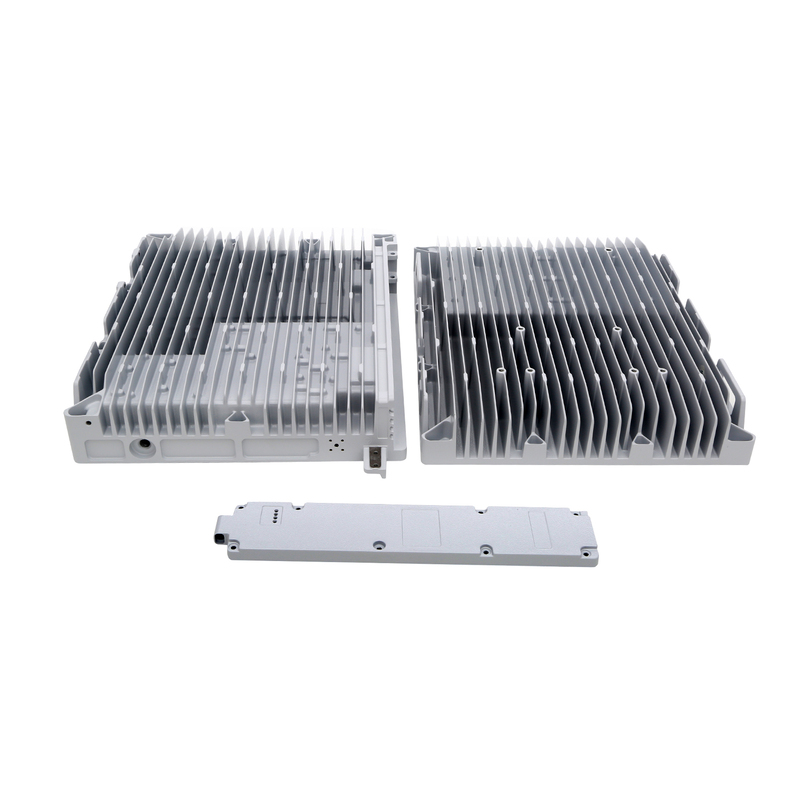
The intended function and operating environment of the part impact DFM decisions. Aerospace parts demand high precision and heat resistance; communication device housings require smooth surfaces and accurate assembly. Early consideration ensures prototypes meet performance requirements.
4. Testing and Validation in DFM
Assembly testing and functional validation allow designers to optimize DFM for CNC Prototyping. Early feedback helps adjust geometry, tolerances, and material selection, ensuring parts are manufacturable and reliable in production.
Get Your CNC Prototype Quote Now
ZH Precision provides professional CNC prototyping from single prototypes to on-demand small batch production. We ensure precise tolerances, fast delivery, and consistent high-quality results for every part.
Get Quote3. General DFM Guidelines for CNC Prototyping
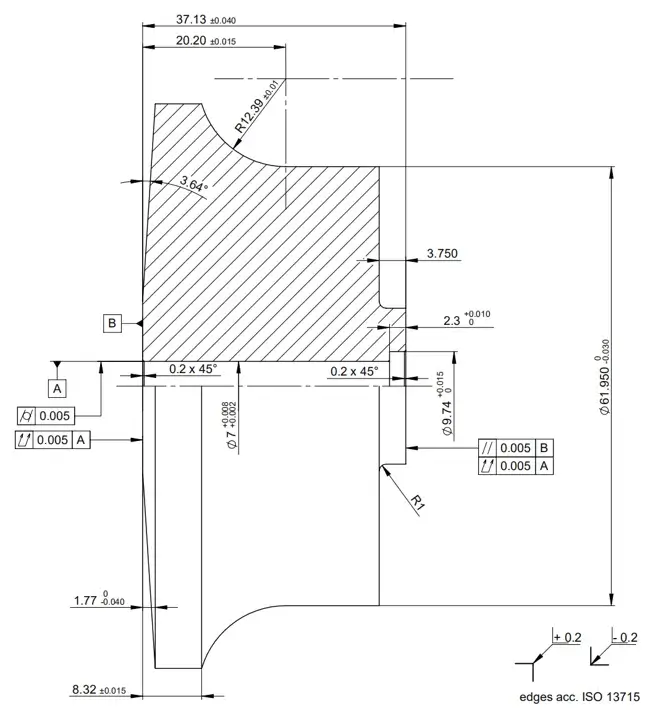
Following these general principles in DFM for CNC Prototyping improves manufacturability, reduces costs, and enhances assembly efficiency. Leveraging ZH Precision’s CNC Prototyping capabilities, these rules can guide practical design decisions.
1. Minimize Part Count
Reducing part count through component consolidation lowers machining setups, assembly complexity, and tolerance stack-up. In CNC prototyping, fewer parts generally result in shorter lead times and more stable functional testing.
2. Optimize Part Orientation
Part orientation directly affects tool accessibility, setup efficiency, and machining accuracy. Prioritizing orientations that allow critical features to be machined in a single setup helps reduce fixturing complexity, dimensional variation, and overall machining risk.
3. Design Multi-Functional Components
Combining multiple functions—such as structural support and alignment—into a single CNC-machined part reduces system complexity and supports faster validation during early-stage prototyping.
4. Facilitate Alignment and Assembly
Chamfers, fillets, and well-defined transition radii improve machinability and guide mating parts during assembly, reducing burrs, manual fitting, and variation across prototype iterations.
5. Use Modular and Replaceable Components
Modular designs allow targeted design changes without reworking the entire assembly, reducing scrap cost and accelerating CNC prototype iterations.
6. Prefer Standard Components
Using standard fasteners, hole sizes, and commonly available features simplifies machining, sourcing, and assembly. Standard components reduce custom operations and help ensure that CNC prototypes remain compatible with downstream production processes.
7. Optimize Tolerances and Surface Finishes
Applying tight tolerances only to critical functional features reduces machining time, inspection effort, and cost, while still ensuring prototype performance and reliability.
8. Consider Fixturing and Future Assembly Processes
Designing with fixturing and datum structures in mind improves machining stability and repeatability, while early consideration of future assembly constraints reduces scaling risk beyond prototyping.
4. Benefits of DFM for CNC Prototyping
When applied consistently, DFM transforms CNC prototyping from a trial-and-error process into a controlled, repeatable engineering workflow.
1. Enhances Functional Performance While Controlling Cost
DFM aligns material selection, machining strategy, and fixturing with functional requirements, preventing over-processing and unnecessary tolerances that increase machining time and cost.
2. Reduces Prototyping Complexity and Rework
By accounting for machining constraints early, DFM reduces setup changes, tool swaps, and dimensional variation, minimizing rework and schedule delays during CNC prototyping.
3. Enables a Reliable Transition from Prototype to Production
Validating designs using production-relevant CNC processes during prototyping ensures critical features and tolerances can scale into small-batch or volume manufacturing with minimal redesign.
4. Improves Manufacturing Efficiency and Process Flexibility
Optimized designs reduce machining steps and fixture complexity, allowing CNC prototyping workflows to adapt efficiently to design changes and varying production volumes.
5. Supports Complex and Multi-Functional CNC Parts
DFM enables reliable machining of complex geometries by addressing risks such as tool deflection and vibration, ensuring prototype accuracy while maintaining process stability.
5. Relationship Between DFM and DFA
Design for Manufacturability (DFM)
Design for Manufacturability (DFM) focuses on designing parts that can be machined efficiently, accurately, and cost-effectively. In CNC prototyping, DFM considers machining orientation, tool accessibility, fixturing strategy, and tolerance allocation to reduce setups, control dimensional variation, and ensure consistent part quality.
Design for Assembly (DFA)
Design for Assembly (DFA) focuses on simplifying assembly, alignment, and functional testing. Even when CNC prototypes meet dimensional requirements, inadequate alignment features or assembly references can affect performance. Applying DFA principles improves assembly repeatability, reduces manual fitting, and ensures reliable functional validation.
6. ZH Precision’s Support for DFM in CNC Prototyping
At ZH Precision, Design for Manufacturability (DFM) is integrated into the CNC prototyping process from the earliest design review, where our engineering team evaluates part geometry, material selection, tolerances, and fixturing requirements before machining begins. This proactive approach ensures potential manufacturing challenges are identified early, machining strategies are optimized, and prototypes are produced efficiently with consistent quality across multiple iterations, enabling faster validation and smoother transition to production.
7. Conclusion
Design for Manufacturability (DFM) is essential for successful CNC prototyping, ensuring parts can be machined efficiently, assembled reliably, and tested accurately. By integrating DFM principles early—optimizing part count, orientation, tolerances, and fixturing—engineers can reduce setup complexity, accelerate prototype iterations, lower costs, and produce parts that are ready for production scaling. Applying these guidelines consistently helps teams achieve reliable, functional prototypes while minimizing rework and maximizing development efficiency.
8. FAQ
A: Look for early design reviews, material and tolerance recommendations, and optimized toolpath planning. Manufacturers that provide these services demonstrate expertise in producing accurate and manufacturable CNC prototypes.
A: Yes. By designing parts with tool accessibility, optimal orientation, and minimal setups in mind, DFM reduces machining complexity and rework, helping manufacturers deliver faster and more cost-effective prototypes.
A: Manufacturers applying DFM ensure that prototypes can scale smoothly to small-batch or mass production, with critical tolerances, assembly features, and material choices already optimized, reducing redesigns and delays.
A: A manufacturer that applies DFM principles ensures parts are easy to machine, cost-efficient, and reliable. This reduces delays, avoids costly rework, and ensures prototypes are closer to production-ready standards.
A:Tool accessibility, part orientation, tolerance optimization, fixture considerations, and standard component use.