
Differences Between Zinc Die Casting vs Aluminum Die Casting
Understanding the strengths and limitations of zinc and aluminum is critical for designing parts that not only work well but are also cost-effective to produce. Let’s take a look at the main areas where these two materials differ.
Weight
Zinc alloys used in die casting, like Zamak 3, 5, and 7, have a density of about 6.7 g/cm³. This extra weight gives small, handheld components a solid, premium feel, which is ideal for precision parts such as connectors, fine gears, and premium hardware where stability and tactile quality matter.
Aluminum alloys commonly used in die casting, such as A380 or ADC12, are much lighter, around 2.7 g/cm³. This makes aluminum perfect for larger structural parts or components where reducing weight improves performance, energy efficiency, and portability, such as housings, heat sinks, and automotive structural elements.
Properties
Zinc alloys shine when it comes to precision and detail. They allow for thin walls as small as 0.3 mm, intricate geometries, and smooth surfaces straight from the mold. Aluminum, while slightly less precise, offers a higher strength-to-weight ratio, which is ideal for parts that need to be strong but not heavy, like structural housings or heat sinks.
Melting Point
Zinc alloys have a relatively low melting point of about 420°C . This low melting point, combined with excellent fluidity, makes zinc well-suited for hot-chamber die casting, where the metal is injected directly from a heated chamber into the mold. Lower casting temperatures reduce thermal stress on tooling, allow faster cycle times, and help keep production costs manageable, especially for small to medium-sized precision components.
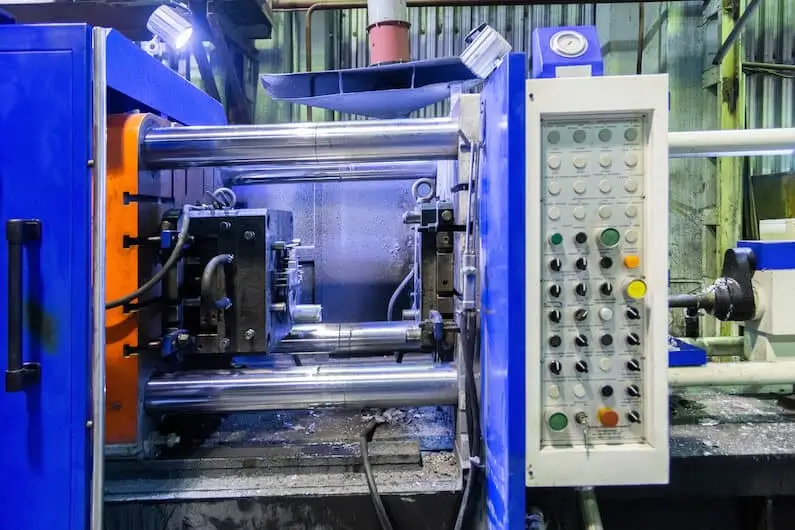
Aluminum melts at a much higher temperature of about 660°C , which makes the cold-chamber die casting process necessary. Aluminum’s higher melting point provides excellent high-temperature strength and structural integrity, making it ideal for larger structural parts, housings, and heat-resistant components. Cold-chamber casting involves slightly longer cycle times and greater demands on molds and machinery, but it ensures that aluminum parts retain their mechanical properties in elevated-temperature applications.
Thermal Conductivity
Aluminum alloys conduct heat more efficiently than zinc alloys, which is why aluminum is widely used for heat sinks, LED housings, electronic enclosures, and automotive components that require active heat dissipation. Its combination of good thermal conductivity and low density makes it highly effective for removing heat from critical areas.
Zinc alloys provide stable thermal behavior and uniform heat distribution in small precision components, but they are not typically used for dedicated heat-dissipation parts. Zinc is better suited for applications where dimensional accuracy, surface finish, and intricate features are more important than thermal performance.
Request a Quote for Custom Parts
Our team can assess your design and provide the most efficient solution, whether for CNC machining, die casting, sheet metal fabrication, or aluminum extrusion. Submit your part requirements today and receive a fast, tailored quote.
Get QuoteCorrosion Resistance
Aluminum naturally forms a protective oxide layer that gives it good baseline corrosion resistance. In die casting applications, additional finishes such as paint or powder coating are commonly used to improve durability and appearance, especially in outdoor or humid environments.
Zinc alloys also offer reasonable corrosion resistance in indoor conditions, but surface treatments like electroplating, powder coating, or painting are often applied to enhance long-term durability, prevent surface oxidation, and achieve decorative finishes. Selecting the right coating system ensures parts maintain both performance and appearance in real-world service conditions.
Mold Lifespan
Zinc die casting is known for extended die life because of its relatively low casting temperature. Lower thermal loading reduces heat checking, erosion, and thermal fatigue in die steel. In production environments, zinc dies commonly achieve several hundred thousand cycles, and for small, high-precision components with optimized cooling and maintenance, die life can exceed one million shots. This durability significantly lowers tooling cost per part in long production runs.
Aluminum die casting, by contrast, exposes dies to much higher thermal stress. Elevated metal temperatures accelerate heat checking, soldering, and surface degradation of die cavities. As a result, aluminum die life typically falls in the range of 100,000 to 500,000 cycles, depending on alloy, geometry, wall thickness, and die thermal management. Die materials, coatings, and cooling design play a critical role in maintaining service life.
Surface Finishing
Zinc die castings typically produce smooth surfaces with fine detail reproduction and relatively low surface porosity. This makes zinc alloys well-suited for electroplating processes such as nickel or chrome plating, where consistent surface quality is required. Minimal surface preparation is usually needed before finishing.
Aluminum die castings tend to have higher surface porosity and form a stable oxide film, which can affect coating adhesion and appearance. As a result, additional surface preparation—such as blasting, sealing, or chemical pretreatment—is often required. Aluminum supports finishing methods like painting, powder coating, and conversion coatings, but surface quality control is more process-sensitive than with zinc.
Applications
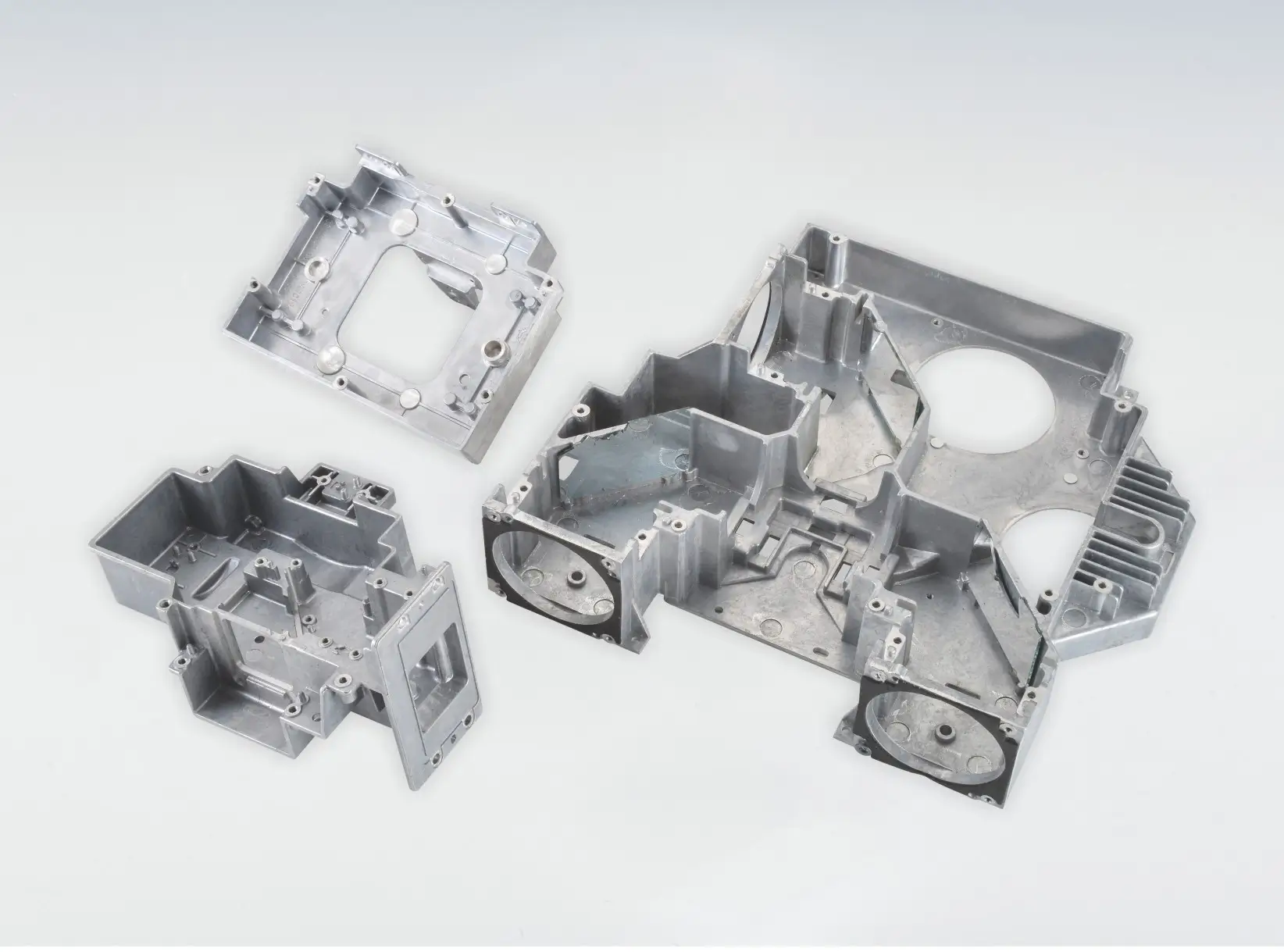
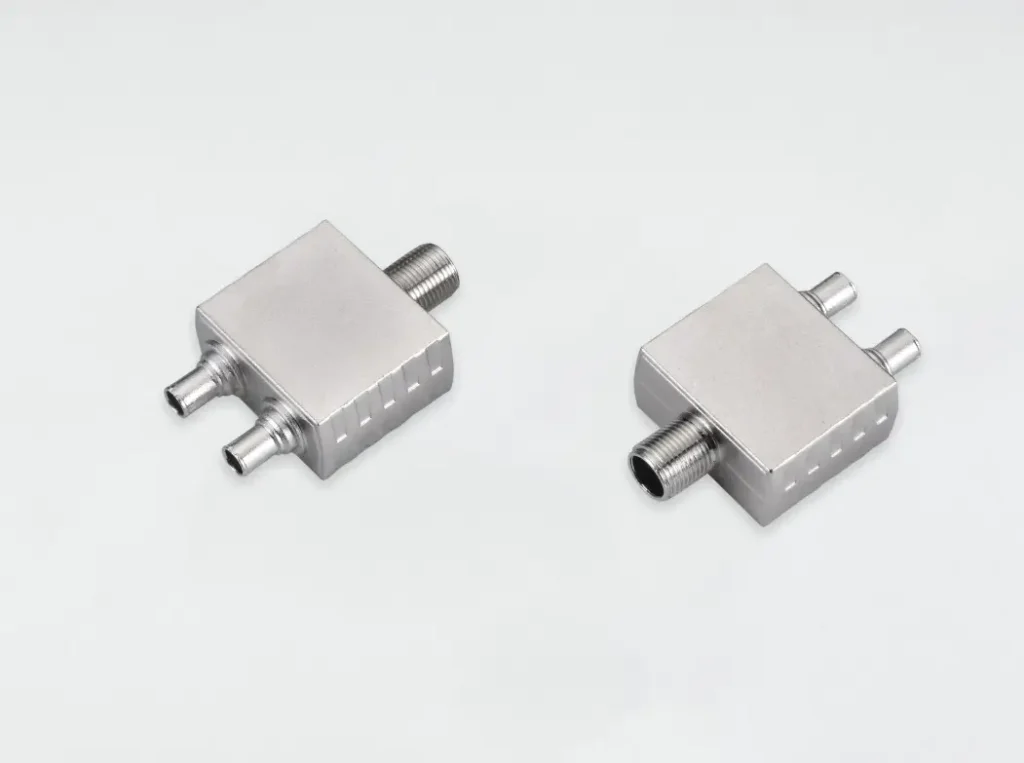
Zinc die casting is ideal for small, intricate components that require high dimensional precision and fine detail reproduction. Typical applications include electronic connector housings, precision gears, interior hardware, and small mechanical assemblies. Its excellent fluidity and ability to form thin walls ensure these components meet tight tolerances with minimal post-processing.
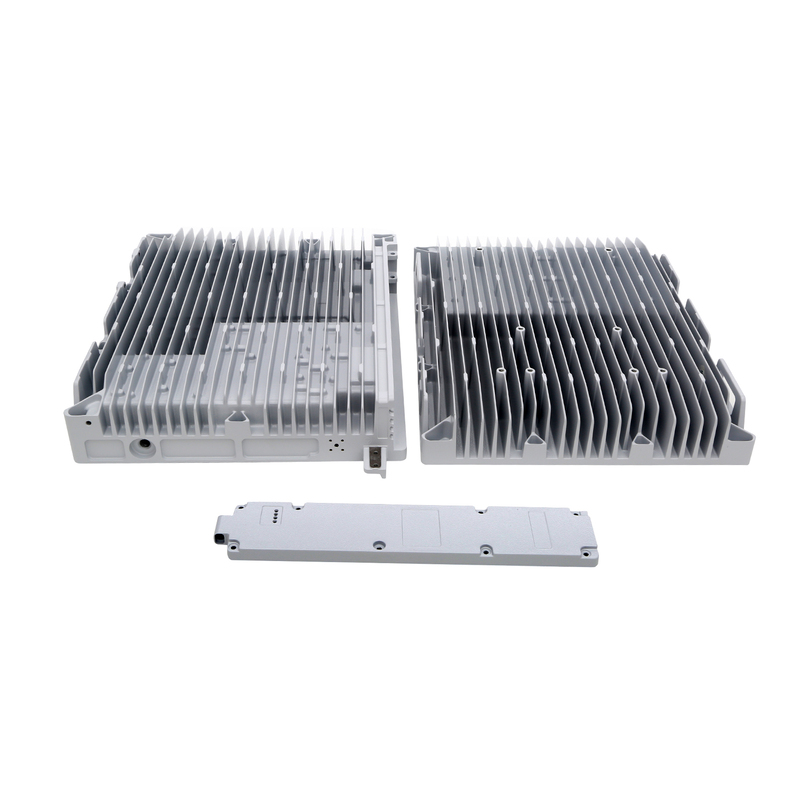
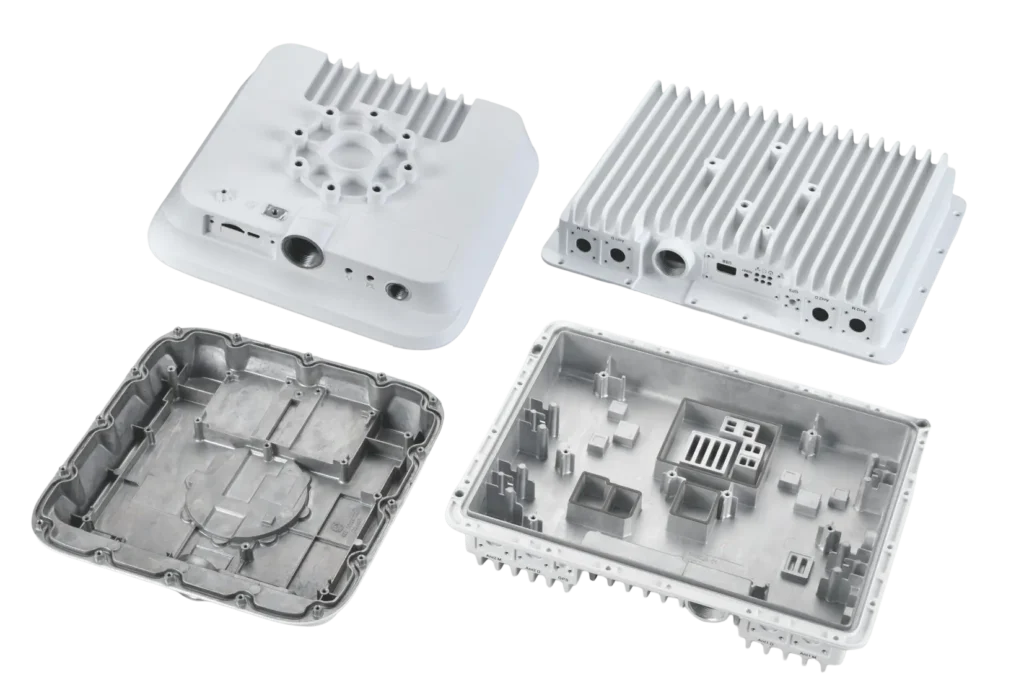
Aluminum die casting is better suited for larger, structural components that need strength, rigidity, and thermal stability. Common applications include electronic device enclosures, heat sinks, powertrain housings, battery casings, and communications equipment housings. Aluminum’s higher strength-to-weight ratio and ability to maintain integrity at elevated temperatures make it ideal for components that must withstand mechanical loads or heat.
Cycle Time
Zinc die casting has a relatively short cycle time due to its low melting point (~420°C) and high fluidity, allowing molds to fill and solidify quickly. This results in faster part production per cycle.
Aluminum die casting requires a longer cycle time because of its higher melting point (~660°C). Filling and solidification take more time, which extends the overall production cycle compared with zinc.
Costs
The cost of a part isn’t just about the price of the material. Other factors like cycle time, mold life, and finishing requirements all play a role. Understanding these elements helps engineers and buyers get a clear picture of the overall production cost.
| Cost Factors | Zinc Die Casting | Aluminum Die Casting |
| Raw Material Cost | higher per kg | lower per kg |
| Cycle Time | faster, molds fill and cool quickly | slower, takes longer to fill and solidify |
| Die Life | longer, molds last many cycles so cost per part is lower | shorter, molds wear out sooner so tooling cost per part is higher |
| Secondary Machining | usually little to none | may need extra finishing |
| Waste / Scrap Rate | few rejected parts | higher for thin or tricky parts |
| Energy Use | lower, melts at a lower temperature | higher, needs more energy to reach melting point |
| Overall Production Cost | often cheaper for small, detailed parts | often cheaper for bigger, simpler parts |
| Shipping / Weight Impact | heavier, may slightly raise shipping cost | lighter, can save on shipping |
When and Why You Should Choose Zinc Die Casting
Zinc is perfect when precision, complexity, and high-volume efficiency are your priorities. Its properties allow thin walls, intricate details, and high-quality finishes, while low-temperature casting keeps molds lasting longer. Typical zinc applications include electronics housings, connectors, small gears, and premium automotive interiors.
Consider zinc when:
- You need extremely thin walls or intricate features
- Tight dimensional tolerances are critical
- A decorative or functional plated surface is required
- High-volume production requires long-lasting tooling
When and Why Choose Aluminum Die Casting
Aluminum is ideal when weight reduction, structural strength, or heat management are important. Its high melting point and thermal conductivity make it suitable for parts exposed to heat or requiring strong yet lightweight structures.
Consider aluminum when:
- You need a high strength-to-weight ratio
- Parts will operate in elevated temperatures
- Thermal management is a priority (heat sinks, housings)
- A durable coating is needed for corrosion resistance
Get Your Zinc or Aluminum Die Casting Parts
At ZH Precision, we combine deep material knowledge with advanced manufacturing to help you select the right material, optimize design, and produce high-quality die cast parts throughout the die casting process, from prototyping to full-scale production. Our team ensures your parts meet performance, aesthetic, and cost objectives, every step of the way.
Conclusion
There’s no one-size-fits-all. Zinc excels at precision, complexity, and high-volume efficiency, while aluminum leads in lightweight strength and heat performance. The right choice depends on your part’s function, environment, volume, and cost goals. Working with an expert manufacturer ensures your parts are optimized, reliable, and cost-effective.
FAQ
A:Zinc is denser and stronger for small, intricate parts, while aluminum provides better structural strength for larger components.
A:Zinc may have a higher per-kilogram cost but lower total cost for small, precise parts, while aluminum is generally more economical for larger structural components.
A:Aluminum is naturally corrosion-resistant, whereas zinc requires plating or coating to achieve similar protection.
A:No, zinc cannot be anodized. Surface protection is typically achieved through electroplating, painting, or powder coating.
A:Zinc is preferred for small, precise housings due to dimensional accuracy and surface finish, while aluminum is better when heat dissipation is important.