
What is 4-Axis CNC Machining?
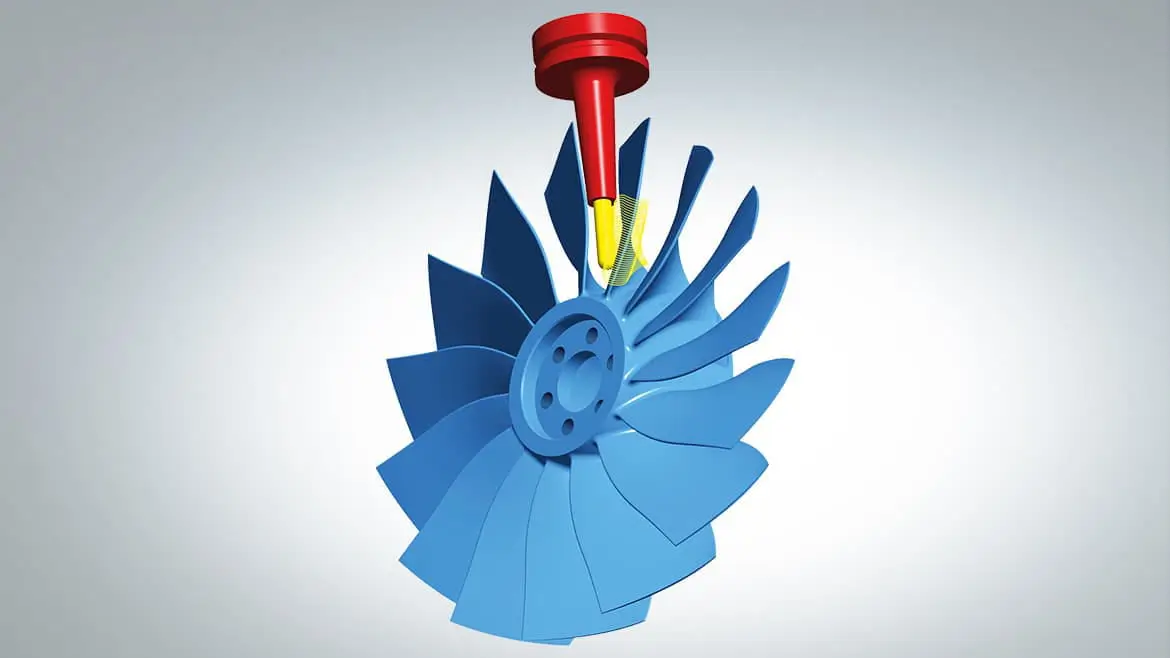
4-axis CNC machining is an advanced manufacturing process that builds on traditional 3-axis CNC by adding a fourth rotational axis. This extra axis allows a workpiece to rotate while the cutting tool moves along the X, Y, and Z axes, enabling the production of more complex geometries in a single setup. For buyers, this means higher accuracy, reduced setup time, and fewer chances for errors compared to multiple manual repositionings.
CNC Machining Basics
CNC (Computer Numerical Control) machining automates cutting, drilling, and shaping operations through computer programming. It ensures consistent precision across repeated runs and can handle both metal and plastic components with tight tolerances.
Understanding the Fourth Axis
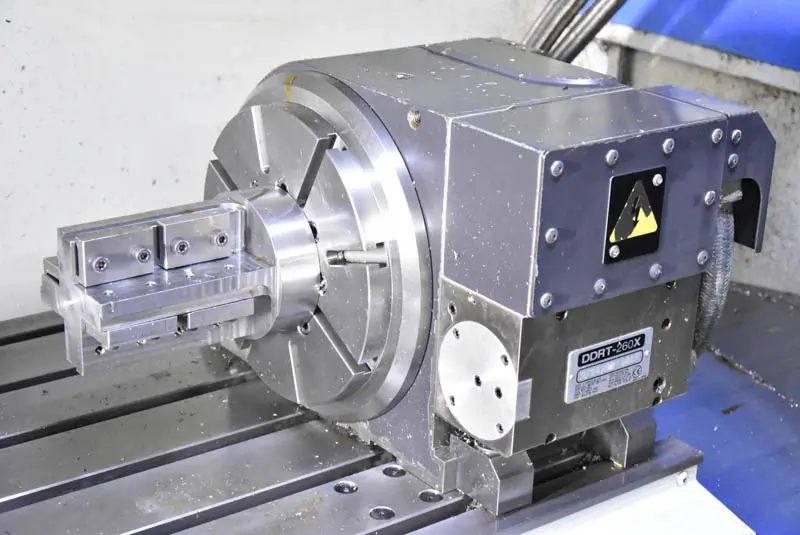
The fourth axis typically rotates the workpiece on a horizontal or vertical spindle. This capability allows manufacturers to create angled holes, slots, or features that would otherwise require multiple setups on a 3-axis machine. It’s particularly valuable for cylindrical or symmetrical parts and reduces the need for secondary operations.
Why It Matters for Buyers
For engineers, product designers, and OEMs, 4-axis CNC machining simplifies production of intricate parts, shortens lead times, and ensures repeatable quality. Choosing a supplier with proven 4-axis expertise can directly impact the success of your projects, from prototype to small-batch production.
Key Benefits of 4-Axis CNC Machining
4-axis CNC machining combines precision, versatility, and efficiency, making it ideal for engineers, product designers, and OEMs who need complex components with tight tolerances. The fourth rotational axis allows machining from multiple angles in one setup, reducing errors, saving time, and expanding design possibilities. Buyers benefit from reliable parts, faster production, and smoother project execution.
Achieve Complex Geometries
The fourth axis enables machining of angled holes, undercuts, and multi-faceted surfaces that 3-axis machines cannot handle. This allows for more sophisticated product designs, such as ergonomic consumer components, aerospace brackets, or intricate medical device parts. By consolidating complex features into a single run, buyers save on setup costs and avoid outsourcing secondary operations.
Improve Dimensional Accuracy
Multi-angle machining in a single setup eliminates errors from repeated repositioning. Every part maintains consistent tolerances across batches, which is crucial for applications like precision tooling or high-stress mechanical components. Buyers benefit from reduced scrap rates, lower rework costs, and confidence that each component meets strict specifications.
Streamline Production Workflow
By completing multiple operations in one setup, 4-axis machining reduces fixture changes, handling time, and production bottlenecks. This leads to faster turnaround times and predictable delivery schedules. Buyers can plan projects more efficiently, meet tight deadlines, and scale production without added complexity.
Low-Volume Production and Rapid Prototyping
4-axis CNC machining enables the efficient production of low-volume parts and prototypes, allowing engineers and designers to quickly test, refine, and validate complex designs. This flexibility is ideal for product development and early-stage testing. However, buyers should be aware that per-part costs are higher for low-volume runs due to setup and machine time. Careful planning and combining prototype work with small-batch production can help optimize both cost and development speed.
Common Materials Used in 4-Axis CNC Machining
Selecting the right material is a crucial step in 4-axis CNC machining. The choice affects not only the part’s strength, durability, and weight but also its machinability, surface finish, and overall production cost. By carefully selecting the right CNC machining material, engineers and buyers can make informed decisions, ensuring that the final parts meet functional requirements, aesthetic expectations, and budget constraints while fully leveraging the capabilities of 4-axis CNC machining.
Aluminum
Aluminum is lightweight, corrosion-resistant, and easy to machine, making it ideal for aerospace components, consumer electronics, and structural parts. Its excellent thermal conductivity also supports efficient heat dissipation in electronic housings. With 4-axis CNC machining, buyers benefit from faster production, precise tolerances, and a balance of strength and weight in their designs.
Stainless Steel
Stainless steel provides high strength, wear resistance, and corrosion resistance, making it suitable for medical devices, industrial equipment, and high-stress mechanical components. Although more challenging to machine than aluminum, 4-axis CNC ensures tight tolerances and smooth finishes. Buyers gain durable, long-lasting parts that meet strict safety and performance standards.
Titanium
Titanium offers an exceptional strength-to-weight ratio and corrosion resistance, perfect for aerospace, medical implants, and high-performance automotive components. Machining titanium requires specialized tooling, but 4-axis CNC ensures precise, consistent results. Buyers receive lightweight yet robust parts capable of withstanding extreme conditions.
Engineering Plastics
Engineering plastics such as POM, ABS, and Nylon are ideal for functional prototypes, housings, and low-stress components. Plastics provide design flexibility, easy post-processing, and lower weight. 4-axis CNC machining allows precise shaping of these materials, giving buyers cost-effective prototypes and parts suitable for applications where metal properties are not required.
Surface Finishes and Post-Processing Options for 4-Axis CNC Machining
Surface finish and post-processing play a crucial role in both the functionality and aesthetics of CNC-machined parts. With 4-axis CNC machining, parts can achieve precise dimensions and consistent geometry, but selecting the right finishing process ensures durability, corrosion resistance, visual appeal, and suitability for specific applications. Buyers benefit from understanding available options to match performance requirements, industry standards, and budget constraints.
Anodizing
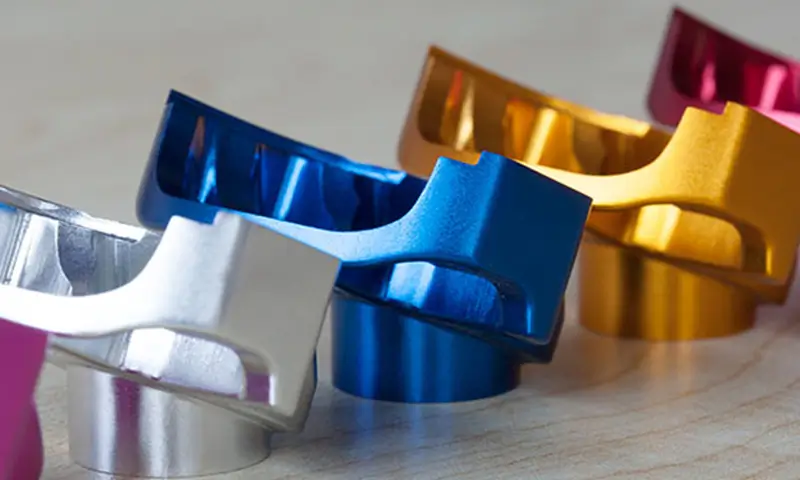
Anodizing is commonly used for aluminum parts to enhance corrosion resistance, surface hardness, and color aesthetics. It creates a protective oxide layer without adding significant weight. For buyers, anodized components offer longer-lasting performance and a professional finish suitable for electronics, enclosures, and structural parts.
Polishing and Buffing
Polishing or buffing smooths the surface of metal parts, improving both appearance and function by reducing friction in moving components. 4-axis CNC machining allows precise preparation for these finishes. Buyers benefit from enhanced part longevity, improved mechanical performance, and visually appealing components for consumer-facing products.
Sandblasting and Bead Blasting
These techniques provide a uniform matte or textured surface, improving adhesion for coatings or paint. They also remove minor machining marks. Buyers can use these finishes to achieve a consistent, high-quality look on housings, brackets, and industrial parts, while also preparing the surface for secondary coatings.
Heat Treatment and Coatings
Heat treatment can enhance strength and wear resistance of metals like steel or titanium. Additional coatings, such as powder coating or plating, can provide corrosion protection or color customization. Buyers gain durable parts that meet mechanical requirements and withstand demanding operational environments.
Expert Insights: Practical Design Tips for 4-Axis CNC Machining
Designing for 4-axis CNC machining is not just about geometry—it’s about understanding how parts are actually manufactured. Based on real-world machining experience, the most successful projects are those that consider fixturing, tool access, and CNC machining strategy early in the design stage. Applying practical design principles can reduce production risks, improve consistency, and help buyers achieve better results in both prototypes and production runs.
Use 4-Axis Where It Truly Adds Value
4-axis CNC machining is most effective when parts require multi-angle features, such as angled holes, curved surfaces, or cylindrical geometries. For simpler flat parts, 3-axis machining may be more efficient. Selecting the right process based on part complexity helps avoid unnecessary costs while maintaining performance.
Design with Fixturing in Mind
Even with 4-axis capability, stable fixturing remains critical. Poor clamping can lead to vibration, deformation, or dimensional inconsistencies. Designing parts with proper reference surfaces and balanced structures ensures better stability during rotation and machining.
Apply Tolerances Strategically
Not all features require tight tolerances. Over-specifying tolerances increases machining time and inspection requirements. Focus precision on critical features such as mating surfaces or functional interfaces, while allowing standard tolerances elsewhere to optimize cost and efficiency.
Consider Tool Access and Machining Direction
Complex geometries should be designed with tool accessibility in mind. Features that are difficult to reach may require special tooling or additional setups, increasing cost and lead time. Proper orientation and spacing can simplify machining and improve overall efficiency.
Plan for Surface Finish Early
Surface finish is influenced not only by post-processing but also by machining strategy. Toolpaths, cutting angles, and material selection all affect the final appearance and performance. Considering these factors early helps avoid rework and ensures the desired finish is achieved.
Request a DFM Review and Quotation
Submit your drawings to receive a manufacturability review and a clear quotation. Our engineers help ensure your design is ready for efficient production.
Get QuoteCommon Applications of 4-Axis CNC Machining
4-axis CNC machining is widely used across industries where precision, complexity, and reliability are critical. Its ability to handle multi-angle machining in a single setup makes it ideal for producing parts that require tight tolerances and intricate geometries. Understanding common applications helps buyers evaluate how 4-axis CNC can meet their specific project needs.
Precision Mechanical Components
4-axis CNC machining excels at producing mechanical parts that require exact dimensions and consistent performance, such as gears, brackets, and assemblies. Buyers benefit from high-accuracy components that reduce assembly issues and enhance product reliability.
Aerospace and Automotive Parts
Aerospace and automotive industries often require lightweight, high-strength components with complex geometries. 4-axis CNC can machine titanium, aluminum, and stainless steel to meet these demanding specifications. Buyers gain durable parts that meet safety standards while maintaining tight tolerances.
Medical Equipment and Devices
Medical instruments and device components demand extreme precision and smooth surface finishes. 4-axis CNC machining ensures consistent accuracy for components such as surgical tools, implants, and diagnostic housings. Buyers receive reliable parts that comply with strict quality and regulatory requirements.
Consumer Electronics and Tooling
Enclosures, housings, and tooling for electronics and industrial equipment often feature intricate shapes and fine details. 4-axis CNC allows these features to be machined in a single setup, reducing production time and improving quality. Buyers benefit from faster turnaround and reduced risk of errors during assembly.
4-Axis vs 3-Axis CNC Machining
Choosing the right CNC machining method is critical for efficiency, precision, and manufacturability. While 3-axis CNC machines are suitable for simple geometries, 4-axis CNC adds a rotational axis that allows multi-angle machining in a single setup. This capability enables more complex parts, reduces secondary operations, and improves production efficiency. Understanding these differences helps buyers make informed decisions when selecting CNC machining for prototypes, low-volume production, or complex components.
Key Differences Between 3-Axis and 4-Axis CNC
| Feature / Aspect | 3-Axis CNC Machining | 4-Axis CNC Machining | Buyer Value / Benefit |
| Machining Capabilities | Moves in X, Y, Z axes; suitable for flat or simple parts | Adds rotational (A) axis; allows multi-angle machining and complex geometries | Reduced need for secondary setups; can produce intricate parts efficiently |
| Precision & Consistency | Requires repositioning for multiple faces; risk of alignment errors | Multi-face machining in a single setup maintains tight tolerances | Fewer rejects, consistent dimensions, high reliability across batches |
| Production Efficiency | Multiple setups increase machining time and labor | Combines operations in one setup; faster production | Shorter lead times, predictable schedules, lower risk of delays |
| Suitable Applications | Simple parts like plates, brackets, basic housings | Complex parts like cylindrical housings, aerospace brackets, medical instruments | Ability to produce complex components without extra cost or time |
How to Choose a 4-axis CNC machining manufacturer
Selecting the right supplier is critical to ensure that your parts are manufactured accurately, delivered on time, and meet quality expectations. A reliable 4-axis CNC machining manufacturer not only provides advanced equipment but also offers engineering support, quality assurance, and responsive service. Understanding key evaluation factors helps buyers make informed decisions and reduce risks in production.
Technical Capability
A supplier’s equipment, tooling, and machining expertise determine the complexity of parts they can produce. Buyers should verify the supplier’s experience with the materials and tolerances required for their project. Choosing a technically capable supplier ensures precision, repeatable results, and the ability to handle complex designs.
Quality Assurance
Quality control processes, certifications (such as ISO 9001), and in-house inspection equipment are essential for consistent part accuracy. Buyers benefit from reduced defects, minimized rework, and confidence that components will meet performance standards.
Customer Support and Engineering Assistance
A supplier that offers proactive engineering support can provide design feedback, DFM recommendations, and troubleshooting during production. Buyers gain faster problem resolution, optimized designs, and smoother project execution.
Production Capacity and Delivery Reliability
Understanding a supplier’s capacity, lead times, and scheduling flexibility is key for planning your projects. Buyers benefit from predictable delivery schedules, the ability to handle urgent orders, and scalable production as project volumes increase.
Why ZH Precision is Your Trusted 4-Axis CNC Partner
ZH Precision combines advanced 4-axis CNC machining capabilities with experienced engineering support to help engineers, product designers, and OEMs turn complex designs into precise, functional components. Our state-of-the-art equipment handles a wide range of materials and intricate geometries, while our engineering team provides DFM guidance, prototype evaluation, and design optimization. With strict quality control processes and flexible production options, buyers benefit from consistent, high-precision parts, predictable lead times, and reliable support throughout the project lifecycle.
Conclusion
4-axis CNC machining offers unmatched precision, flexibility, and efficiency for producing complex components across industries. By understanding its capabilities, benefits, suitable materials, surface finishes, and DFM considerations, engineers, product designers, and OEMs can make informed decisions that save time, reduce errors, and optimize costs. Partnering with a trusted supplier like ZH Precision ensures access to advanced 4-axis CNC equipment, expert engineering support, and consistent, high-quality parts, helping you bring your designs to life reliably and efficiently.
FAQ: Questions to Ask Before Placing an Order
A:ZH Precision can handle both prototypes and low-volume production without large minimum order requirements. This allows buyers to test designs, validate prototypes, or produce small batches efficiently while maintaining high precision and quality.
A:Our advanced 4-axis CNC machines and strict quality control processes enable tight tolerances and consistent dimensions. Buyers can rely on accurate, repeatable parts for high-precision applications such as aerospace brackets, medical devices, or precision housings.
A:We provide a wide range of finishing options, including anodizing, polishing, sandblasting, plating, and coating. These processes enhance durability, functionality, and aesthetics, ensuring parts are ready for assembly or market use.
A:Yes. Our engineering team offers DFM guidance, prototype evaluation, and design optimization to help clients improve manufacturability and reduce production risks. Buyers benefit from fewer errors, faster design iterations, and smoother project execution.
A:ZH Precision delivers predictable lead times for prototypes, low-volume, and medium-volume production. Flexible shipping options ensure parts arrive on schedule, allowing buyers to meet project timelines without compromise.