
What is 3-Axis CNC Machining
3-axis CNC machining is a type of computer numerical control (CNC) process in which the cutting tool moves in three perpendicular directions to shape a workpiece. By following instructions from CAD (Computer-Aided Design) and CAM software, the machine performs precise milling, drilling, and contouring operations on metals or plastics. This subtractive manufacturing method is particularly suitable for producing flat surfaces, slots, holes, and simple three-dimensional parts, making it one of the most reliable and cost-effective solutions for industrial component manufacturing.
The Three Linear Axes (X, Y, Z)
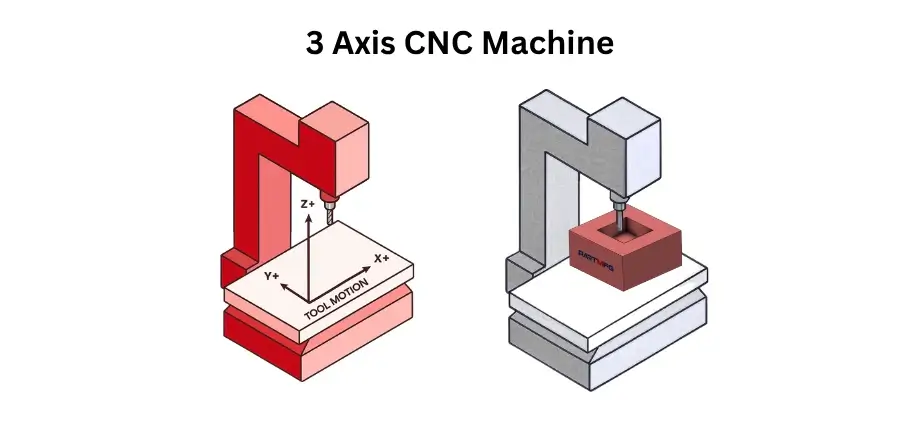
In 3-axis CNC machining, the cutting tool or workpiece moves along three perpendicular linear axes: X, Y, and Z. The X-axis controls left-to-right movement, the Y-axis controls front-to-back movement, and the Z-axis controls vertical movement toward or away from the workpiece. By combining these three directions, the machine can create precise shapes, pockets, holes, and contours on the part surface. This three-dimensional motion allows manufacturers to produce components with tight tolerances and consistent quality while keeping setups and programming relatively simple compared to multi-axis systems.
3-Axis CNC Machining Process
The 3-axis CNC machining process is a step-by-step workflow that transforms a digital design into a precise physical component. Each stage ensures accuracy, consistency, and efficiency, making it suitable for prototyping as well as small-to-medium batch production.
Step 1: CAD Design
The process begins with creating a detailed 3D model of the part using CAD (Computer-Aided Design) software. This model defines the dimensions, geometry, and critical features that the finished part must meet, providing the foundation for all subsequent machining steps.
Step 2: CAM Programming
The CAD model is then imported into CAM (Computer-Aided Manufacturing) software, which generates toolpaths and machining instructions. These instructions tell the CNC machine exactly how to move the cutting tool along the X, Y, and Z axes to achieve the desired shape and precision.
Step 3: Workpiece Setup
The raw material is securely mounted on the machine bed and aligned accurately. Proper setup ensures that the cutting tool reaches the correct positions and maintains consistency across multiple parts. Measurement and calibration at this stage prevent errors during machining.
Step 4: Machining Operations
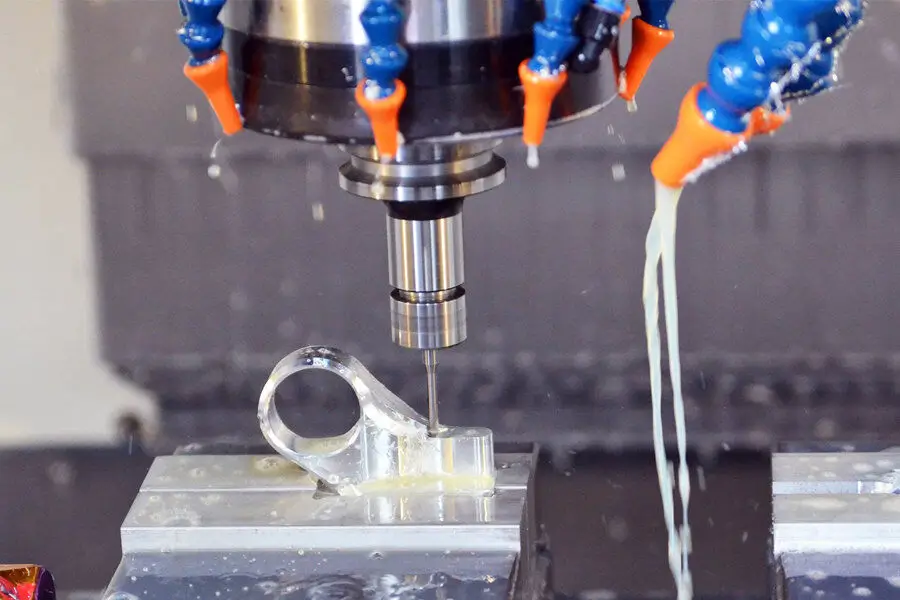
The CNC machine executes the programmed toolpaths, removing material layer by layer. The cutting tool moves along the three axes to create flat surfaces, pockets, holes, and simple 3D shapes according to the design.
Step 5: Quality Inspection
After machining, the finished part undergoes inspection for dimensional accuracy, surface finish, and overall quality. Only components that meet the required specifications proceed to finishing, assembly, or shipment.
Types of 3-Axis CNC Machines
3-axis CNC machines come in several types, each designed for specific applications and materials. Understanding the differences helps manufacturers choose the right equipment for their parts.
3-Axis CNC Milling Machines
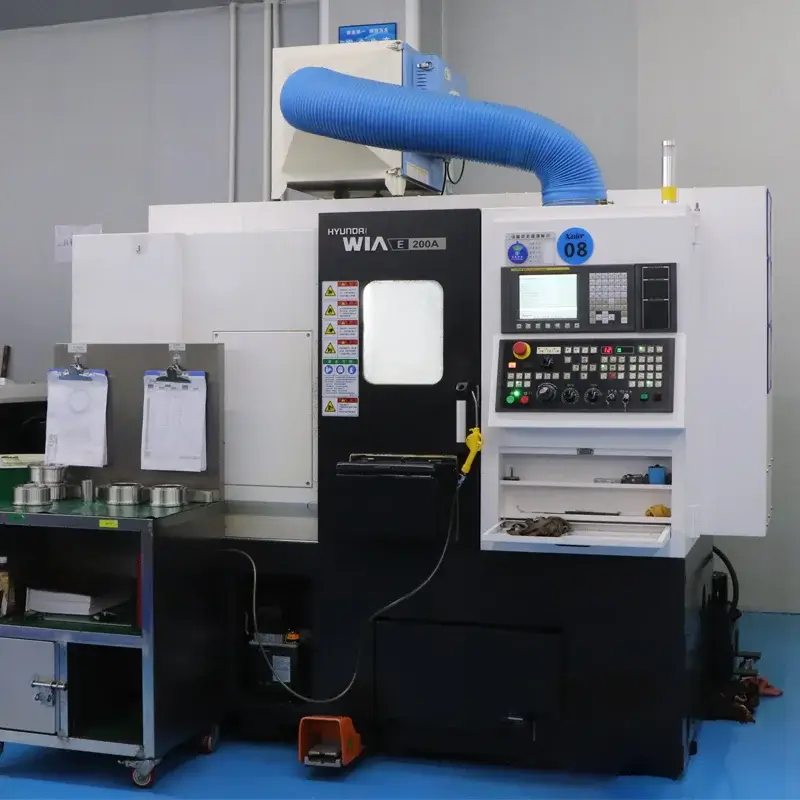
These are the most common type of 3-axis machines. They use rotating cutting tools to remove material from a stationary workpiece, making them suitable for flat surfaces, pockets, slots, and simple 3D shapes. Milling machines are widely used in industries such as electronics, automotive, and industrial equipment for precision parts.
Vertical Machining Centers (VMC)
Vertical machining centers are advanced 3-axis machines with a vertically oriented spindle. This configuration improves chip removal and tool accessibility, making them ideal for machining aluminum, steel, and other metals with high precision. VMCs are often used for housings, brackets, and other mechanical components requiring tight tolerances.
3-Axis CNC Routers
CNC routers are designed primarily for softer materials like plastics, composites, and lightweight metals. They operate at high spindle speeds and are suitable for cutting panels, enclosures, and decorative parts. Routers are commonly used in electronics, consumer products, and signage manufacturing where speed and surface finish are important.
Materials Used in 3-Axis CNC Machining
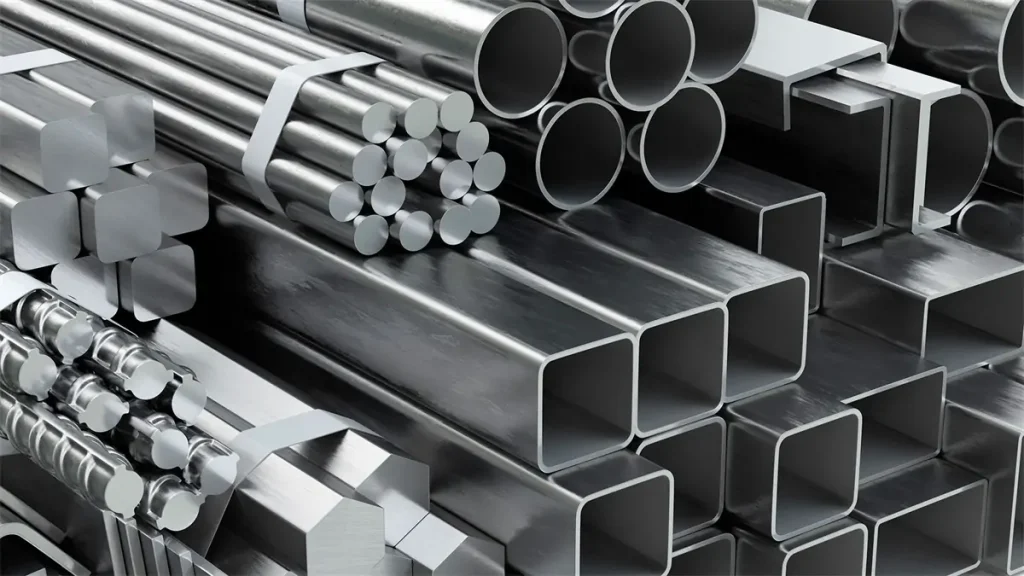
3-axis CNC machining is compatible with a wide range of materials, allowing manufacturers to produce components that meet various strength, durability, and surface finish requirements.
Aluminum Alloys
Aluminum is lightweight, corrosion-resistant, and easy to machine, making it one of the most popular materials for CNC machining. Alloys such as 6061 and 7075 are commonly used for electronic housings, mechanical parts, and structural components, offering a good balance of strength and machinability.
Stainless Steel
Stainless steel materials like 304 and 316 are used when high strength, hardness, and corrosion resistance are required. While more challenging to machine than aluminum, modern cutting tools and CNC programming allow for precise parts suitable for medical devices, industrial equipment, and automotive applications.
Engineering Plastics
Plastics such as ABS, POM, and PEEK are frequently machined for lightweight, chemically resistant, or electrically insulating components. These materials are ideal for electronics housings, prototype parts, and industrial equipment components that require high dimensional accuracy without the weight of metals.
Other Machinable Metals
Other metals such as brass, copper, and titanium can also be machined on 3-axis CNC machines. These materials are chosen for specific properties such as electrical conductivity, thermal performance, or high strength-to-weight ratio, depending on the application requirements.
Request a DFM Review and Quotation
Submit your drawings to receive a manufacturability review and a clear quotation. Our engineers help ensure your design is ready for efficient production.
Get QuoteWhat Parts Can Be Made with 3-Axis CNC Machining
3-axis CNC machining is ideal for producing parts with relatively simple geometries and accessible surfaces. Its precision and repeatability make it suitable for a wide range of industrial applications.
Flat and Prismatic Components
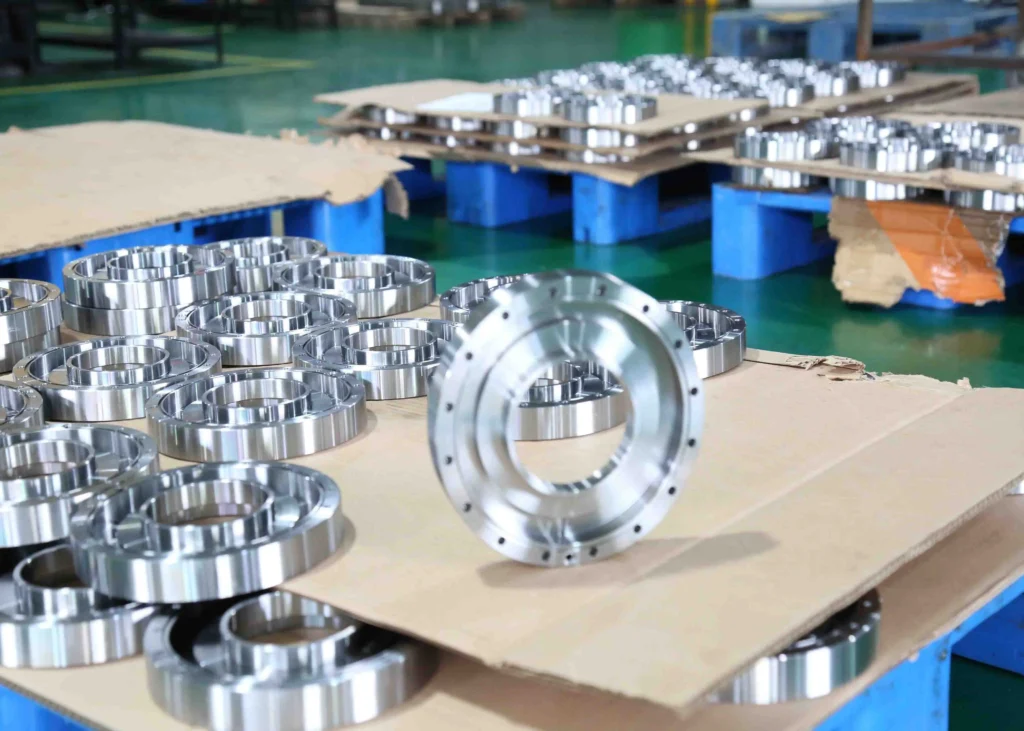
Parts with flat surfaces, slots, and simple 3D shapes, such as mounting plates and mechanical brackets, can be efficiently produced using 3-axis machines. These components are common in machinery, automotive, and industrial equipment.
Mechanical Brackets and Mounting Plates
Custom brackets, frames, and structural plates for machinery or electronics are often machined with 3-axis CNC due to its ability to maintain tight tolerances and consistent surface finishes.
Electronic Housings and Enclosures
3-axis machining can produce housings for electronic devices, heat sinks, and enclosures, especially when flat surfaces and simple contours dominate the design. This ensures precise fitment and functional assembly.
Industrial Equipment Components
Simple mechanical parts used in conveyors, automation systems, or industrial machines can be manufactured quickly and accurately. The process allows for repeatable production of small-to-medium batch quantities with reliable quality.
Advantages of 3-Axis CNC Machining
3-axis CNC machining offers several benefits that make it a reliable and cost-effective choice for industrial manufacturing.
Cost Efficiency
Compared to multi-axis CNC machines, 3-axis systems are simpler to program and operate, reducing setup time and overall production costs. They are ideal for parts with simple geometries where advanced multi-axis movements are not required.
High Precision and Repeatability
The computer-controlled movement along the X, Y, and Z axes ensures consistent accuracy across multiple parts. This makes 3-axis machining suitable for producing components that require tight tolerances and reliable performance.
Faster Setup and Programming
With fewer axes to configure, 3-axis machines are easier to set up and program. Engineers can quickly generate toolpaths for prototyping or low-to-medium volume production, reducing lead times.
Versatility for Various Materials
3-axis CNC machining can handle metals, plastics, and composites, allowing manufacturers to produce a wide range of components across different industries without switching to specialized equipment.
Ideal for Prototyping and Small Batches
Because of its balance of speed, precision, and cost, 3-axis machining is often the preferred choice for rapid prototyping and low-to-medium volume production, helping companies validate designs before scaling up.
Limitations of 3-Axis CNC Machining
While 3-axis CNC machining is versatile and cost-effective, it has certain limitations compared to multi-axis systems.
Restricted Tool Access
The cutting tool can only approach the workpiece from three perpendicular directions, which makes it difficult to machine features with complex undercuts or angled surfaces.
Multiple Setups Required for Complex Parts
Parts with features on different faces may require repositioning the workpiece multiple times, increasing setup time and the risk of alignment errors.
Challenges with Deep Cavities and Intricate Geometries
Deep pockets or intricate 3D shapes can be difficult to machine efficiently on a 3-axis machine, as they may require specialized tooling or multiple passes to maintain precision.
Limited Efficiency for Highly Complex Components
For components with compound angles or free-form surfaces, 3-axis machining can be slower and less precise compared to 4-axis or 5-axis CNC systems, which can move the tool or workpiece along additional rotational axes.
3-Axis vs 4-Axis vs 5-Axis CNC Machining
Different CNC machining configurations are designed to handle varying levels of part complexity. While 3-axis machines are suitable for many standard components, additional rotational axes in 4-axis and 5-axis machines allow manufacturers to produce more complex geometries with fewer setups.
| Feature | 3-Axis CNC Machining | 4-Axis CNC Machining | 5-Axis CNC Machining |
| Axes Movement | X, Y, Z linear axes | X, Y, Z + 1 rotary axis | X, Y, Z + 2 rotary axes |
| Part Complexity | Simple to moderate | Moderate complexity | Highly complex |
| Setup Requirements | Standard efficiency | Improved efficiency | Highest efficiency |
| Machining Efficiency | Standard efficiency | Improved efficiency | Highest efficiency |
| Typical Applications | Brackets, plates, housings | Cylindrical parts, side features | Aerospace parts, complex surfaces |
3-Axis CNC Machining
3-axis machining is best suited for parts with simple geometries and features accessible from one direction. It is commonly used for flat surfaces, slots, and holes, making it a cost-effective option for prototypes and standard industrial components.
4-Axis CNC Machining
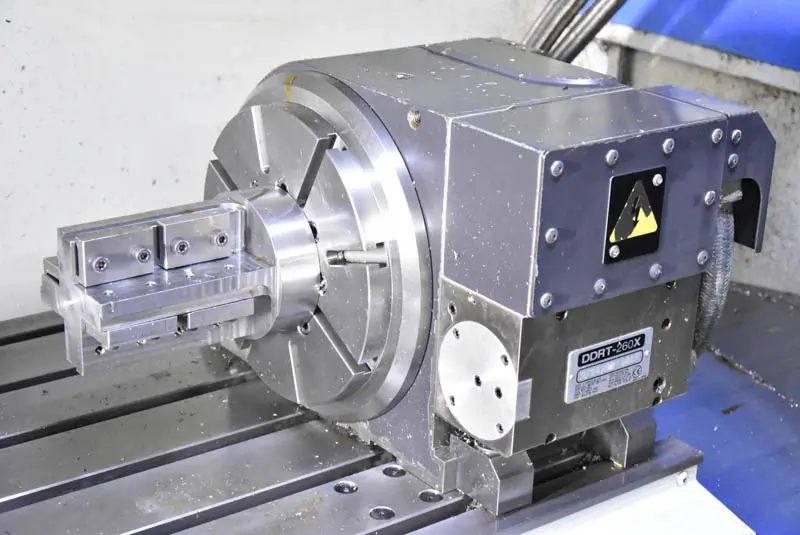
4-axis machining adds a rotary axis that allows the workpiece to rotate during machining. This makes it easier to machine features on multiple sides of a part without repositioning the workpiece, improving efficiency for cylindrical or multi-sided components.
5-Axis CNC Machining
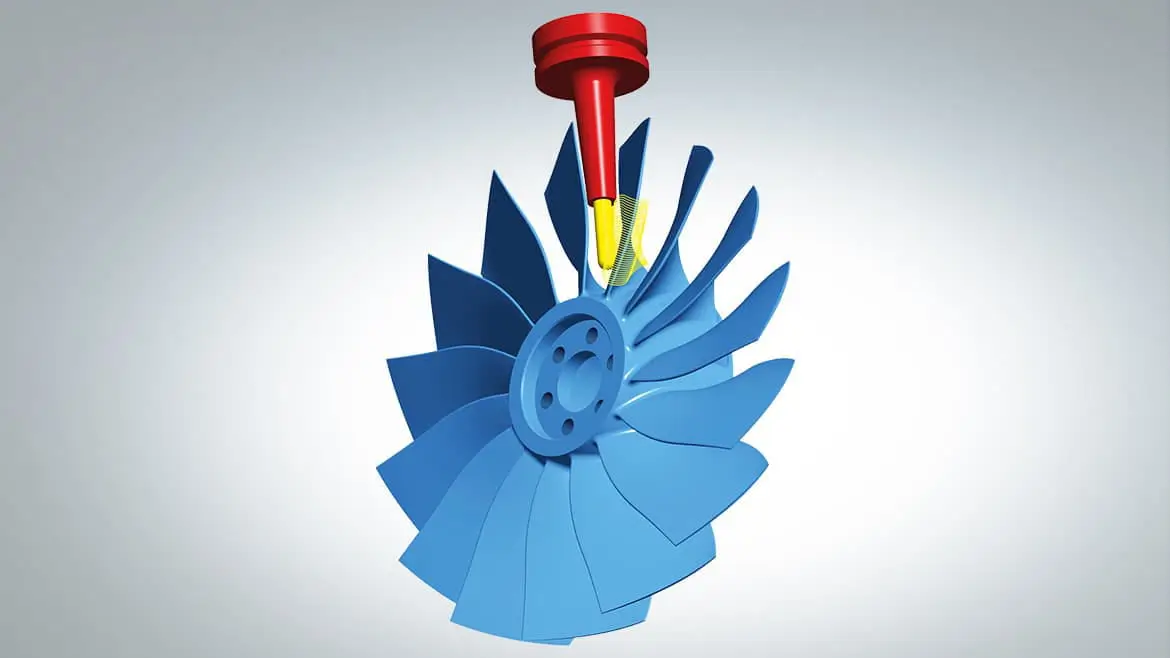
5-axis CNC machining introduces two rotational axes, allowing the cutting tool to approach the workpiece from almost any direction. This capability enables the machining of highly complex geometries, curved surfaces, and intricate aerospace or medical components with fewer setups and higher precision.
Design Guidelines for 3-Axis CNC Machining
When designing parts for 3-axis CNC machining, it is important to consider manufacturability to improve machining efficiency and ensure high-quality results. Proper design practices can reduce machining time, minimize tool wear, and help achieve better dimensional accuracy. By following several practical guidelines, engineers and designers can optimize their components for efficient production using 3-axis CNC machines.
Avoid Deep Cavities
Deep pockets or cavities can be difficult to machine because they require longer cutting tools, which may reduce stability and increase vibration during machining. Designing shallower features helps maintain better cutting performance and improves overall machining accuracy.
Maintain Proper Wall Thickness
Thin walls may deform during machining due to cutting forces, which can affect dimensional accuracy. Maintaining consistent and adequate wall thickness helps ensure structural stability and reduces the risk of part distortion.
Use Standard Hole Sizes
Designing holes with standard diameters allows manufacturers to use commonly available drill bits and cutting tools. This not only simplifies machining but also improves efficiency and reduces production time.
Minimize Complex Features
Although 3-axis CNC machines can produce many types of features, overly complex geometries may require multiple setups or specialized tooling. Simplifying unnecessary design details can make the machining process more efficient and cost-effective.
Reduce the Number of Setups
Whenever possible, parts should be designed so that most features can be machined from one orientation. Reducing the number of setups helps maintain better alignment, improves dimensional consistency, and shortens overall production time.
Applications of 3-Axis CNC Machining
3-axis CNC machining is widely used across many industries due to its reliability, precision, and cost efficiency. It is particularly suitable for producing parts with simple to moderately complex geometries, making it a common manufacturing solution for both prototypes and production components.
Electronics Industry
In the electronics sector, 3-axis CNC machining is often used to produce components such as electronic housings, heat sinks, mounting plates, and structural frames. These parts require precise dimensions and consistent quality to ensure proper assembly and thermal performance.
Automotive Industry
Automotive manufacturers frequently use 3-axis CNC machining to produce brackets, mechanical supports, and prototype components. The process allows engineers to quickly manufacture functional parts for testing and product development.
Industrial Equipment
Many components used in industrial machinery, such as base plates, frames, and structural supports, are produced using 3-axis CNC machines. The process ensures durability and precision for equipment that operates under demanding conditions.
Medical Devices
3-axis CNC machining is also used in the medical industry to produce precision components for instruments, equipment housings, and specialized devices. High dimensional accuracy and repeatability are essential for these applications.
Cost Factors of 3-Axis CNC Machining
The cost of 3-axis CNC machining can vary depending on several factors related to the design, materials, and production requirements of a part. Understanding these factors helps engineers and procurement teams make better decisions when planning manufacturing projects and optimizing part designs for efficiency.
Material Selection
Different materials have different machining properties, which can affect machining time and tool wear. For example, aluminum is relatively easy to machine, while harder materials such as stainless steel or titanium may require slower cutting speeds and specialized tooling.
Part Complexity
Parts with simple geometries can be machined more efficiently, while complex features such as deep pockets, tight tolerances, or intricate contours may require longer machining time and additional setups.
Machining Time
The total machining time directly affects production cost. Factors such as toolpath complexity, cutting depth, and required surface finish can all influence how long it takes to complete a part.
Surface Finishing Requirements
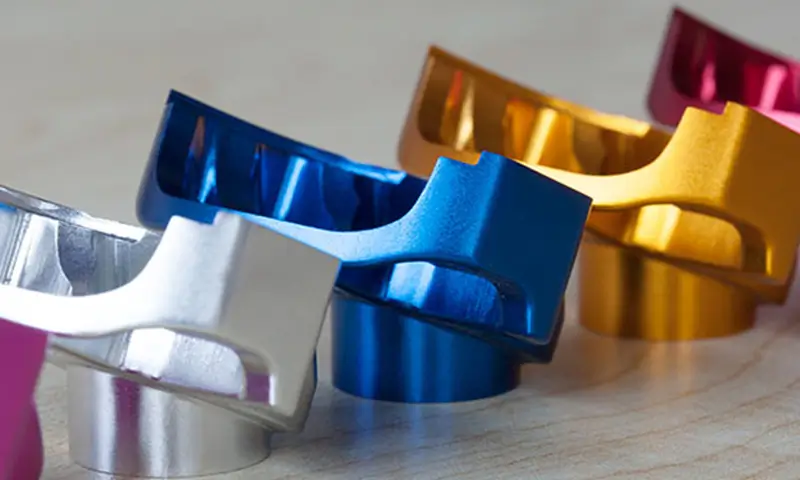
Additional finishing processes such as anodizing, polishing, or coating can increase the overall production cost. These processes are often required to improve appearance, corrosion resistance, or functional performance.
Custom 3-Axis CNC Machining Services at ZH Precision
At ZH Precision, we provide custom 3-axis CNC machining services for a wide range of precision components used in industries such as electronics, automotive, and industrial equipment. With advanced CNC milling machines and experienced engineers, we are able to manufacture parts with high dimensional accuracy and consistent quality. Our machining capabilities support various materials, including aluminum alloys, stainless steel, and engineering plastics, allowing us to meet different functional and structural requirements.
From rapid prototyping to small and medium batch production, our team focuses on optimizing machining strategies to ensure efficient manufacturing and reliable results. We also provide a variety of surface finishing options to improve the appearance, durability, and performance of machined parts. By combining engineering support, precision machining, and strict quality inspection, ZH Precision helps customers turn their designs into high-quality custom components.
Conclusion
3-axis CNC machining remains one of the most practical and widely used manufacturing processes for producing precision components. With its ability to machine a wide range of materials and create accurate parts with consistent quality, it is well suited for applications ranging from rapid prototyping to small and medium batch production. Its relatively simple setup and reliable performance make it a cost-effective solution for many industrial parts with simple to moderate geometries.
By understanding the machining process, material options, design guidelines, and cost factors, engineers and manufacturers can better optimize their components for efficient production. When applied correctly, 3-axis CNC machining provides a dependable manufacturing method for producing mechanical components, electronic housings, and other precision parts used across many industries.
Frequently Asked Questions
A:3-axis CNC machining can achieve high dimensional accuracy depending on the material, part design, and machining conditions. In most cases, standard tolerances of ±0.01 mm can be achieved for precision components. For parts requiring tighter tolerances, additional machining strategies and quality inspections may be applied to ensure the required accuracy.
A:3-axis CNC machines are capable of machining a wide range of materials, including metals and engineering plastics. Common materials include aluminum alloys, stainless steel, brass, copper, and plastics such as ABS, POM, and PEEK. The choice of material typically depends on the mechanical properties, durability, and application requirements of the final component.
A:3-axis CNC machining is best suited for parts with relatively simple geometries and features accessible from a single direction. Typical examples include brackets, mounting plates, electronic housings, heat sinks, and structural components used in machinery and industrial equipment.
A:3-axis CNC machining is the preferred option when parts have simple to moderately complex geometries that do not require machining from multiple angles. Compared with 5-axis machining, it offers lower machining costs, simpler programming, and faster setup times, making it ideal for prototypes and standard industrial components.
A:Yes, 3-axis CNC machining is widely used for rapid prototyping and low-to-medium volume production. Its relatively simple setup and programming allow manufacturers to produce functional parts quickly while maintaining high precision and consistent quality.