
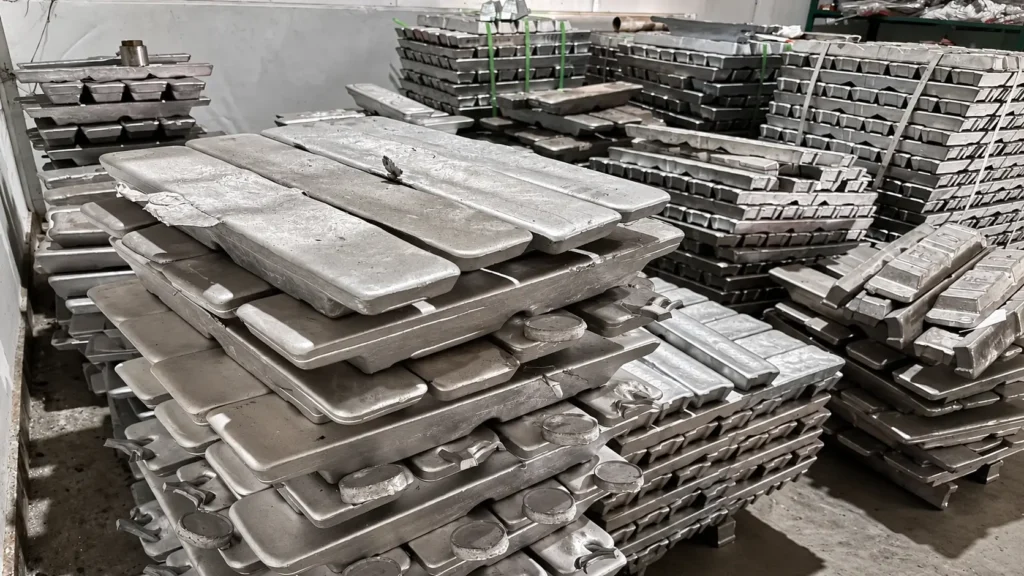
A360 Aluminum Alloy for Die Casting
A360 is an aluminum-silicon-magnesium die casting alloy used for housings, covers, and components requiring corrosion resistance and pressure tightness. Material selection considers the part’s geometry, operating environment, and mechanical requirements.
Zhonghui Precision manufactures custom A360 aluminum die casting parts from customer drawings, with tooling development, secondary CNC machining, surface finishing, and dimensional inspection to meet your specifications.
Home » Services » Aluminum Die Casting » A360 Aluminum Alloy
What Is A360 Aluminum Alloy?
A360 is an aluminum-silicon-magnesium alloy used in high-pressure die casting. Silicon supports mold filling, while magnesium contributes to strength. Its low copper content supports corrosion resistance, making it an option for components exposed to moisture and demanding service environments.
In aluminum die casting, A360 is selected for housings, covers, and fluid-handling components where corrosion resistance and pressure tightness matter. Casting integrity depends on mold design, filling conditions, and porosity control, with leak testing specified for parts that require verified sealing performance.
A360 Aluminum Alloy Chemical Composition
A360 is an aluminum-silicon-magnesium alloy with controlled copper and impurity levels. The following table lists composition limits for A360.0 die castings by weight.
| Element | Content (wt.%) |
|---|---|
| Silicon (Si) | 9.0–10.0 |
| Magnesium (Mg) | 0.4–0.6 |
| Copper (Cu) | ≤0.6 |
| Iron (Fe) | ≤1.3 |
| Manganese (Mn) | ≤0.35 |
| Nickel (Ni) | ≤0.50 |
| Zinc (Zn) | ≤0.50 |
| Tin (Sn) | ≤0.15 |
| Other Elements, Total | ≤0.25 |
| Aluminum (Al) | Balance |
A360 Aluminum Alloy Physical Properties
The physical properties of A360 support evaluation of part weight, heat transfer, and dimensional changes with temperature. The following values are typical reference data for the as-cast alloy.
| Property | Typical Value |
|---|---|
| Density | 2.63 g/cm³ |
| Thermal Conductivity | 113 W/(m·K) |
| Coefficient of Thermal Expansion | 21.0 × 10⁻⁶/K |
| Electrical Conductivity | 29% IACS |
| Specific Heat Capacity | 963 J/(kg·K) |
| Melting Range | 557–596°C |
A360 Aluminum Alloy Mechanical Properties
A360 mechanical properties provide a reference for evaluating strength, ductility, and stiffness. The values below represent separately die-cast specimens in the as-cast condition; properties in finished parts vary with geometry and casting conditions.
| Property | Typical Value |
|---|---|
| Ultimate Tensile Strength | 317 MPa |
| Yield Strength (0.2% Offset) | 170 MPa |
| Elongation | 3.5% |
| Brinell Hardness | 75 HB |
| Shear Strength | 180 MPa |
| Young’s Modulus | 71 GPa |
A360 Aluminum Advantages
Corrosion Resistance: Better corrosion resistance than A380 supports components exposed to moisture.
Elevated-Temperature Strength: Retains strength better than A380 at elevated temperatures.
Thermal Conductivity: Typical conductivity of 113 W/(m·K) supports heat transfer in housings and covers.
Hot-Cracking Resistance: Resists cracking caused by contraction during solidification.
A360 Aluminum Limitations
Mold Filling: Lower fluidity than A380 makes thin walls and intricate features more demanding to cast.
Die Soldering: Greater tendency to stick to the die than A380 requires attention to tooling and process conditions.
Anodized Appearance: Silicon content can affect color uniformity, limiting decorative anodizing results.
Pressure Tightness: Alloy selection alone does not ensure leak-free parts; porosity control and leak testing remain essential for sealing applications.
A360 vs. A380 Aluminum
A360 offers better corrosion resistance and elevated-temperature strength, while A380 provides easier mold filling and greater resistance to die soldering. Selection depends on the part’s operating environment and casting requirements.
| Selection Factor | A360 | A380 |
|---|---|---|
| Corrosion Resistance | Better | Lower |
| Elevated-Temperature Strength | Better | Lower |
| Mold Filling | More demanding | Easier |
| Resistance to Die Soldering | Lower | Better |
| Thermal Conductivity | 113 W/(m·K) | 96.2 W/(m·K) |
| Pressure Tightness | Same NADCA rating; process-dependent | Same NADCA rating; process-dependent |
A360 Aluminum Applications
A360 is a material option for die cast components where corrosion resistance, heat transfer, and elevated-temperature strength influence material selection.
Outdoor Equipment Housings: Control boxes and instrument enclosures exposed to moisture.
Pump Housings and Valve Bodies: Components with fluid passages, machined bores, and sealing surfaces.
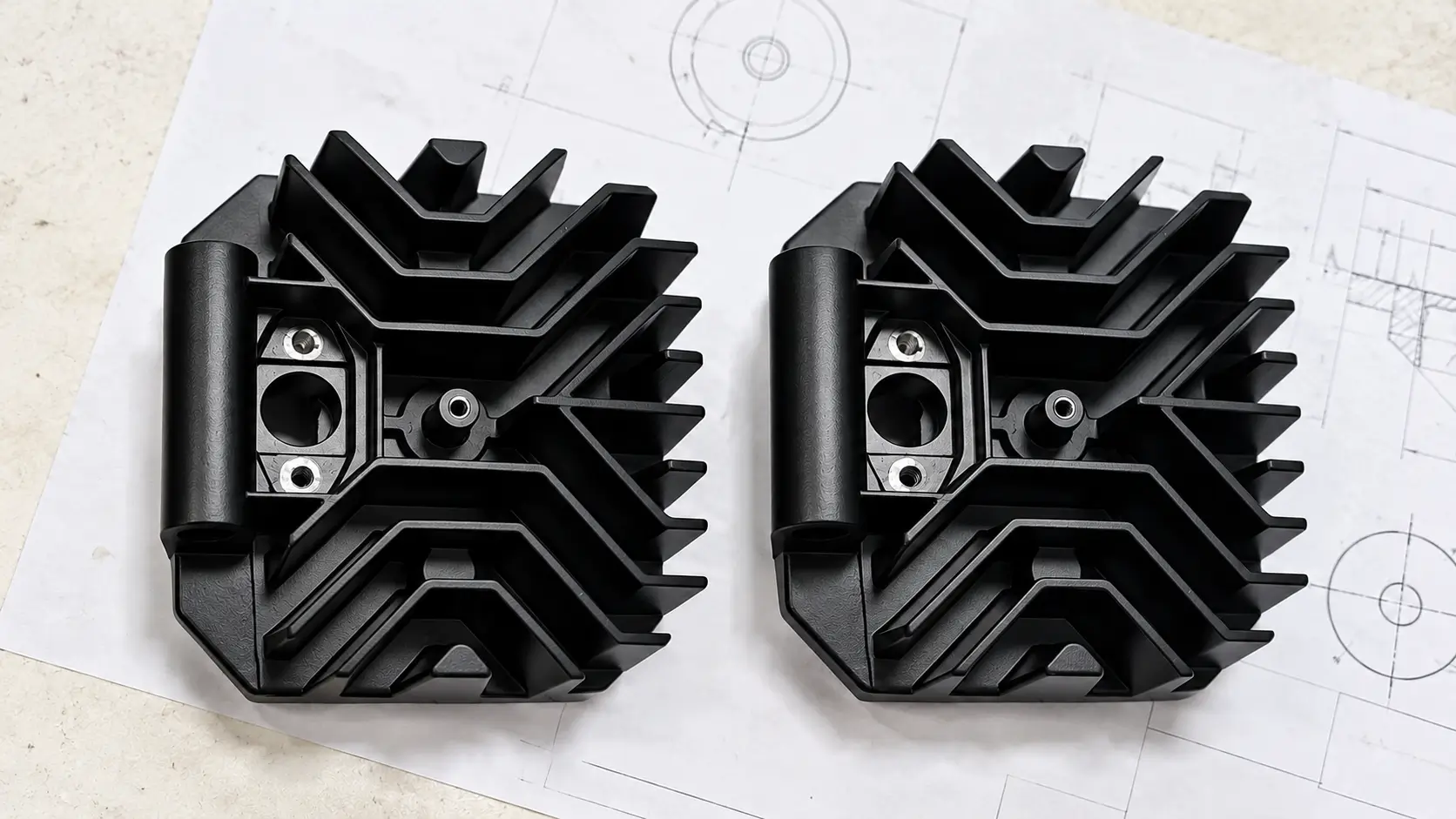
Electronic Housings: Enclosures with integrated cooling fins and mounting features.
Automotive Covers and Housings: Components selected according to operating temperature, fluid exposure, and mechanical loads.
Frequently Asked Questions
A360 offers better corrosion resistance than A380, making it an option for housings exposed to moisture. Coatings and corrosion testing should match the actual environment, particularly where salt exposure is involved.
A360 has lower die-filling capability and greater susceptibility to die soldering than A380. Thin sections and intricate features require careful gate design, temperature control, and process development.
Published NADCA data lists typical thermal conductivity of 113 W/(m·K) for A360, compared with 96.2 W/(m·K) for A380. Housing geometry, wall thickness, and the cooling arrangement also affect overall thermal performance.
No. A360 is useful when corrosion resistance or elevated-temperature strength drives material selection. A380 may be more practical when mold filling and ease of casting are the main priorities.