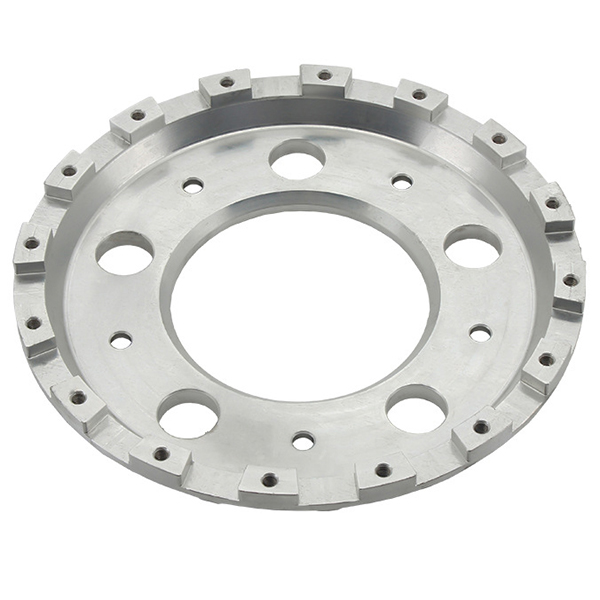
5-Axis CNC Machining Services
ZH Precision provides custom 5-axis CNC machining for complex precision parts from customer drawings and CAD files. Simultaneous 5-axis machining enables multi-sided features, complex surfaces and fewer setups.
- Factory-Direct Pricing
- Simultaneous 5-Axis Machining
- Free DFM Review
Quality Certifications
ISO 9001:2015 | IATF 16949:2016

STP | STEP | SLDPRT | IPT | PRT | SAT
All uploaded files are secure and confidential.
Trusted by companies like


5-Axis CNC Machining Capacity
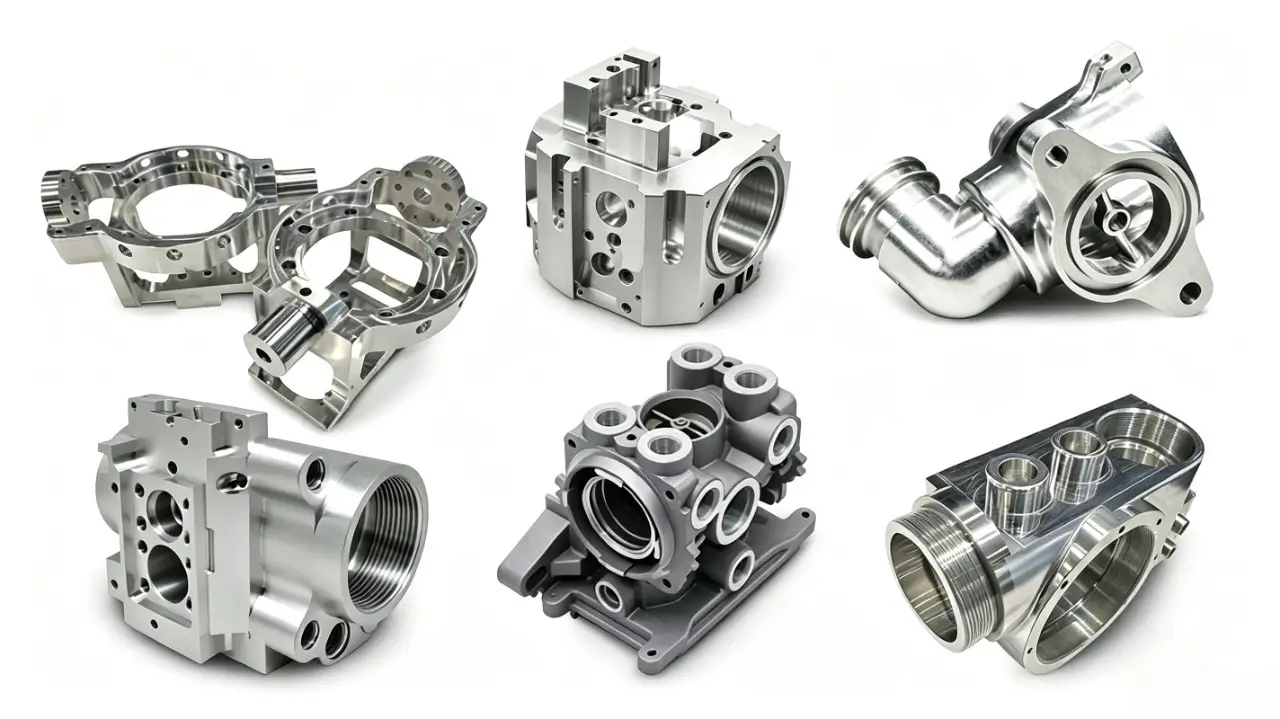
Advanced 5-axis machining supports complex components with multi-sided features, deep cavities, angled surfaces and difficult-to-reach geometries. ZH Precision uses simultaneous 5-axis machining to reduce setups and maintain accurate relationships between critical features.
Our capabilities support aluminum, stainless steel, titanium and other engineering materials for prototypes and production parts, with DFM review and CMM inspection available for demanding projects.
5-Axis Machining Process Control
5-axis machining requires precise control of part location, machining datums, tool access, surface geometry and critical tolerances. Stable setups and controlled machining strategies help maintain feature relationships and dimensional consistency on complex components.
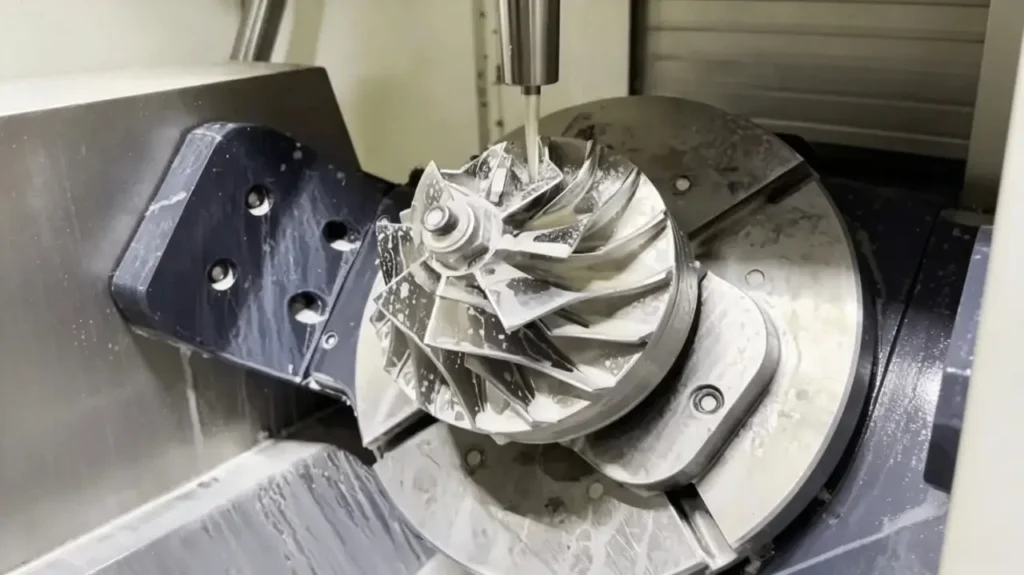
Aluminum Impeller 5-Axis Machining
Control Focus:
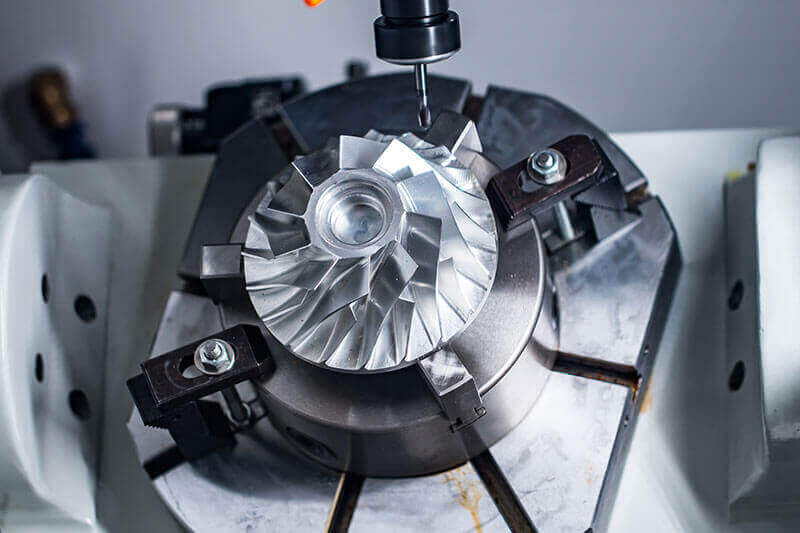
Impeller machining requires accurate control of blade profiles, hub geometry, bore dimensions and runout. These features are critical to maintaining consistent geometry and reliable performance in rotating applications.
Machining Process:
The blank is first turned to establish key reference surfaces and the center bore, followed by simultaneous 5-axis milling of the blades and flow channels. Final inspection verifies critical dimensions, blade geometry and runout against drawing requirements.

5-Axis Machining of Polyhedral Parts
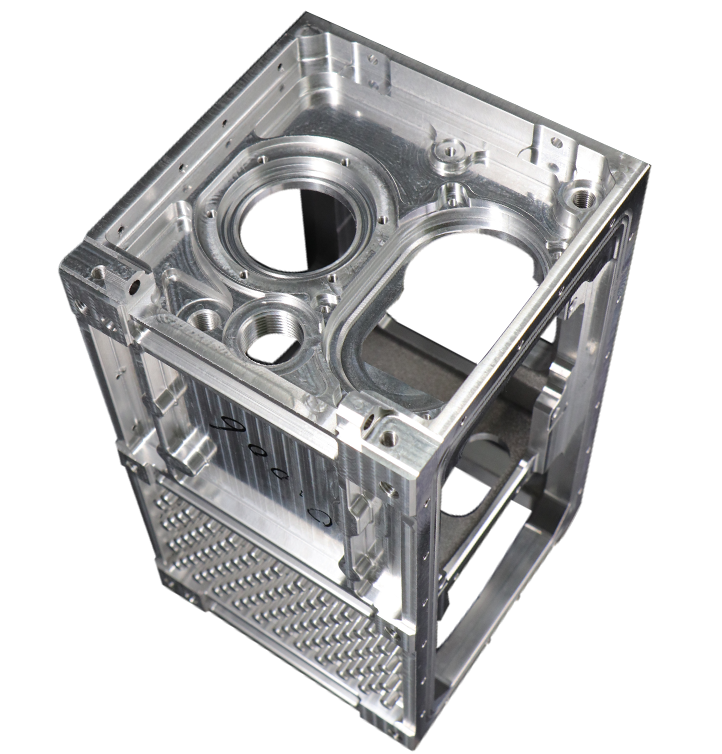
5-axis machining is well suited for components with multiple faces, angled features, cavities, contoured surfaces and difficult-to-reach geometries. Multi-directional tool access reduces repositioning and allows more features to be completed within fewer setups.
On-machine probing can be used to verify part location and critical features during machining, helping control setup variation and improve process consistency for complex precision components.

Get a 5-Axis CNC Machining Quote
Send your CAD files, material, quantity, tolerance, and finishing requirements for engineering review and a fast 5-axis CNC machining quote.
5-Axis CNC Machining Capabilities
5-axis CNC machining follows ISO 2768 general tolerance standards, with typical tolerances ranging from ±0.01 mm to ±0.05 mm. Tighter tolerances can be achieved for critical features according to part drawings, GD&T specifications, and inspection requirements.
| Title | Description |
|---|---|
| Maximum Part Size | 4000 × 1500 × 600 mm |
| Minimum Part Size | 1 × 1 × 1 mm |
| Machining Tolerances | ±0.01 mm to ±0.05 mm depending on part requirements |
| Lead Time | Standard parts: 3–7 days; complex projects based on requirements |
| Global Shipping | Delivery to North America and Europe in 5–10 days |
5-Axis CNC Machining Materials
We support customer-supplied and sourced materials for 5-axis CNC machining projects, including aluminum alloys, stainless steel, titanium, Inconel, tool steel, and brass. Material selection depends on part specifications, machining requirements, and end-use conditions.

Inconel

Tool Steel
🔍 Need help selecting the right material for your 5-axis CNC machining project? Our engineers can recommend suitable materials based on machining requirements, performance, and application conditions.
5-Axis CNC Machined Parts Surface Finish
Surface finishing options for 5-axis CNC machined parts include anodizing, bead blasting, polishing, plating, powder coating, and passivation. These processes improve surface appearance, roughness, hardness, and corrosion resistance while reducing visible machining marks.

As Machined
Standard surface finish directly produced after CNC machining, with natural tool marks and machining textures remaining on the part.
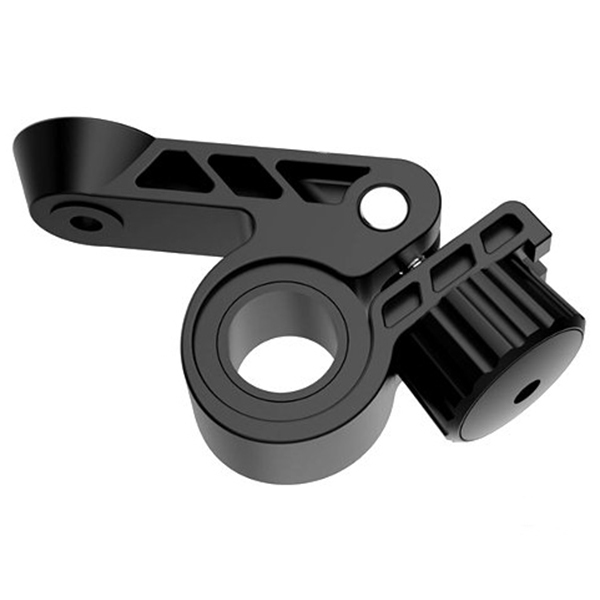
Anodizing
Electrochemical surface treatment mainly for aluminum parts, improving corrosion resistance, hardness, and surface appearance.
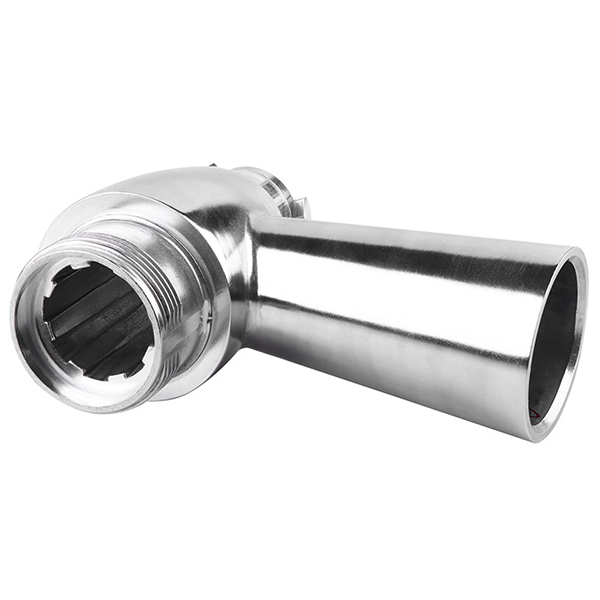
Polishing
Mechanical finishing process that smooths machined surfaces to reduce roughness and achieve a cleaner appearance.
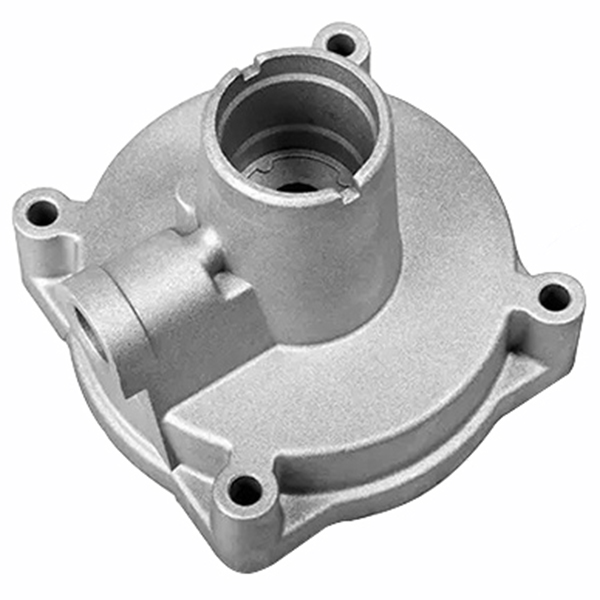
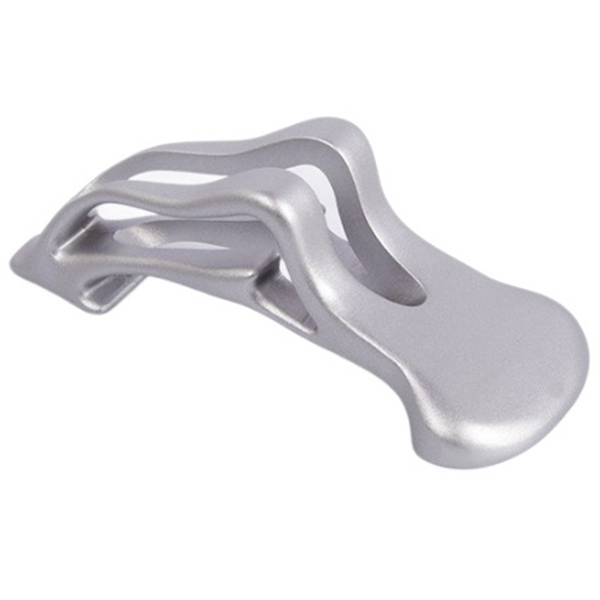
Sand Blasting
Abrasive blasting process that creates a uniform matte texture and removes minor machining marks from metal surfaces.
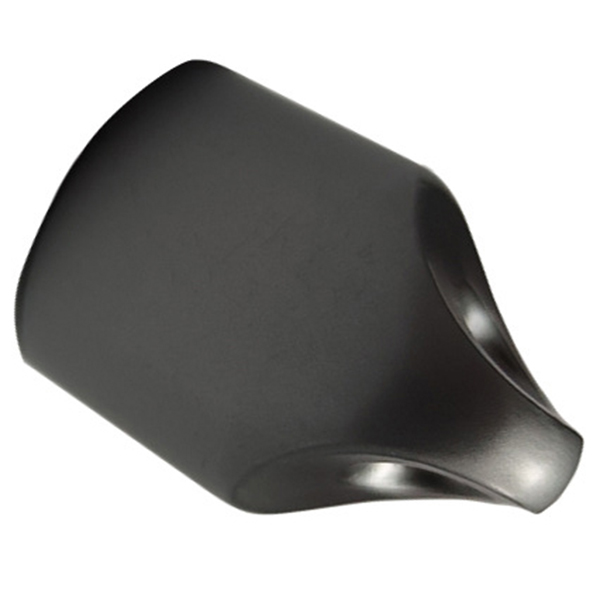
Tumbling
Mass finishing process that deburrs edges and improves surface consistency through abrasive media processing.
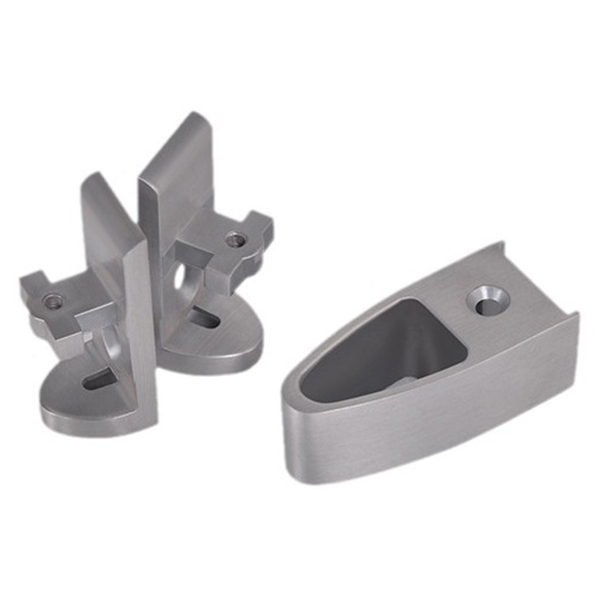
Electropolishing
Electrochemical process that removes surface material to improve smoothness, cleanliness, and corrosion resistance.
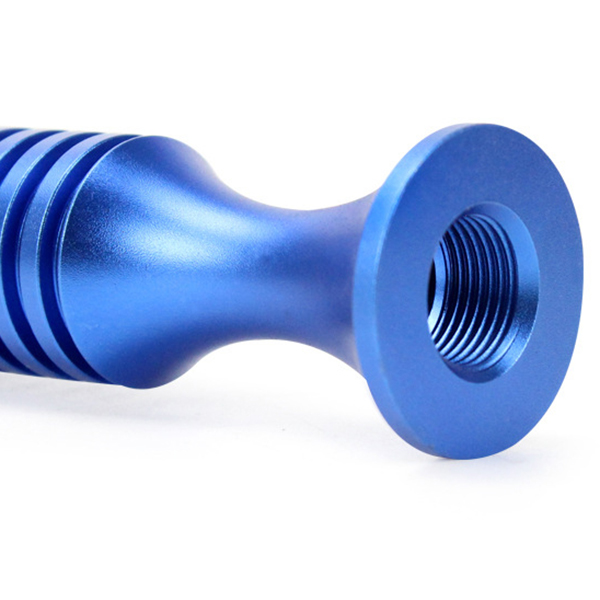
Alodine
Chemical conversion coating for aluminum parts that improves corrosion protection and provides a suitable surface for painting.
Electroplating
Metal coating process that deposits a thin protective layer to improve corrosion resistance, wear resistance, or conductivity.
5-Axis CNC Machining Design Guidelines
Proper 5-axis CNC design considers geometry, tool accessibility, feature size, wall thickness, hole design, and tolerances. These guidelines help reduce setups, improve machining efficiency, and control manufacturing costs.
| Design Guideline | Recommended Practice |
|---|---|
| Complex Geometry | Design curved surfaces, deep cavities, and multi-face features with proper tool access to fully utilize 5-axis machining capabilities. |
| Minimum Feature Size | Maintain feature sizes of 0.5 mm or larger for slots, walls, and detailed structures to ensure reliable machining. |
| Hole & Thread Design | Use standard hole sizes and thread specifications while considering tool accessibility for deep holes and internal features. |
| Wall Thickness | Maintain sufficient wall thickness to reduce deformation, vibration, and dimensional changes during machining. |
| Corner Radius | Apply suitable internal radii based on tool diameter to improve cutting efficiency and reduce unnecessary machining time. |
| Tolerance Requirements | Apply tight tolerances only where required. Standard tolerances typically range from ±0.01 mm to ±0.05 mm depending on part requirements. |
What Is 5-Axis CNC Machining?
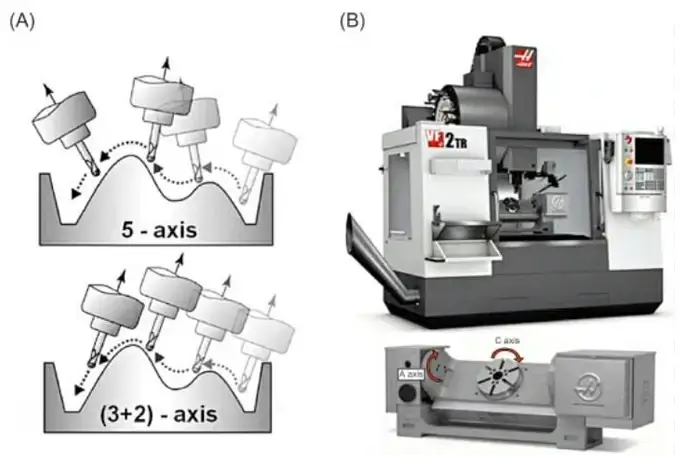
5-axis CNC machining combines three linear axes (X, Y, and Z) with two rotary axes (A, B, or C), allowing the cutting tool or workpiece to be positioned from multiple angles during machining. This configuration enables complex geometries, curved surfaces, and multi-face features to be completed in fewer setups.
By continuously adjusting tool orientation, 5-axis machining improves tool accessibility, reduces repositioning errors, and enhances machining efficiency for complex parts such as impellers, turbine components, medical devices, and aerospace structures. It delivers improved surface finishes, tighter dimensional control, and shorter production cycles for precision applications.

Simultaneous 5-Axis vs 3+2-Axis CNC Machining
Simultaneous 5-Axis Machining
Simultaneous 5-axis machining allows the X, Y, Z, and two rotary axes to move continuously during cutting, enabling real-time tool orientation adjustment. This process is ideal for complex curved surfaces, deep features, and free-form geometries that require smooth surface finishes and precise toolpath control.
3+2-Axis Machining
3+2-axis machining uses the rotary axes to position the workpiece at a fixed angle before cutting, while the X, Y, and Z axes perform the machining operation. This method improves tool accessibility, reduces setups, and provides greater cutting rigidity for multi-face parts with complex features.

Advantages of 5-Axis CNC Machining
Complex Geometries: Allows machining of complex shapes, curved surfaces, and multi-face features from different angles, reducing the need for multiple setups.
Enhanced Accuracy: Minimizes repositioning errors by reducing fixture changes, improving dimensional consistency for precision-critical features.
Improved Surface Finish: Maintains optimal tool angles during cutting to achieve smoother surfaces and reduce secondary finishing operations.
Shorter Cutting Tools: Enables the use of shorter, more rigid tools to reduce vibration and tool deflection for better machining stability.
Increased Productivity: Combines multiple machining operations into fewer setups, reducing cycle time and improving production efficiency.
Cost Reduction: Reduces setup requirements and manual adjustments, helping lower manufacturing costs for complex precision parts.
Applications of 5 Axis CNC Machining
Aerospace Components: Used for machining complex aerospace parts such as turbine blades, structural components, and lightweight precision components with tight dimensional requirements.
Automotive Parts: Suitable for producing engine components, molds, housings, and performance parts with complex geometries and multi-face features.
Medical Components: Enables precision machining of implants, surgical instruments, and medical devices requiring high accuracy and complex surface profiles.
Energy Equipment: Used for manufacturing impellers, turbine components, and other rotating parts requiring precise surface control and dynamic balance.
Industrial Machinery Parts: Supports the production of complex fixtures, housings, molds, and custom mechanical components with challenging geometries.
Frequently Asked Questions
Choose 5-axis CNC machining for parts with features on multiple faces, compound angles, curved surfaces, deep cavities, tight positional tolerances, or limited tool access. It is especially suitable when reducing setups, improving feature alignment, and maintaining accuracy are critical.
For simple flat parts, brackets, or components with features on only one or two sides, 3-axis CNC machining may provide a more cost-effective solution. The appropriate machining method depends on part geometry, tolerance requirements, material, and production needs.
5-axis CNC machining is suitable for complex components such as impellers, turbine blades, aerospace structures, medical implants, and precision mechanical parts. These parts often require multi-angle machining, curved surface processing, or strict positional accuracy that is difficult to achieve with conventional machining methods.
Standard 5-axis CNC machining tolerances typically range from ±0.01 mm to ±0.05 mm, depending on part geometry, material, machining strategy, and inspection requirements. Tighter tolerances can be achieved for critical features according to customer drawings, GD&T specifications, and application requirements.
For complex parts, 5-axis machining can help reduce overall manufacturing costs by minimizing setups, reducing fixture requirements, and shortening machining time. The cost advantage becomes more significant when multiple surfaces or complex features can be completed with fewer repositioning operations.
5-axis machined parts can be supplied with various surface finishing options, including as machined, anodizing, polishing, sand blasting, tumbling, electropolishing, Alodine, and electroplating. Surface treatments can improve appearance, corrosion resistance, hardness, and functional performance based on application requirements.