
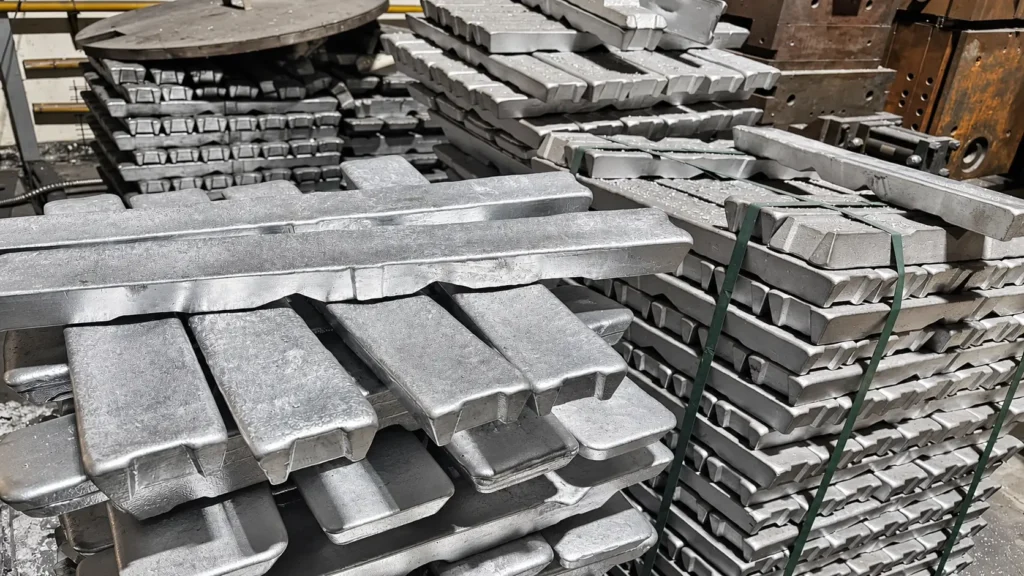
A383 Aluminum Alloy for Die Casting
A383 is an aluminum-silicon-copper die casting alloy with good fluidity and mold-filling capability. It is used for complex parts with thin sections and intricate features.
Often considered as an alternative to A380, A383 is selected according to part geometry, mechanical performance, and finishing requirements.
Home » Services » Aluminum Die Casting » A383 Aluminum Alloy
What Is A383 Aluminum Die Casting?
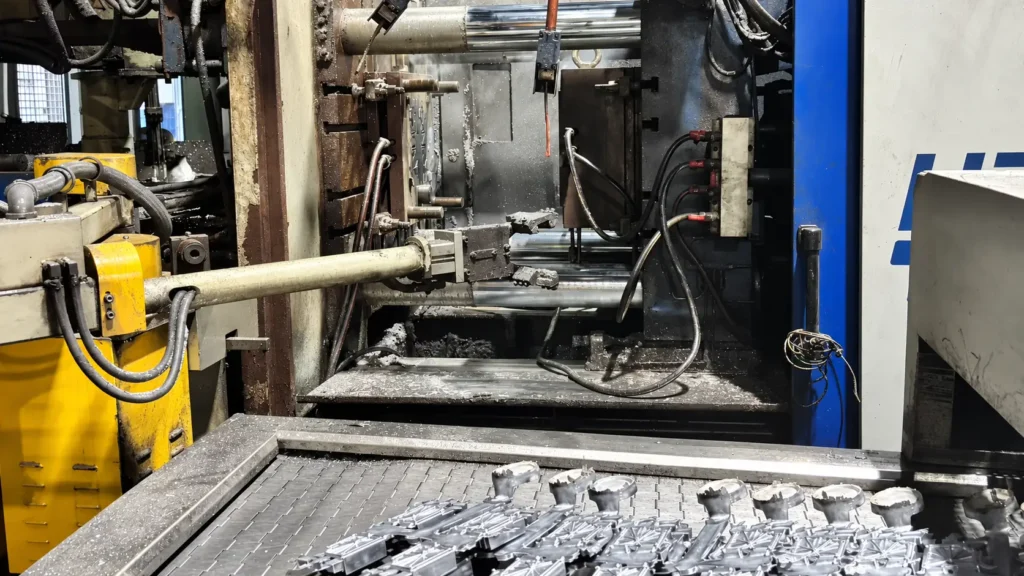
A383 aluminum die casting uses high pressure to inject molten A383 alloy into a reusable steel mold. The alloy’s fluidity helps fill intricate cavities, producing parts with ribs, bosses, thin sections, and other detailed features.
The process is used for custom housings, covers, brackets, and similar components. Functional surfaces such as precision bores, threads, and mating faces can be CNC machined after casting to meet drawing requirements.
A383 Aluminum Alloy Composition
Silicon and copper are the main alloying elements in A383. Material verification checks the specified chemical composition before production, with alloy requirements confirmed against your drawing and applicable material standard.
| Element | Die Cast Composition (wt.%) |
|---|---|
| Silicon (Si) | 9.5–11.5 |
| Copper (Cu) | 2.0–3.0 |
| Iron (Fe) | 1.3 max. |
| Manganese (Mn) | 0.50 max. |
| Magnesium (Mg) | 0.10 max. |
| Nickel (Ni) | 0.30 max. |
| Zinc (Zn) | 3.0 max. |
| Tin (Sn) | 0.15 max. |
| Aluminum (Al) | Balance |
A383 Aluminum Physical Properties
Density, thermal conductivity, thermal expansion, and electrical conductivity help assess A383 for weight-sensitive parts, heat transfer, and dimensional changes during use. The values below are typical reference data for material selection.
| Density | Thermal Conductivity | Coefficient of Thermal Expansion | Electrical Conductivity |
|---|---|---|---|
| 2.74 g/cm³ | 96.2 W/(m·K) | 21.1 × 10⁻⁶/K | 23% IACS |
A383 Aluminum Mechanical Properties
Tensile strength, yield strength, elongation, and hardness help assess A383 for load-bearing and assembly requirements. The values below are typical reference data; actual properties depend on casting conditions and part geometry.
| Ultimate Tensile Strength | Yield Strength | Elongation | Brinell Hardness | Elastic Modulus |
|---|---|---|---|---|
| 310 MPa | 152 MPa | 3.5% | 75 HB | 71 GPa |
A383 Aluminum Die Casting Characteristics
A383 offers good fluidity and mold-filling capability, making it a practical choice for parts with thin sections, ribs, and intricate features. These characteristics are useful when complex geometry makes complete filling a key material-selection consideration.
Compared with A380, A383 has a higher silicon content and lower copper content. It offers improved resistance to hot cracking, while final alloy selection also considers mechanical performance, corrosion exposure, machining, and surface finishing requirements.
Advantages of A383 Aluminum
Good Mold Filling: Supports intricate features, ribs, and thin sections.
Hot-Cracking Resistance: Offers improved resistance to cracking during solidification compared with A380.
Complex Part Integration: Allows bosses, ribs, and cavities to be combined in a single casting.
Limitations of A383 Aluminum
Limited Ductility: Requires careful evaluation for applications involving impact or substantial deformation.
Decorative Anodizing: Silicon and copper content can make a uniform decorative anodized finish difficult to achieve.
Potential Porosity: Casting porosity can affect pressure tightness and machined surfaces, requiring process control and appropriate inspection.
Typical Applications of A383 Aluminum
A383 is used for complex die cast components where mold filling and integrated features are important. Common applications include:
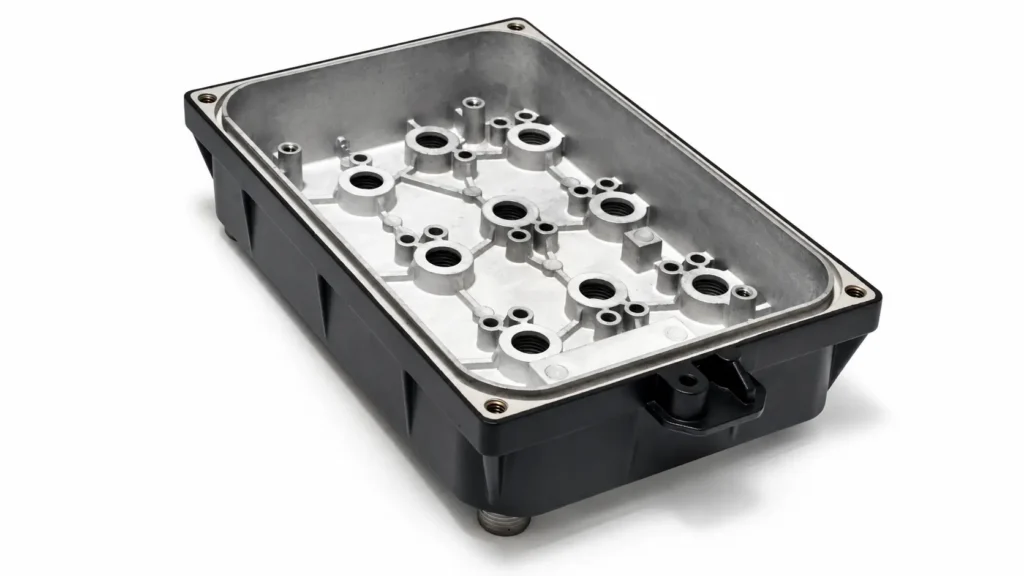
Equipment Housings: Enclosures with internal ribs, mounting bosses, and machined interfaces.
Automotive Covers: Covers and casings with detailed geometry and multiple attachment points.
Electrical Enclosures: Protective housings with cavities, cable openings, and mounting features.
Industrial Components: Brackets, bases, and covers that combine several functional features in one casting.
Frequently Asked Questions
A383 contains more silicon and less copper than A380. Its improved fluidity and resistance to hot cracking make it useful for intricate castings. Selection also depends on mechanical requirements, corrosion exposure, and surface finishing.
A383 and ADC12 are commonly compared as similar die casting alloys, but they belong to different specification systems. Confirm the required standard and chemical composition before approving a substitution.
Yes. Bores, threads, sealing faces, and other precision features can be machined after casting. Machining allowances and locating surfaces should be defined during the design review.
A383 can be anodized, but its silicon and copper content can produce a dark or uneven appearance. For consistent decorative colors, painting or powder coating may be more suitable, subject to the finish requirements.
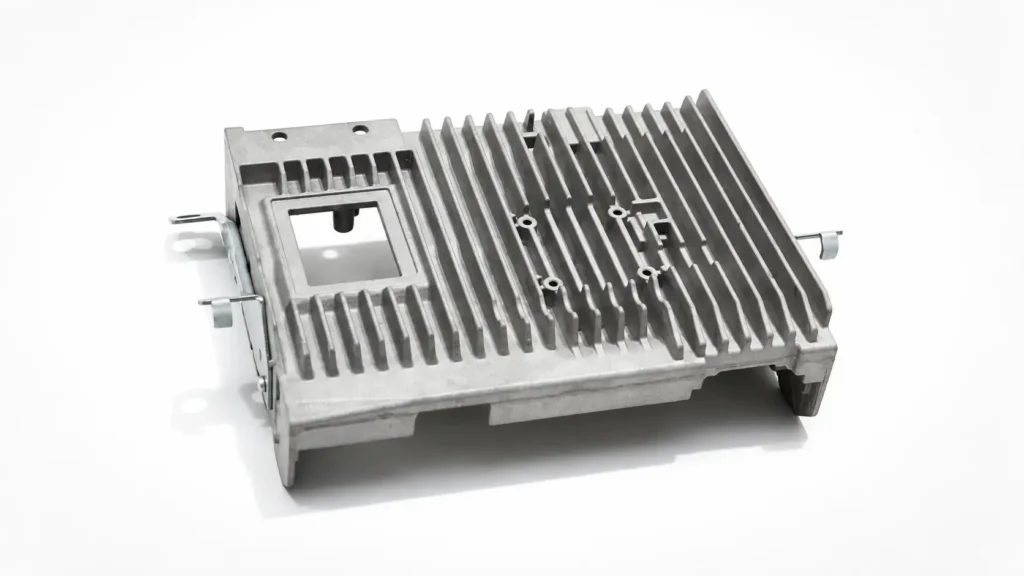
A383 can combine a housing and cooling fins in one casting. Its typical thermal conductivity is approximately 96.2 W/(m·K), so suitability should be evaluated against heat load, airflow, and allowable operating temperature.