
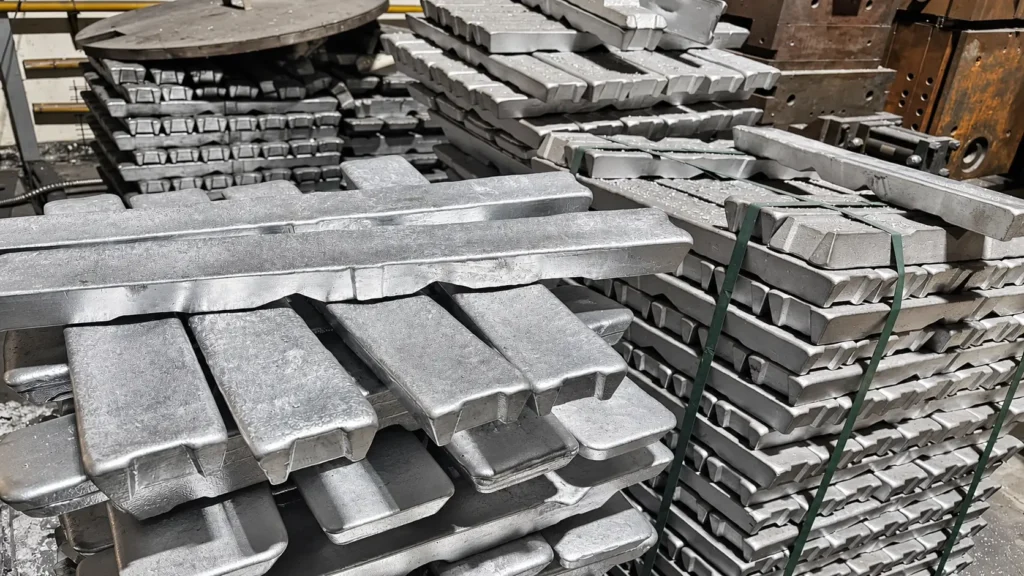
ADC12 Aluminum Alloy
ADC12 is an aluminum-silicon-copper alloy widely used in high-pressure die casting. Its good fluidity allows molten metal to fill complex molds, making it suitable for parts with thin walls, reinforcing ribs, and detailed features. It offers a practical balance of castability, mechanical performance, and machinability.
Zhonghui Precision uses ADC12 for custom die-cast housings, covers, brackets, and other components. Cast parts can undergo CNC machining for critical holes, threads, and mating surfaces, with surface finishing selected according to appearance and operating requirements.
Home » Services » Aluminum Die Casting » ADC12 Aluminum Alloy
ADC12 Aluminum Alloy Chemical Composition
Silicon and copper are the main alloying elements in ADC12. Silicon improves molten metal flow and mold filling, helping produce complex shapes and thin sections. Copper contributes to strength and hardness. Other elements are controlled to maintain the alloy’s casting and mechanical characteristics.
| Element | Content (% by Weight) |
|---|---|
| Aluminum (Al) | Balance |
| Silicon (Si) | 9.6–12.0 |
| Copper (Cu) | 1.5–3.5 |
| Iron (Fe) | 1.3 max |
| Manganese (Mn) | 0.50 max |
| Magnesium (Mg) | 0.30 max |
| Zinc (Zn) | 1.0 max |
| Nickel (Ni) | 0.50 max |
ADC12 Aluminum Alloy Physical Properties
ADC12 combines relatively low density with moderate thermal conductivity, making it suitable for lightweight housings and covers that also transfer heat. Thermal expansion should be considered when designing mating features, particularly where cast components operate across changing temperatures.
| Property | Typical Value |
|---|---|
| Density | 2.74 g/cm³ |
| Thermal Conductivity | Approximately 96 W/(m·K) |
| Coefficient of Thermal Expansion | Approximately 21 × 10⁻⁶/K |
| Electrical Conductivity | Approximately 23% IACS |
ADC12 Aluminum Alloy Mechanical Properties
ADC12 provides a practical balance of strength and hardness for die-cast housings, covers, and brackets. Its limited ductility makes it less suitable for parts that require significant bending after casting. The mechanical performance of finished components depends on wall thickness, casting conditions, and internal porosity.
| Property | Typical Value |
|---|---|
| Ultimate Tensile Strength | 310 MPa |
| Yield Strength | 150 MPa |
| Elongation at Break | 3.5% |
| Brinell Hardness | 75 HB |
| Modulus of Elasticity | 71 GPa |
Advantages of ADC12 Aluminum Alloy
Good castability: ADC12 fills complex mold cavities well, making it suitable for components with thin walls, reinforcing ribs, and detailed features.
Lightweight construction: Its low density helps reduce component weight in housings, covers, and equipment parts.
Efficient production: Features can be formed directly during die casting, reducing material removal and supporting economical batch production.
Good machinability: Holes, threads, and mating surfaces can be machined after casting to meet dimensional and assembly requirements.
Limitations of ADC12 Aluminum Alloy
Limited ductility: ADC12 is less suitable for parts that need substantial bending or deformation after casting.
Porosity considerations: Internal pores may affect sealing or become exposed during machining. Leak-tight components require appropriate process control and testing.
Decorative finishing restrictions: Anodizing may produce uneven color because of the alloy’s silicon and copper content. Painting or powder coating may be preferable for a consistent appearance.
Heat-treatment restrictions: Conventional solution heat treatment can cause blistering in high-pressure die-cast parts containing trapped gas. Its suitability must be assessed for the specific casting process.
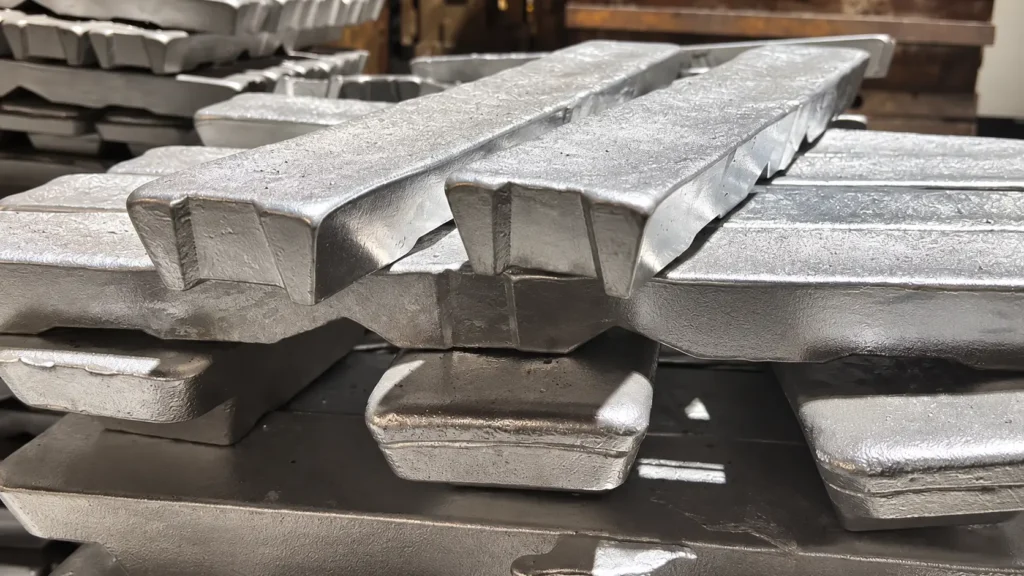
Casting and Machining ADC12 Aluminum
Cold-chamber high-pressure die casting is the main process used to manufacture ADC12 components. The alloy’s fluidity helps molten metal reach narrow sections and detailed areas of the mold, making it suitable for complex housings and covers produced in repeat batches.
CNC machining complements casting when specific features need closer dimensional control. Milling produces flat mounting and sealing faces, while drilling, boring, and tapping finish holes and threads. Turning can be used for cylindrical features where the part geometry allows.
Frequently Asked Questions
ADC12 is a Japanese aluminum die-casting alloy designation specified in JIS H 5302. It belongs to the aluminum-silicon-copper alloy family and is widely used for complex die-cast components.
No. ADC12 and A380 have different chemical composition limits. ADC12 generally contains more silicon and less copper. They should not be substituted without checking the drawing, material specification, and application requirements.
The main difference is the permitted zinc content. ADC12 allows up to 1.0% zinc, while ADC12Z allows up to 3.0%. Material certificates should identify the specified grade.
Yes. Milling, drilling, boring, tapping, and turning can be used to finish ADC12 castings. Precision bores, threads, and sealing faces are commonly machined after casting.
ADC12 can be used for sealed housings, but leak tightness depends on casting design, porosity control, and machining locations. A leak-test method and acceptance limit should be specified for the finished component.
Published values are typically reference data. Finished-part properties depend on casting conditions, wall thickness, and the test specimen. Any required minimum values and test methods should be agreed upon before production.