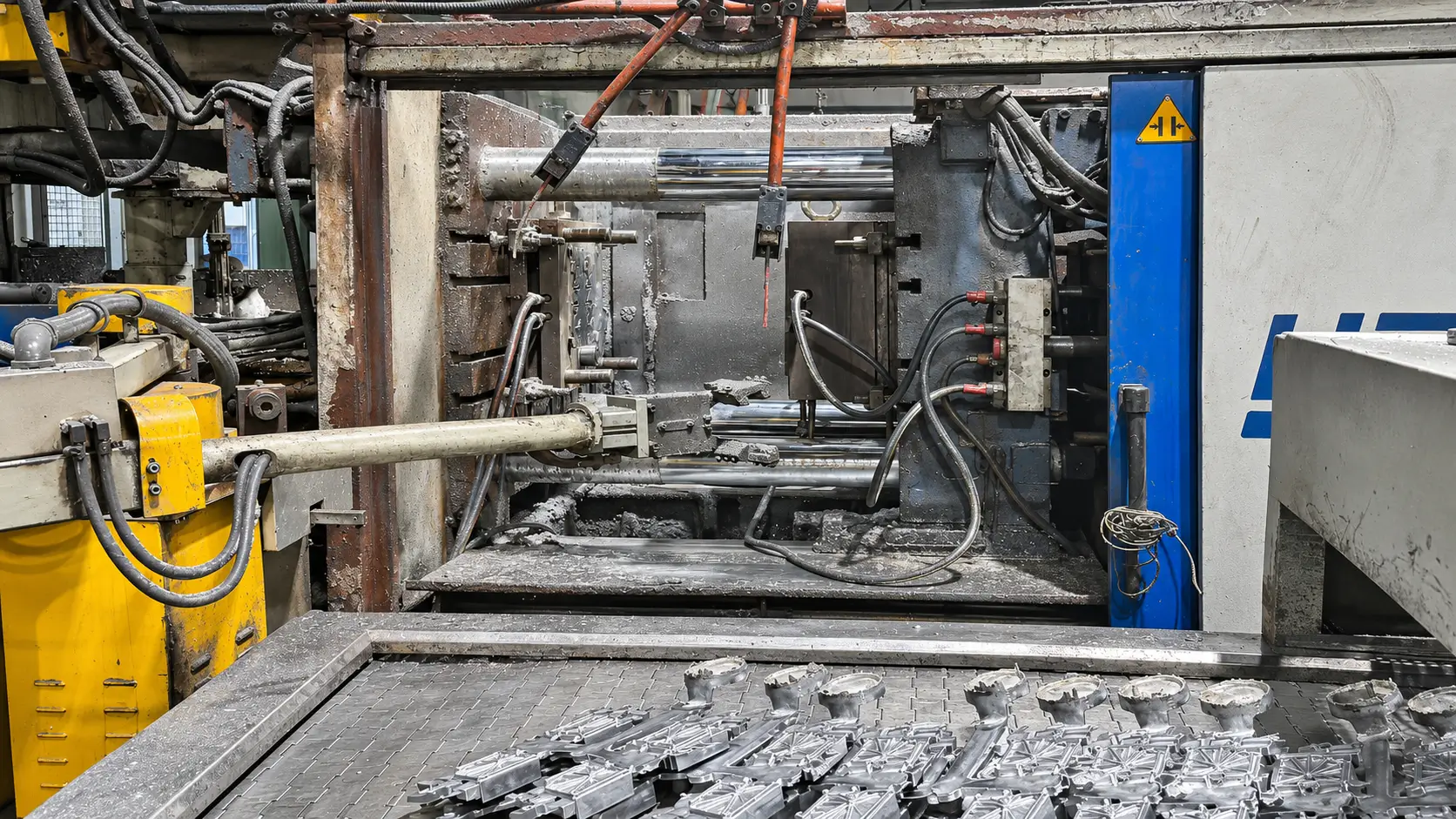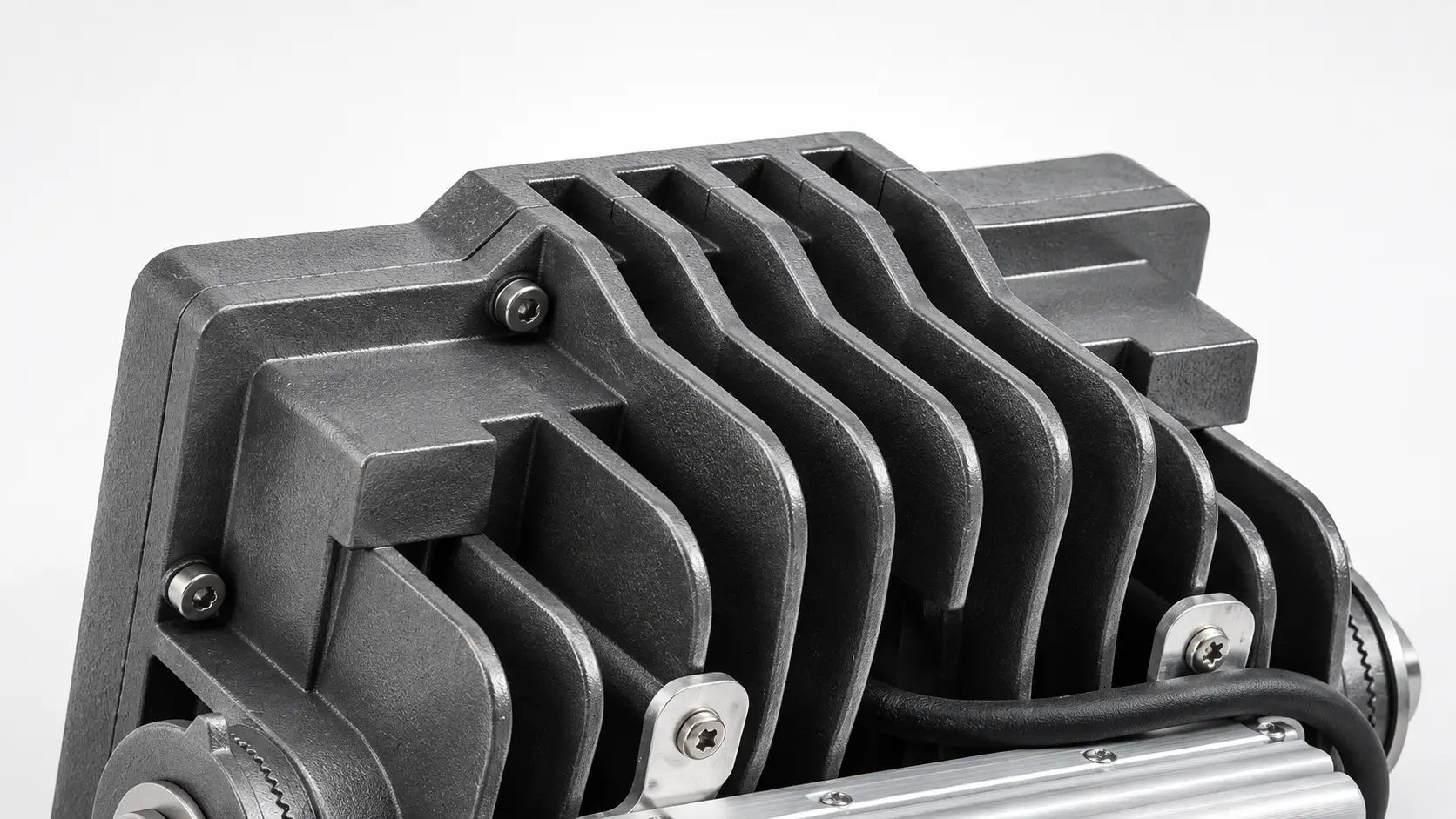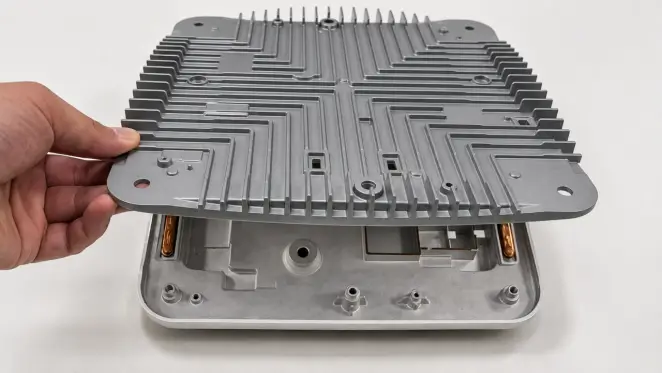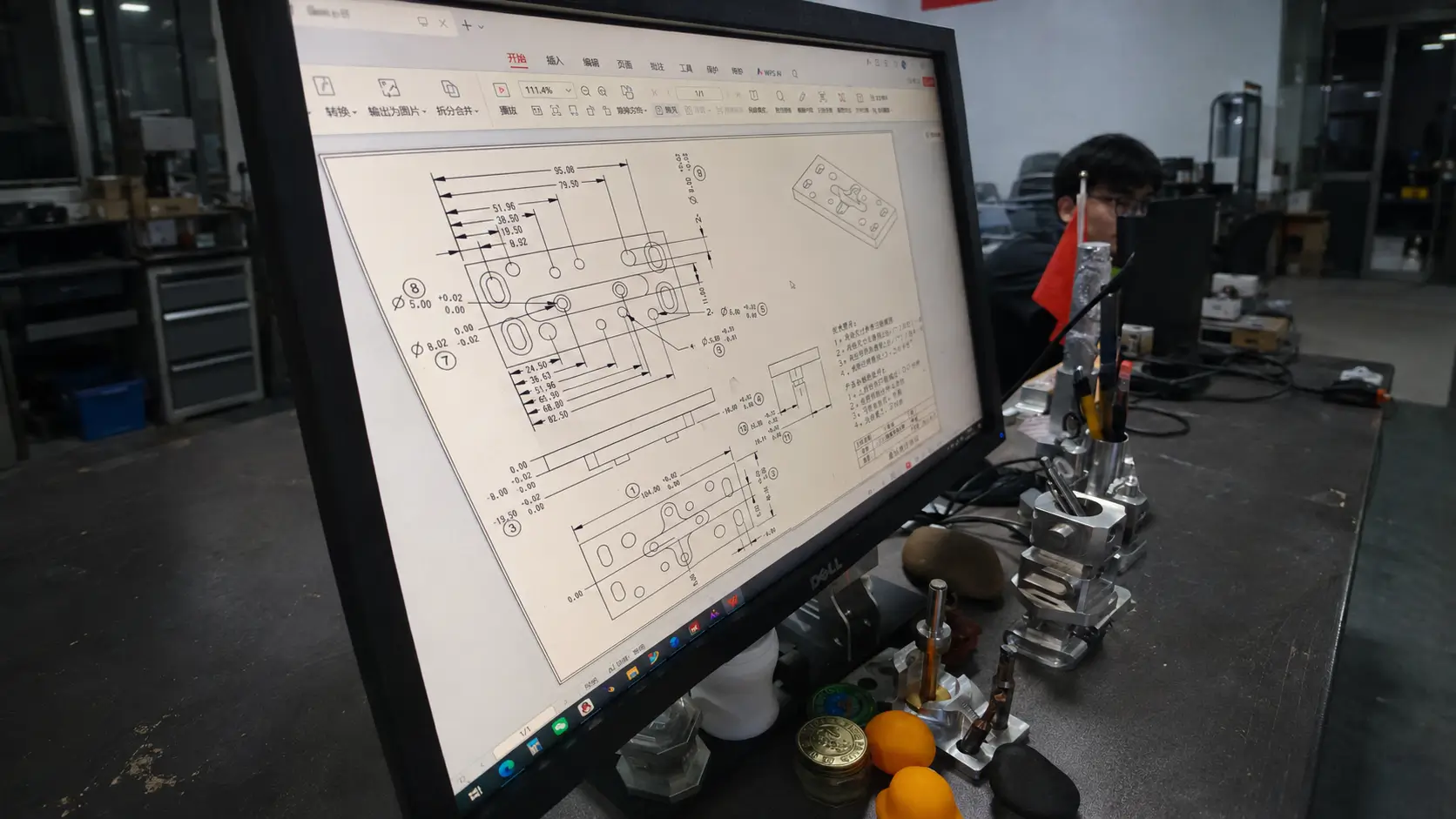

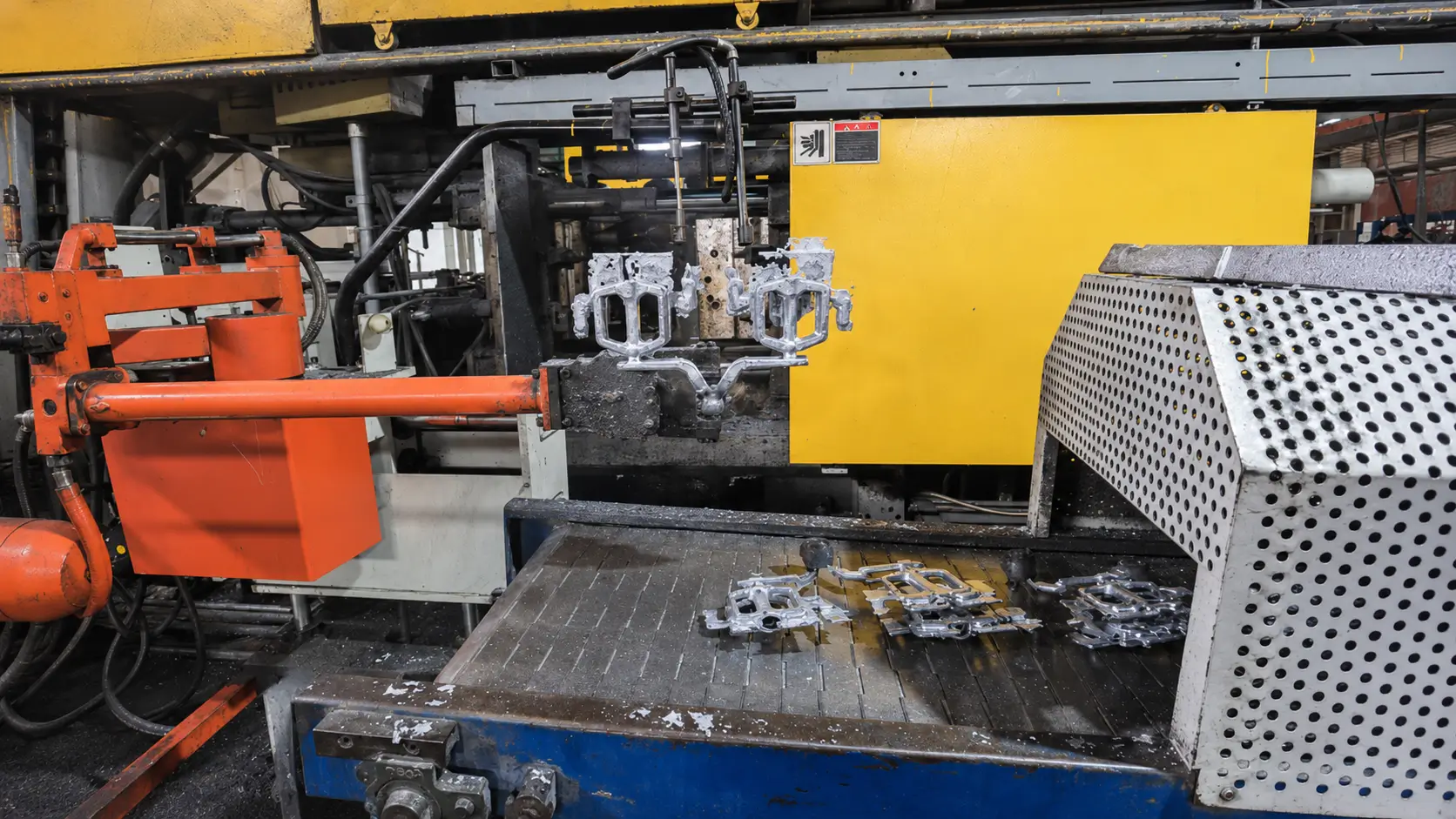
This guide explains how to calculate your first-order total and your average cost per finished part at different quantities. It then breaks down what drives tooling, casting, and finishing costs, so you can see where there’s room to reduce costs before requesting a quote and compare suppliers on the same terms.
How Is Aluminum Die Casting Cost Calculated?
To work out what your first batch of aluminum die cast parts will cost, start with three items on the supplier’s quote.
| Quote item | What it means |
|---|---|
| Tooling fee | The upfront cost of making the die that forms the part. Check whether this fee also covers initial die trials and any separate tool needed to trim excess metal from the casting. |
| Quoted unit price | What the supplier charges for one part at the quoted quantity. Check whether it covers a trimmed casting or a finished part with the machining, surface finish, and inspection you specified. |
| Separately quoted charges | Fees billed on their own, such as sample parts, a first-article inspection report, special packaging, or shipping. |
Multiply the quoted unit price by the number of parts you’re ordering, then add the tooling fee and any separately quoted charges.
First-order cost = Tooling fee + (Quoted unit price × Order quantity) + Separately quoted charges
Divide that total by the order quantity to find your average cost per part for the first order. The quoted unit price is what the supplier charges for each part. The average cost also spreads the upfront tooling fee and any other separately billed charges across the batch.
How Does Order Quantity Affect Cost per Part?
A larger order can lower your average cost per part even when the supplier’s quoted unit price stays the same. If the same die can produce the full order, the tooling fee is spread across more parts.
Suppose the die costs $6,000 and the supplier quotes $4 per finished part at all three quantities. The totals below cover tooling and finished parts. The figures are for illustration.
| Order quantity | Tooling cost per part | First-order total | Average cost per part |
|---|---|---|---|
| 1,000 | $6.00 | $10,000 | $10.00 |
| 5,000 | $1.20 | $26,000 | $5.20 |
| 10,000 | $0.60 | $46,000 | $4.60 |
At 1,000 parts, divide the $6,000 tooling fee by 1,000 to get $6.00 in tooling cost per part. Add the quoted unit price of $4.00 and the average comes to $10.00 per part.
Increasing the order from 5,000 to 10,000 parts lowers the average cost from $5.20 to $4.60 per part. The first-order total rises from $26,000 to $46,000 because you’re buying 5,000 more parts at $4.00 each. Use the first-order total to plan your budget and the average cost per part to compare order quantities.
Suppliers may also quote different unit prices at different quantities. Ask for the tooling fee and unit price at each quantity so you can see how much of the difference comes from spreading the tooling cost and how much comes from the quoted price per part.
What Drives Aluminum Die Casting Tooling Cost?
Two aluminum housings can be similar in size and still need very different molds. One may come out as soon as the mold opens. The other may have a side hole that requires part of the mold to move out of the way first. That difference changes what the toolmaker has to design, machine, fit, and test.
Part Size and Shape
A larger casting generally needs a larger mold, which can require more steel and machining. Shape changes the work involved in building the mold. For example, a side hole that runs across the direction the mold opens may need a slide. The slide holds the pin that forms the hole and pulls it sideways before the casting is removed. The toolmaker has to make and fit that mechanism so it moves freely and returns to the same position for each shot.
If the drawing allows the hole to be drilled after casting, the supplier may be able to build a simpler mold. The trade-off is that every housing then needs a drilling operation. If both methods meet the drawing requirements, compare the mold fee and the finished-part price at the quantity you expect to buy.
Number of Parts the Mold Makes at Once
A cavity is the space in the mold that forms one casting. A two-cavity mold can make two castings in one cycle. The toolmaker has to machine both cavities and lay out the channels that carry molten aluminum to them. Depending on the part size and layout, the two cavities may also need a larger mold.
Producing two parts per cycle can lower the casting cost per part. Whether that saves money overall depends on how much more the mold costs and how many parts you expect to produce. Ask for the tooling fee and unit price for each option at the same order quantity. Those two figures show how many parts you would need to buy for the unit savings to cover the extra tooling cost.
Mold Steel, Service Life, and Build Time
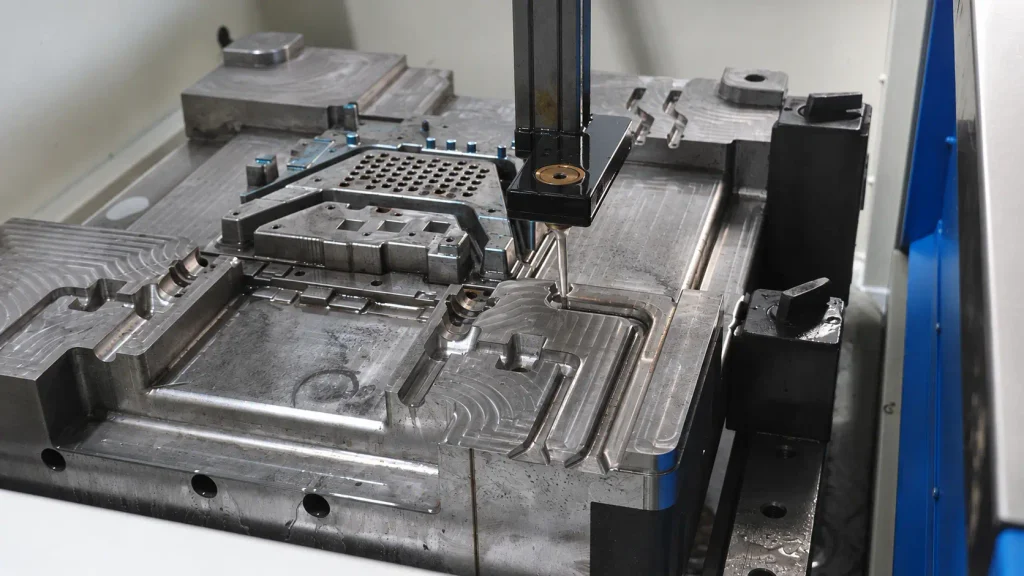
A mold intended for repeat production has to withstand repeated heating and cooling over its expected service life. The expected number of casting cycles can affect the steel grade and heat treatment the supplier specifies. When comparing mold quotes, check what service life each supplier is quoting for and whether it is stated in casting cycles or parts. A two-cavity mold can produce two parts per cycle, so those figures describe different things.
Build time also depends on the work needed to make the mold run. Cooling channels help control mold temperature. Vents give trapped air a way out. Ejector pins push the casting out after the mold opens. If the part requires extra cooling in one area or a separate insert to form a difficult feature, those details can add machining, fitting, and testing time to the mold build.
When budgeting for a new die, check which steps the tooling quote covers, from mold design and machining to trial runs and approval samples. Learn how Zhonghui Precision handles die casting mold manufacturing and what to confirm before approving a tooling quote.
Trial Runs, Samples, and Trim Tooling
Once the mold is built, the supplier runs it to produce samples and check how the part fills, releases, and measures against the drawing. The quote should make clear how many trial rounds and samples are included, and whether it covers adjustments needed after the trial. If the part design is still changing, ask how later drawing revisions would be priced.
Also check how the supplier plans to remove the excess metal attached to the casting. If the process uses a dedicated trim die, there are two charges to check. Making the trim die is an upfront tooling expense. Using it to trim each casting is a production operation that may be included in the quoted unit price.
What Drives the Cost of an As-Cast Aluminum Part?
Two aluminum housings can use the same alloy and weigh the same, yet cost different amounts to cast. One may need more metal in its feed channels, a larger machine to hold the die closed, or more time to cool before it can be removed. The cost of a usable casting comes down to how much metal and production time each cycle requires, how many acceptable parts it produces, and what work is needed to remove the excess metal.
Alloy Grade, Shot Weight, and Metal Recovery
The alloy grade sets the starting price of the metal. To estimate how much metal production uses, the supplier looks at the shot weight, which is the total amount of aluminum used in one injection. It includes the metal that forms the parts, the runners that carry metal to them, the metal collected in overflow pockets, and the biscuit, a disk of metal left at the end of the injection chamber.
A trimmed housing might weigh 400 g, while the full shot for a single-cavity die might weigh 600 g. The machine still has to melt and inject 600 g each cycle. If the supplier can recover and remelt some of the extra 200 g, that reduces the amount of fresh alloy needed. Remelting takes energy, and some metal is lost in the process. The material estimate therefore depends on the alloy price, the total shot weight, and how much metal can be recovered and reused.
Machine Size and Clamping Force
The casting machine has to hold the die closed while molten aluminum is injected under pressure. At the same casting pressure, a wider area inside the die takes more force to hold shut. Suppliers call this the projected area. Think of it as the footprint of the castings and feed channels when viewed straight along the direction the die opens.
That is why a broad, shallow cover can require more clamping force than a deeper, more compact housing of the same weight. If the wider part requires a machine with a higher hourly rate, that raises the machine cost per casting even when both parts use a similar amount of aluminum.
Cycle Time and Parts Made per Shot
A casting cycle includes closing the die, injecting the aluminum, waiting for it to solidify enough for removal, and ejecting the casting. Die spraying and part removal can also affect how soon the next cycle starts. A thick mounting boss, for example, may need extra cooling time before the housing can be ejected reliably. A few extra seconds on every cycle can reduce the number of parts the machine produces in an hour.
At 40 seconds per cycle, a machine can run 90 cycles per hour. At 50 seconds, it can run 72. With one cavity and the same hourly machine rate, the longer cycle raises the machine cost per casting by 25%, before accounting for rejects. A two-cavity die can produce two castings per cycle, so the supplier also considers how many parts each shot yields when calculating the unit price.
Rejected Castings and Cost per Accepted Part
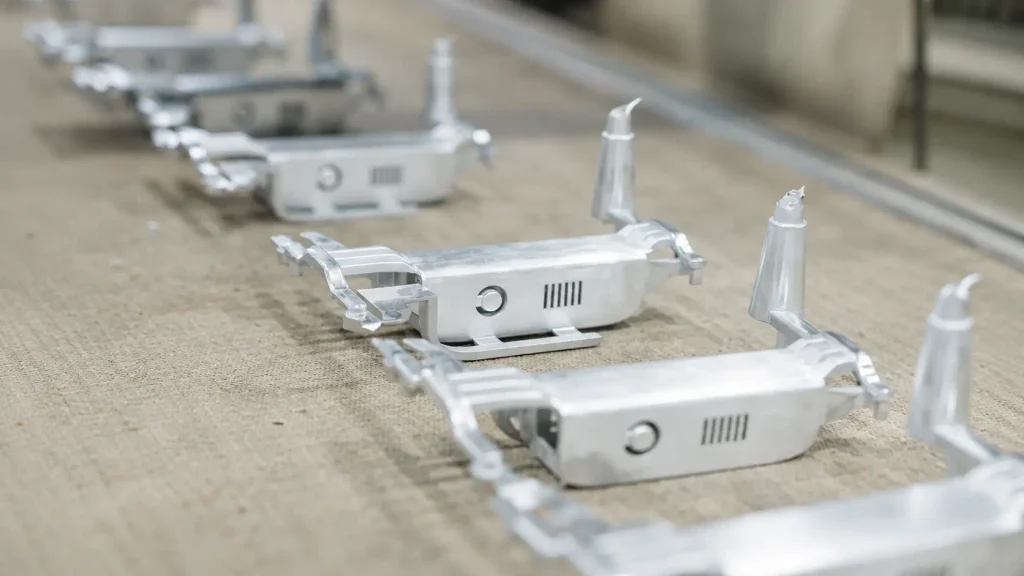
A machine can complete a cycle and still produce a part that cannot be shipped. For example, if the aluminum begins to solidify before it reaches the end of a thin rib, that rib may come out incomplete. The rejected casting may be recoverable as metal, but the machine time used to make it has already been spent.
If 100 castings come out of the die and 95 pass inspection, the cost of running those cycles has to be recovered across the 95 accepted parts. This is why the supplier estimates both the production rate and the percentage of castings expected to pass. A faster cycle saves money only if it delivers enough acceptable parts to bring down the cost per piece.
Trimming and Basic Deburring
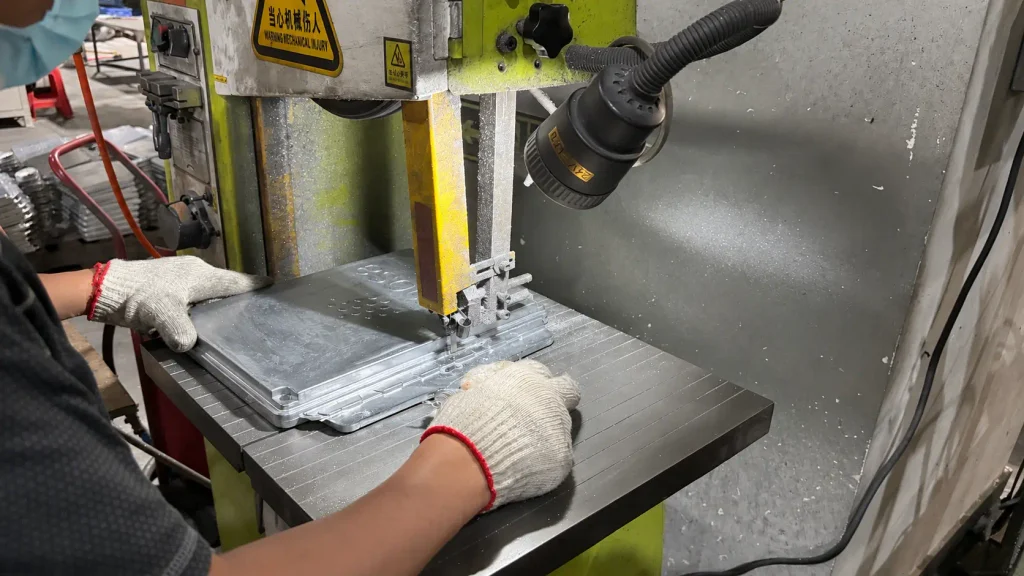
When a housing leaves the die, the runners and overflows may still be attached. They have to be removed, and thin excess metal along the line where the die halves meet, called flash, may also need to be cleaned off. A runner with an accessible attachment point can be quicker to remove than several attachments around thin edges or recessed features. The removal method and cleanup time affect the cost of each trimmed casting.
When comparing casting prices, ask whether the quoted unit price includes runner removal, flash removal, and basic deburring. If the supplier uses a dedicated trim die, confirm where its upfront cost appears and whether the trimming operation is included in the unit price.
How Do Machining, Finishing, and Inspection Affect Cost?
A housing may be ready to leave the die casting machine long before it is ready to ship. A flat face may need machining so a gasket seals properly. Threaded holes may need drilling and tapping, and a coated housing may need its threads masked before coating. These requirements add work to each part and help explain the difference between the price of a casting and the price of a finished housing.
CNC Machining and Critical Dimensions
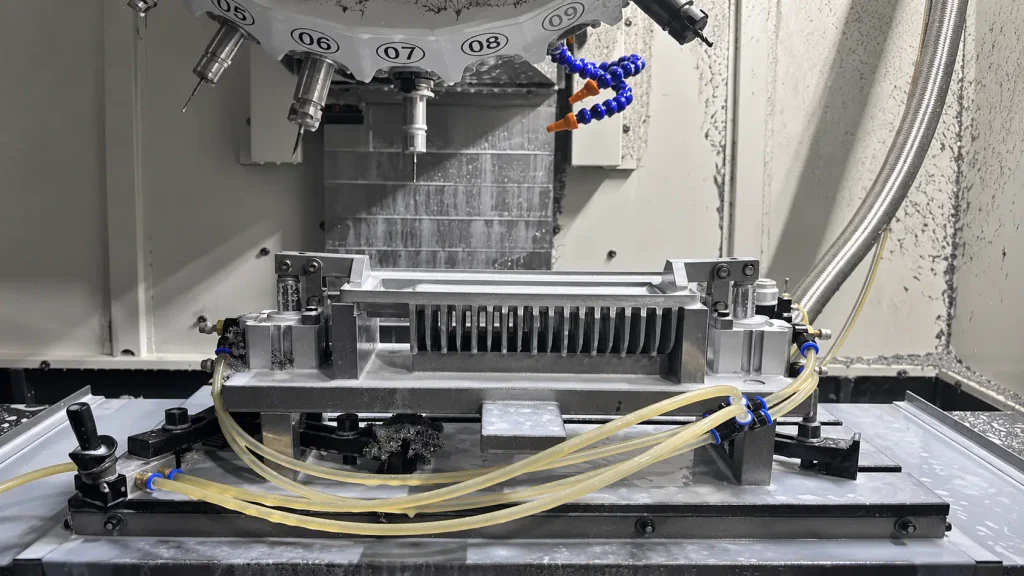
A sealing face shows how a drawing requirement turns into a machining cost. If the cast face cannot reliably meet the specified flatness, the supplier must secure the housing in a fixture and machine the face flat. If the same housing also needs mounting holes on another side, the supplier may have to reposition it to reach them. That adds handling time as well as cutting time.
When reviewing the drawing, identify which faces and holes control sealing, fit, or alignment. Specifying a tight tolerance only where the assembly needs it helps the supplier determine which features can stay as cast and which need machining.
Surface Finishing and Masking
The cost of a finish includes preparing the part and protecting areas that must remain uncoated. Take two housings with the same powder coating. One can be coated across all accessible surfaces. The other needs plugs in the threaded holes and masking over a machined grounding pad. The coating is the same, but the second housing takes more time to prepare and check.
Mark any areas that must stay uncoated on the drawing. If appearance matters only on the faces visible after assembly, identify those faces so the supplier can quote to the actual cosmetic requirements.
Inspection, Testing, and Reports
For a housing that must hold pressure, the inspection plan can change the unit price. A first-article dimensional report records measurements from initial samples. A leak test on every housing requires an operator or an automated station to seal the openings, run the test, and check the result for each part. If results must be recorded by serial number, that adds another step.
Specify what to check, how often to check it, and what records you need. For a leak test, provide the test pressure and acceptable leak rate if those requirements are defined. When comparing quotes, check whether first-article reports, routine dimensional checks, and production leak testing are included in the finished-part price or listed separately.
How to Reduce Aluminum Die Casting Cost
Start with the requirements that add cost to the quote. A side hole can add to the tooling fee. A tightly controlled surface can add machining to every part. A two-cavity die can increase the first-order budget and lower the price of repeat orders. The right change depends on which cost you need to reduce and what the part must do in service.
Review Features That Add to the Mold Cost
Ask the supplier to point out which features require extra moving parts in the mold. If a side opening is only there to provide access during assembly, for example, check whether its position or direction can change. An opening aligned with the direction the mold opens may be easier to form.
If the opening has to stay where it is, ask for two prices if both methods are feasible. One quote can cover forming the opening during casting. The other can cover drilling it afterward. Compare the tooling fee and the finished-part price at your expected quantity. A simpler mold can save money on the first order, while a recurring drilling charge can become more significant over several orders.
Limit Machining and Finishing to the Areas That Need Them
Look at the drawing one surface at a time. On a gasketed housing, the sealing face may need machining to meet its flatness requirement. The surrounding exterior faces may be acceptable as cast. If the same flatness requirement is applied across those faces, the supplier may have to machine and inspect surfaces that play no role in sealing.
Use the same approach for finishing. Mark the surfaces visible after assembly and the areas that must stay uncoated for fit, electrical contact, or another functional reason. These details let the supplier quote the preparation, masking, and inspection the part actually requires.
Match the Mold to Your Expected Production Volume
Give the supplier both your first-order quantity and your expected annual demand. The first figure helps you budget for the initial order. The second helps the supplier assess whether a mold that makes more parts per cycle could pay off over repeat orders.
If both a single-cavity and a two-cavity mold are practical, request the tooling fee and finished-part price for each. For example, if the two-cavity mold costs $4,000 more and saves $0.80 per finished part, it takes 5,000 parts for the unit savings to cover the extra tooling cost. That calculation assumes the $0.80 savings holds and both quotes cover the same finished part. Use it to decide whether the extra tooling investment makes sense at the volume you expect to buy.
How to Compare Aluminum Die Casting Quotes
When sourcing aluminum die casting parts, comparing supplier quotations involves more than checking the unit price. Differences in tooling, casting processes, CNC machining, surface finishing, and inspection requirements can significantly affect the final cost. A complete die casting quote should clearly define the scope of supply, including which manufacturing operations and services are covered. Before comparing offers, make sure all suppliers use the same drawing revision, aluminum alloy grade, order quantity, and finished-part specifications.
| What to Compare | What to Check on Each Quote |
|---|---|
| Tooling | Whether the price includes the aluminum casting die, trim die, mold trials, and approval samples. Check mold life, ownership, maintenance, and replacement costs. |
| Part and Material | Confirm the drawing revision, aluminum alloy grade, and whether the quoted price covers a trimmed casting or a fully finished part. |
| Machining and Finishing | Identify which surfaces and holes require CNC machining, what surface treatment is included, and whether masking or other secondary operations cost extra. |
| Inspection and Testing | Check the inspection methods, testing frequency, acceptance criteria, and whether dimensional reports, material certificates, or leak-test records are included. |
| Quantity and Delivery | Compare unit prices at the same order quantities. Check tooling and sample lead times, production schedules, minimum order quantities, packaging, and freight charges. |
Before comparing the total aluminum die casting cost, identify any missing operations and ask suppliers to price them separately. If one quotation includes leak testing on every aluminum housing while another treats it as optional, add the same testing requirement to both. Also separate one-time tooling costs from recurring production costs so you can evaluate the initial investment and repeat-order unit prices independently. This provides a clearer basis for understanding differences between supplier offers.
When requesting die casting quotes, provide the 3D model, 2D drawing, initial order quantity, and expected annual demand. Clearly identify critical dimensions, aluminum alloy requirements, surface finishes, testing methods, and reporting requirements. This information helps manufacturers evaluate tooling requirements, casting feasibility, secondary machining, and production costs before preparing an aluminum die casting quotation. You can submit your project details through Zhonghui Precision’s Aluminum Die Casting Services page.
FAQ
The cost depends on the size of the part, how many parts the mold makes per cycle, and whether features such as side holes require moving components. For a project-specific estimate, send the supplier your 3D model, drawing, and expected production volume. Ask for a tooling quote that states whether trial runs, approval samples, and any required trim die are included.
It can be if the design is ready for production and you expect enough repeat orders to justify the tooling cost. If the design may still change, compare the cost of making a small batch by another suitable process with the cost of building a die now. Use your first-order quantity to check how much you need to spend today and your expected total volume to judge whether the die is worth the investment.
Each production run takes time to install the die, set up the machine, and check the first castings. A supplier may set a minimum order quantity to spread that setup work across enough parts. If you need fewer parts, ask whether the supplier can quote a smaller run with a separate setup fee. That gives you a total you can compare with the cost of buying the minimum quantity.
It depends on what the supplier has quoted. A trimmed casting may still need machining on sealing faces, mounting holes, or threads. If you need a part ready for assembly, ask the supplier to identify which features will be machined and confirm that the work is included in the unit price.