
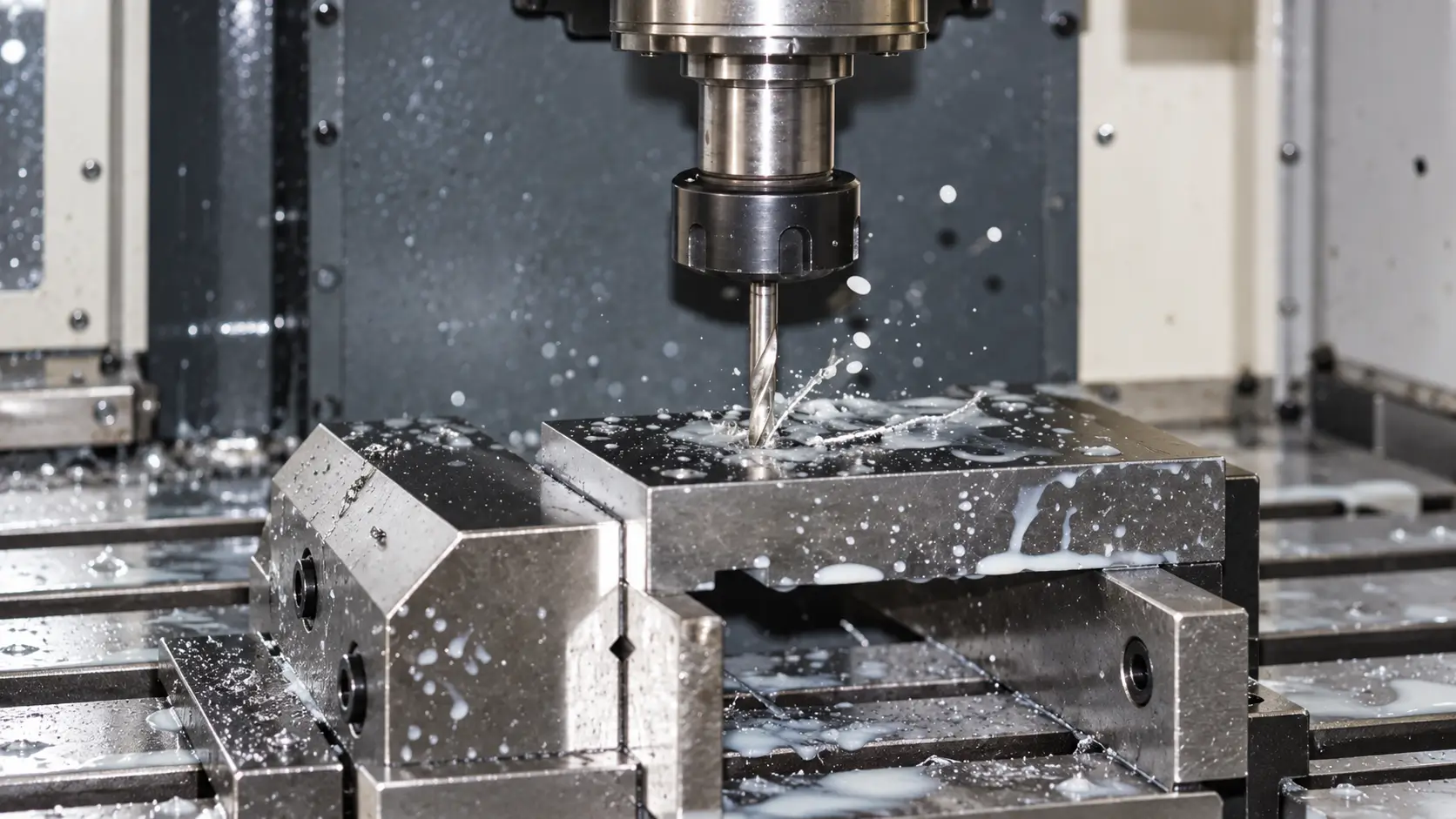
CNC drilling controls where a drill enters the workpiece and how deep it cuts. This article explains the drilling process, the operations used to finish different holes, and the tools and applications commonly involved in making CNC machined parts.
What Is CNC Drilling?
CNC drilling is a machining process that uses a rotating drill to cut round holes into a workpiece. A programmed machine controls the hole location, drilling depth, spindle speed, and feed. It can produce a single hole or a pattern of holes across a machined part.
A drilled hole may provide clearance for a bolt, form the starting hole for a thread, or prepare material for a finishing operation. When the finished hole needs a recessed screw head or a close-fitting diameter, additional operations such as counterboring or reaming follow the initial drilling.
How Does CNC Drilling Work?
CNC drilling follows a planned sequence from the part drawing to the inspection of the finished holes. The exact tools and drilling cycle depend on the material, hole size, and depth.
Step 1: Review the part design. The CAD model and drawing define the hole locations, diameters, depths, and whether each hole is blind or through. They also identify holes that will later need threads, recesses, or a close-fitting diameter.
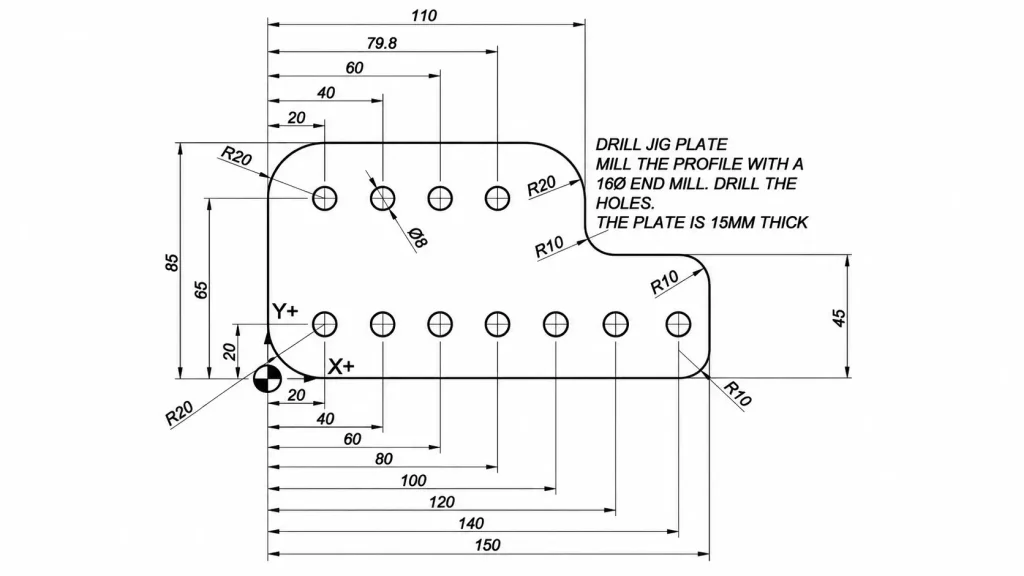
Step 2: Plan the drilling operation. The machinist selects a suitable drill, tool holder, and machining order. Hole depth and material influence the choice of cutting conditions, coolant, and chip-removal method.
Step 3: Create the CNC program. CAM software or manual programming sets the tool paths, hole coordinates, feed, spindle speed, and drilling cycles. The program also accounts for safe movement between holes and around the workholding fixture.
Step 4: Set up the machine. The workpiece is clamped, the machining datum is established, and the tools are installed. Before cutting, the operator checks the setup and confirms that the drill can reach the programmed positions.
Step 5: Drill the holes. The machine moves to each location and feeds the rotating drill into the workpiece to the specified depth. The operator monitors the cut, particularly when chip buildup, tool wear, or deeper holes could affect the result.
Step 6: Deburr and inspect. After drilling, the hole edges are deburred and the required dimensions are checked against the drawing. Holes that need tapping, counterboring, countersinking, or reaming then move to those operations.
What Are the Advantages and Limitations of CNC Drilling?
Advantages of CNC Drilling
CNC drilling can produce repeated hole patterns at programmed locations. This is useful for housings, brackets, and plates with multiple mounting holes, where the spacing between holes matters for assembly. Once the setup and program are established, the same pattern can be repeated across a batch.
On a machining center, drilling can follow milling without removing the part from its fixture. The machine can also change tools to create holes of different sizes or prepare them for tapping and other operations.
Limitations of CNC Drilling
A drilled hole does not necessarily have the diameter accuracy, roundness, or surface finish needed for a close fit. A locating pin or bearing bore may require reaming or boring after the initial hole is made.
Deeper holes are more difficult because chips must travel farther to leave the cut, while a long drill is more susceptible to deflection. The material, hole depth, and required accuracy determine whether standard drilling is sufficient or a different hole-making method is needed.
What Are the Common CNC Hole-Making Operations?
A drilled hole may be ready to use as a clearance hole, or it may need another operation to meet the part drawing. The following operations produce different finished features; they are not a fixed sequence for every hole.
Drilling
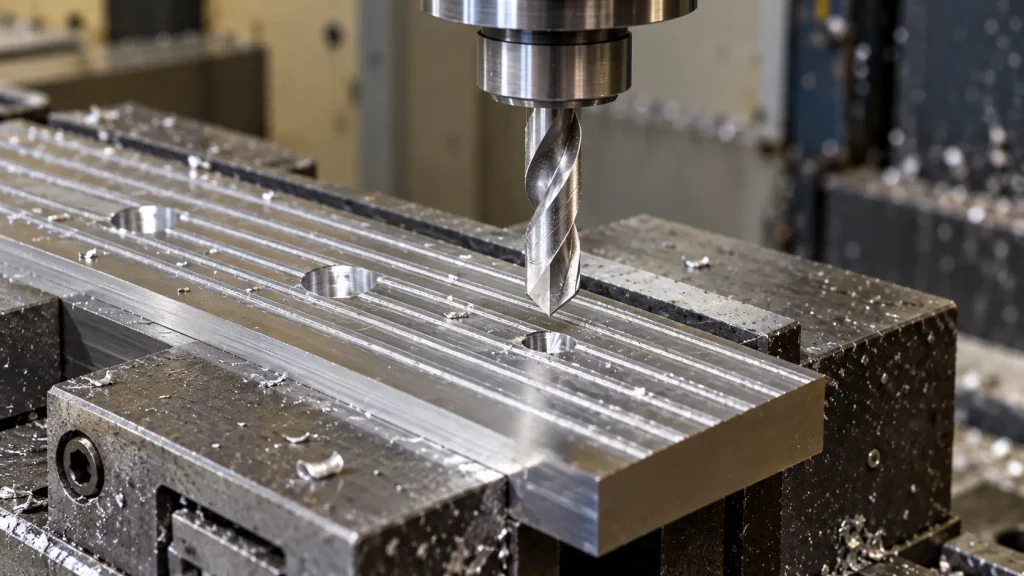
Drilling creates the initial round hole with a rotating cutting tool. A through hole passes completely through the workpiece, while a blind hole stops at a specified depth. Both can be used for fasteners or serve as the starting point for another operation.
Hole depth affects tool choice and chip removal. A deeper hole may require a different drilling cycle or tool to keep chips from building up around the cutting edges.
Tapping
Tapping cuts an internal thread into a previously drilled hole. The predrilled diameter is selected for the specified thread rather than made to the final nominal thread diameter. A small chamfer at the hole entrance can help the tap start and leave a cleaner edge.
Blind threaded holes need enough drilled depth beyond the required thread engagement for the tap to cut and clear chips. The required allowance depends on the tap and tapping method.
Counterboring and Countersinking
Counterboring enlarges the entrance of an existing hole to create a flat-bottomed recess, commonly used for a socket-head screw. Countersinking creates a conical recess for a flat-head screw. Both allow the screw head to sit within the part when the drawing calls for it.
A related operation, spotfacing, machines a small flat area around a hole to provide a suitable bearing surface for a screw head or washer. It does not necessarily recess the fastener.
Reaming
Reaming finishes a hole that has already been drilled or otherwise prepared. A multi-edge reamer removes a controlled amount of material to improve the finished diameter and surface, making it useful for holes with a specified fit, such as locating pin holes.
The pre-machined hole must leave an appropriate amount of material for the reamer. That allowance depends on the hole size, material, and tool; it should not be treated as one fixed value for every part.
CNC Machines Used for Drilling
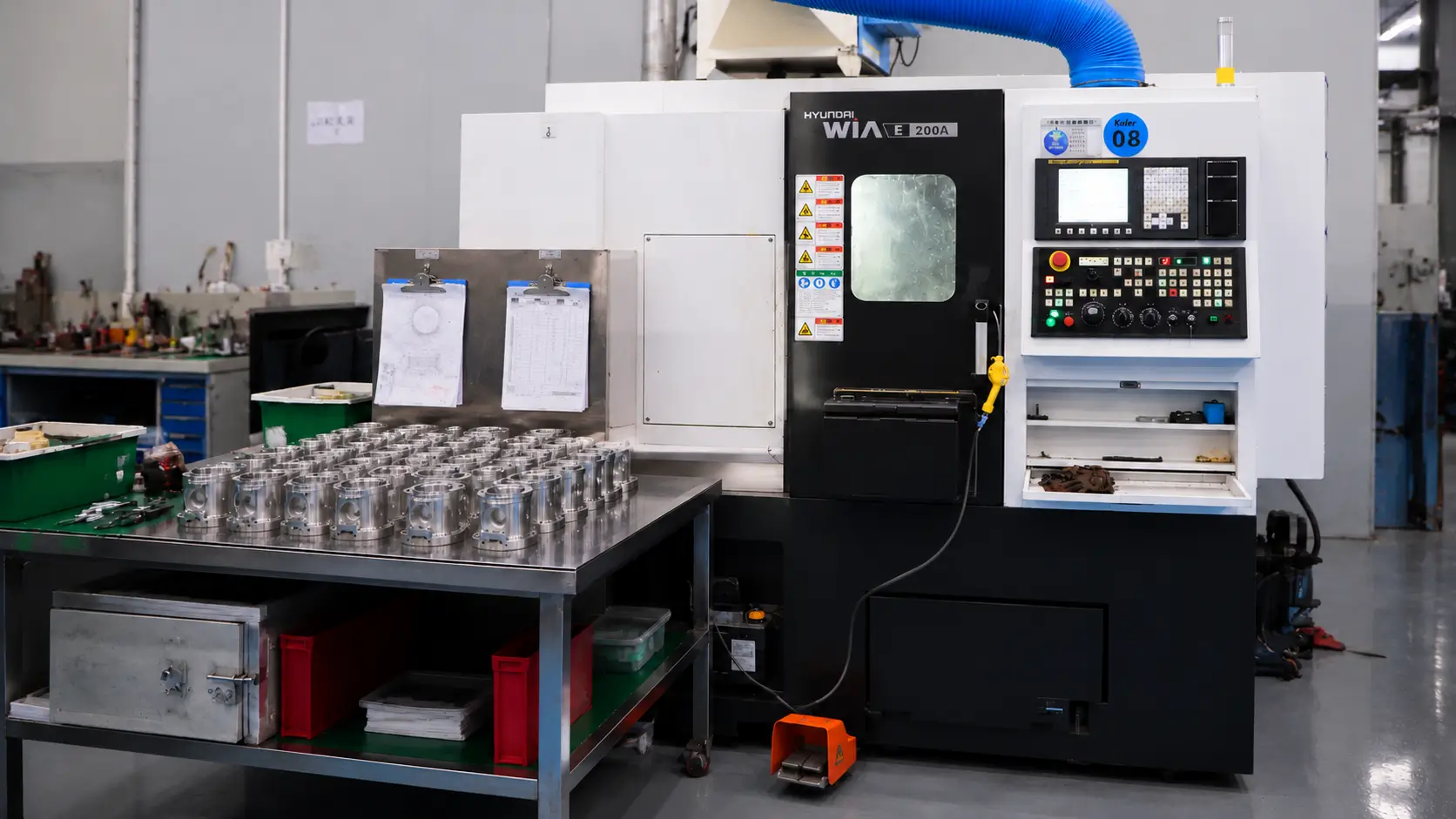
Vertical machining centers commonly drill holes on the top and accessible sides of housings, brackets, and plates. They can also mill features, tap threads, and machine counterbores in the same setup.
Horizontal machining centers provide access to different sides of a workpiece and are useful for parts with holes on multiple faces. Depending on the machine and fixture, several sides can be machined by indexing the workpiece.
Five-axis machining centers can orient the part or tool to reach holes on angled surfaces. They are useful when the hole direction cannot be approached easily with a conventional three-axis setup.
CNC drill and tap centers are designed for jobs with frequent drilling and tapping operations. Fast tool changes make them suitable for parts with many holes of different sizes.
CNC lathes drill axial holes in rotating parts such as shafts and cylindrical housings. Lathes equipped with live tooling may also drill off-center or radial holes, subject to the machine configuration.
Multi-spindle drilling machines can machine several holes simultaneously when the part design and production quantity justify dedicated tooling. Deep-hole drilling machines use specialized tools and coolant delivery for holes whose depth or straightness requirements exceed conventional drilling methods.
For large plates or structural parts, gantry drilling machines or other large-format equipment may be used when the workpiece cannot fit a standard machining center. The equipment is selected according to part size, hole direction, depth, quantity, and required accuracy.
Common CNC Drill Bits
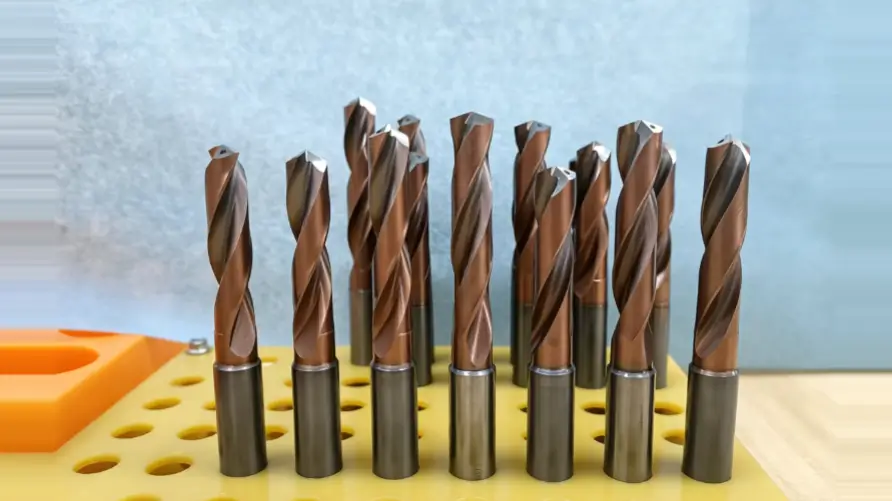
The drill bit is selected according to the hole diameter and depth, workpiece material, and the condition of the surface where drilling begins. The following tools serve different stages and types of hole-making work.
| Drill type | Typical use |
| Twist drill | Produces standard through holes and blind holes in many machined parts. |
| Spot drill | Creates a shallow starting point to help the following drill enter at the intended location. |
| Center drill | Produces a center hole, often used to support a rotating workpiece during turning. |
| Step drill | Produces holes with two or more diameters using a single stepped tool in suitable applications. |
| Indexable drill | Delivers coolant through the tool to the cutting zone, helping with cooling and chip removal. |
| Gun drill | Produces deep holes using a specialized tool and coolant delivery method for chip evacuation. |
Drill type describes the tool’s shape or function; drill material is a separate choice. High-speed steel (HSS) and carbide drills are selected according to the workpiece material, cutting conditions, and machine setup. Coatings may be specified to improve tool wear resistance in suitable applications.
Key Considerations for Effective CNC Drilling
Material and Drill Selection
Aluminum, stainless steel, and engineering plastics do not form chips or respond to heat in the same way. The drill’s geometry, material, and coating should suit the workpiece material as well as the hole diameter and depth. A long, slender drill also needs more careful support and cutting conditions than a short drill of the same diameter.
Speed, Feed, and Chip Removal
Spindle speed and feed affect how the drill cuts and how chips form. Settings that are unsuitable for the material or tool can lead to excessive heat, poor hole quality, or early tool wear. Coolant can help manage heat and move chips away from the cutting area, but its delivery must reach the cutting edge to be effective.
Chip removal becomes more difficult as hole depth increases. Depending on the tool and material, the operation may use through-tool coolant or a drilling cycle that periodically withdraws the drill to clear chips.
Workholding and Hole Accuracy
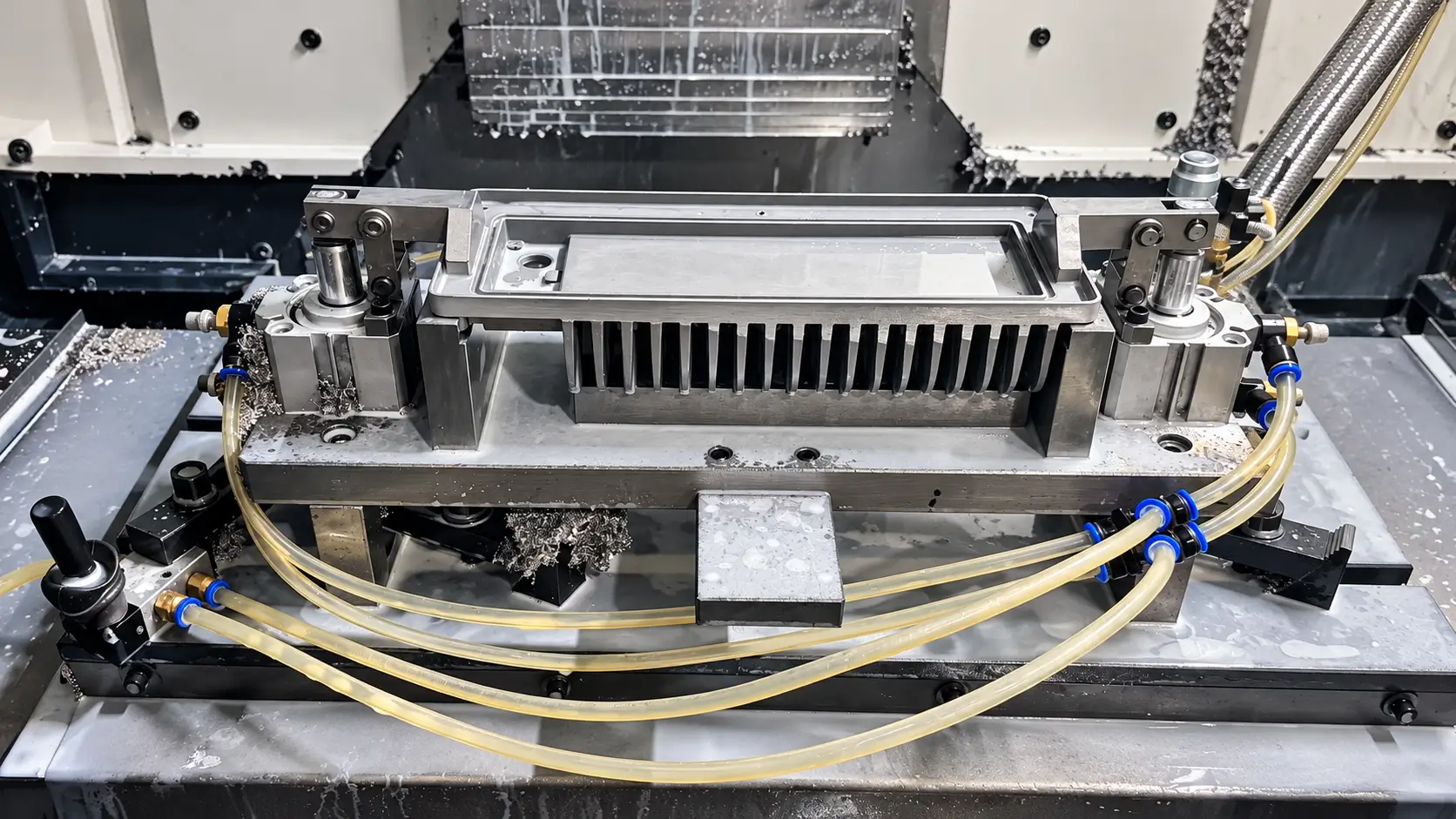
The workpiece must remain stable as the drill enters and cuts. Movement or deflection can affect hole location and quality, especially in thin sections or on angled entry surfaces. When a hole has a specified fit or strict positional requirement, the machining and inspection plan should address that requirement rather than rely on drilling alone.
Where Is CNC Drilling Used?
CNC drilling is used to make holes for fastening, positioning, and fluid flow in machined parts. A single component may contain several hole types because each one serves a different function in the finished assembly.
In housings and enclosures, drilled holes allow covers and internal components to be fastened in place. Some are tapped for screws, while others are counterbored or countersunk so the screw heads sit within the surface. Brackets and fixture plates often need repeated hole patterns for mounting, along with closely controlled holes for locating pins.
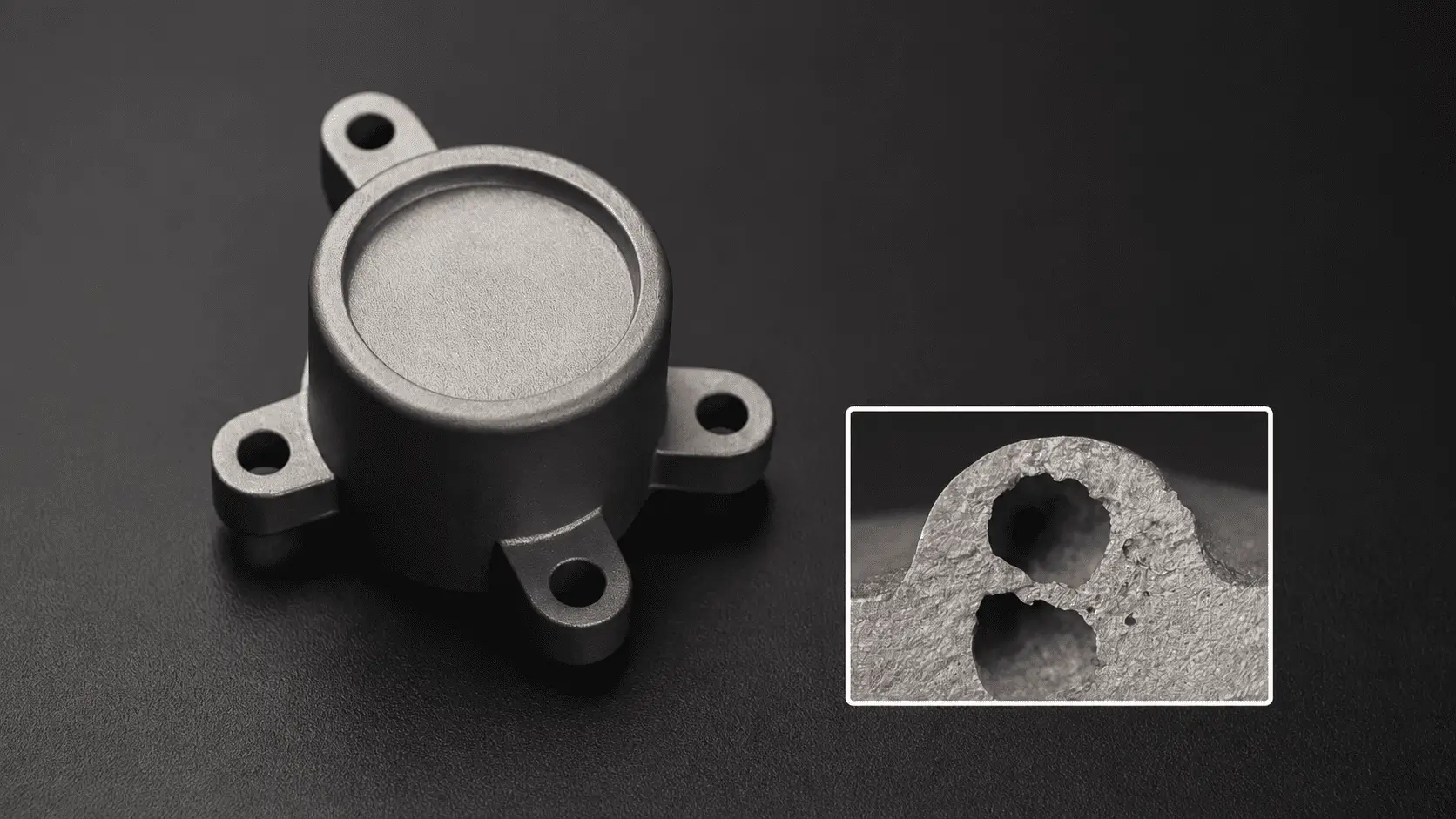
Drilling also supports shafts, manifolds, and mechanical assemblies. An axial hole may be drilled in a shaft on a CNC lathe; a manifold may need intersecting passages for air or fluid. These applications require different approaches to tool access, chip removal, and inspection, especially when a hole is deep or meets another passage.
Conclusion
CNC drilling creates holes at programmed locations and depths, from simple clearance holes to the starting holes for threads and close-fitting features. The finished requirement determines whether drilling is followed by tapping, counterboring, countersinking, or reaming.
For custom machined parts, hole diameter, depth, position, and function should be clear on the drawing. These details help determine the drilling method, any finishing operations, and how the completed holes will be inspected.
FAQ
CNC drilling uses a drill to make a round hole by feeding along the hole’s axis. CNC milling uses a rotating cutter that can move along a programmed path to create pockets, slots, surfaces, and some hole features. Both operations may be performed on the same machining center.
Drilling creates the hole needed before an internal thread is cut. A tap or another threading operation then forms the thread. The predrilled diameter depends on the specified thread size and tapping method.
Reaming may be used when a hole needs a controlled finished diameter and fit, such as a locating pin hole. An ordinary bolt clearance hole usually does not need it. The decision follows the drawing requirement.
A through hole passes completely through the part. A blind hole stops within the material at a specified depth. Blind holes require attention to drill-point depth and space for chips or any later tapping operation.
There is no single depth limit for all holes. The achievable depth depends on the hole diameter, material, drill type, machine setup, and how coolant reaches the cutting edge and chips leave the hole. Deep holes may require specialized tools or equipment.