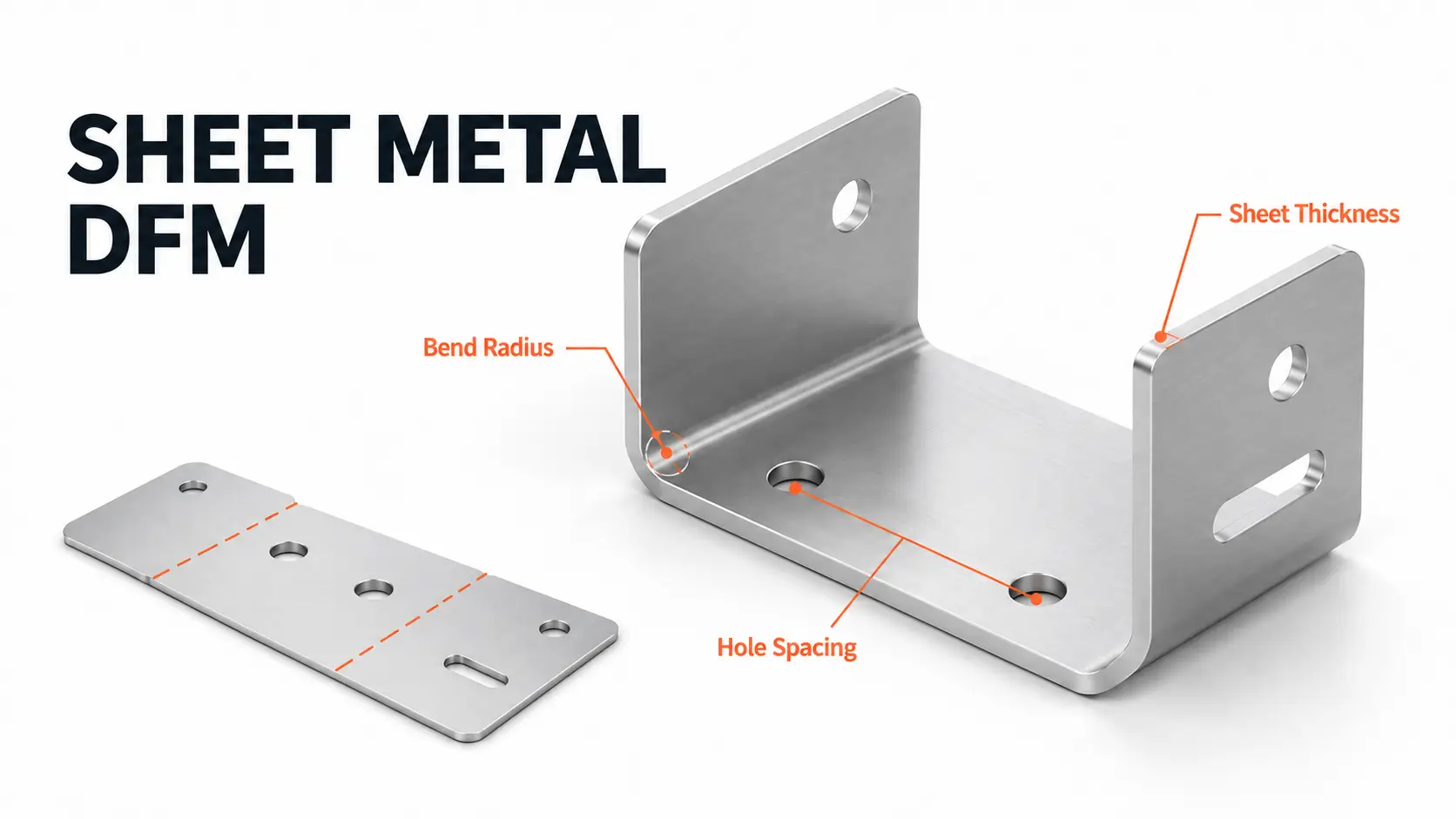

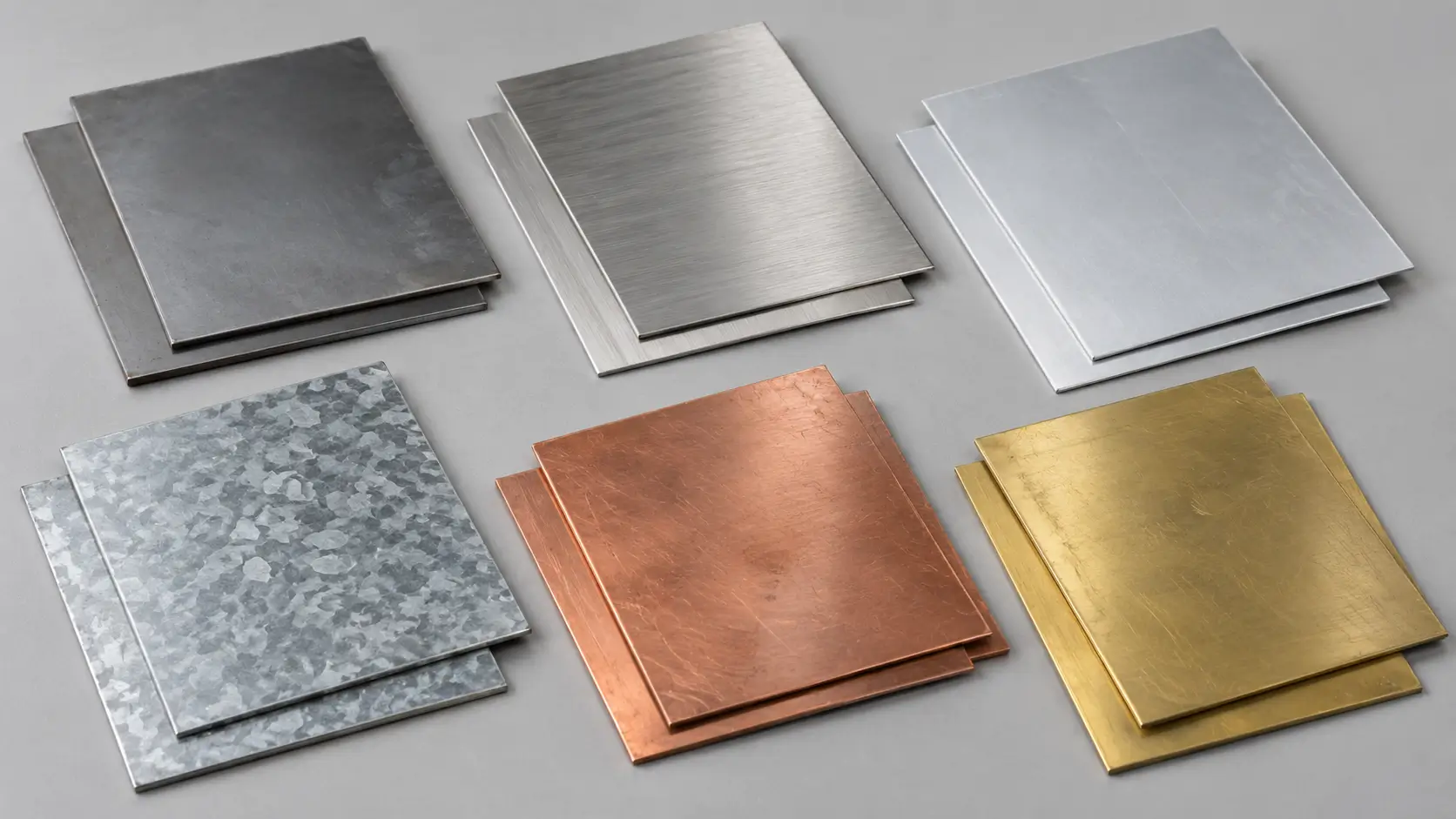
This guide explains the main types of sheet metal materials, their properties, and typical applications. It also compares their advantages and limitations to help you select a material that suits your part’s design, operating environment, and manufacturing requirements.
What Are Sheet Metal Materials?
Sheet metal materials are metals and alloys produced in thin, flat form for fabrication into parts such as enclosures, brackets, and panels. Common options include carbon steel, stainless steel, aluminum, copper, and brass. The material grade, thickness, and condition influence its strength, corrosion resistance, and behavior during cutting, bending, and welding.
These materials may also be described by their production method or surface coating. Carbon steel identifies a material family, cold-rolled describes a rolling process, and galvanized indicates a zinc coating. The terms can overlap: a carbon steel sheet may be cold-rolled and then galvanized. A material specification should therefore identify the grade, thickness, and any required condition or coating.
Common Types of Sheet Metal Materials
Carbon steel, stainless steel, aluminum, galvanized steel, copper, and brass are common choices for sheet metal fabrication. Their differences in weight, corrosion resistance, formability, and cost make them suitable for different parts and operating environments. Within each category, the specific grade and material condition also affect how the sheet bends, welds, and performs in service.
Carbon Steel Sheet
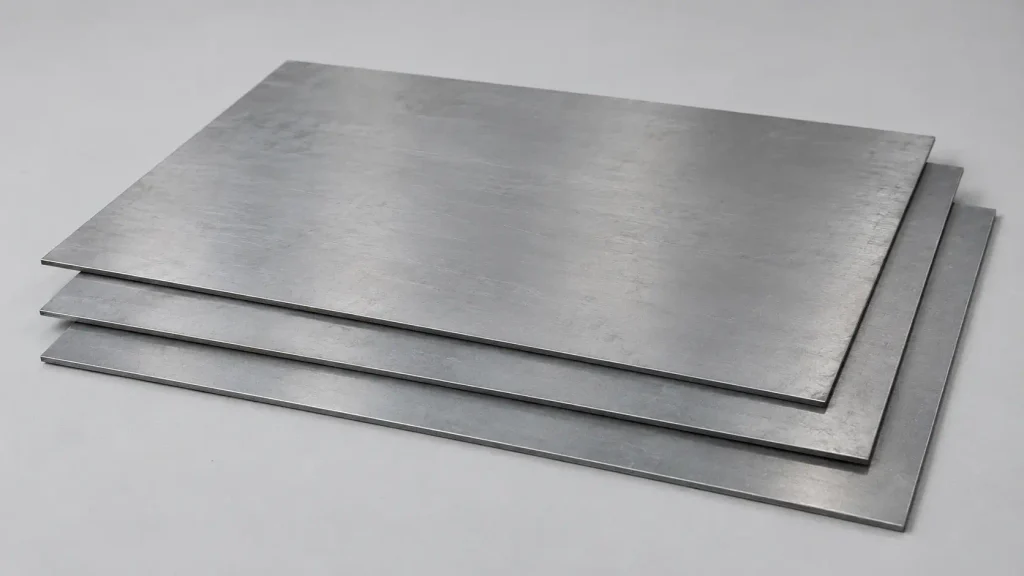
Carbon steel is widely used for industrial sheet metal parts because it offers good strength, broad availability, and relatively low material cost. Low-carbon grades are particularly common where parts require bending and welding.
Hot-rolled steel sheet typically has a scaled surface and is often selected for supports, structural brackets, and welded components where surface appearance is less important. Mill scale may need removal before painting or coating.
Cold-rolled steel sheet generally offers a smoother surface and tighter thickness control. It is commonly used for cabinets, control panels, equipment enclosures, and parts with more demanding surface requirements.
The grade matters as much as the supply form. “Cold-rolled steel” alone does not specify strength or forming performance, so drawings should identify the required grade or material designation. Bendability also depends on material condition, thickness, rolling direction, and inside bend radius.
Bare carbon steel can rust in humid or outdoor environments. Painting, powder coating, plating, or galvanizing may provide the required protection, but surface preparation and surface finishing add to the finished-part cost.
Choose carbon steel when strength and cost are priorities, and the part can receive suitable corrosion protection where needed.
Stainless Steel Sheet
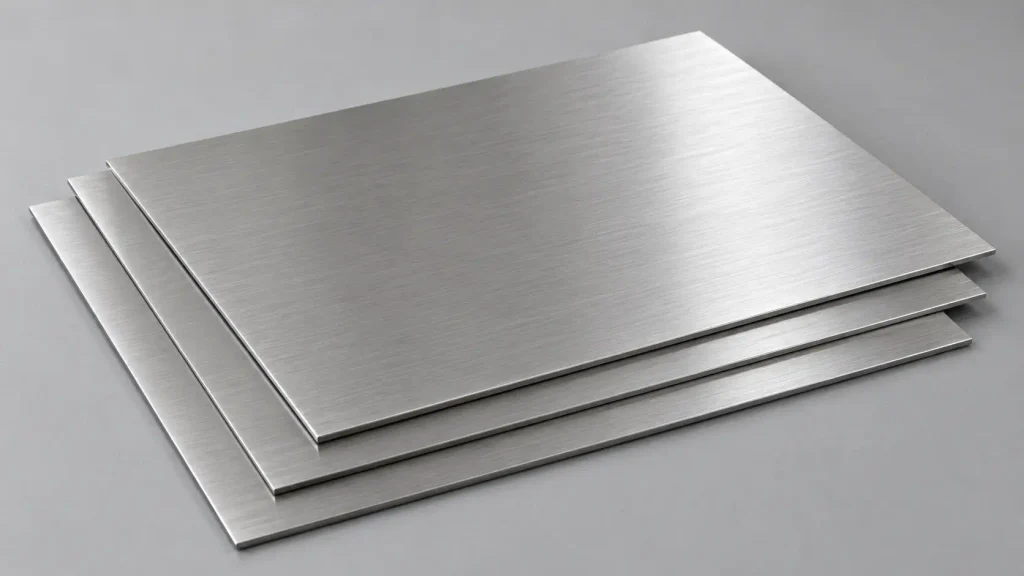
Stainless steel is commonly selected for sheet metal parts that need corrosion resistance without a painted or plated finish. Typical applications include food-processing equipment, instrument housings, panels, and brackets exposed to moisture or frequent cleaning.
304 stainless steel is a common general-purpose choice. It offers good corrosion resistance, formability, and weldability, making it suitable for many indoor enclosures and fabricated components.
316 stainless steel contains molybdenum, which improves resistance to chloride-related corrosion compared with 304. It is often considered for coastal environments and parts exposed to salt or certain chemicals, although it typically costs more and is not immune to corrosion.
During fabrication, stainless steel work-hardens and can require greater bending force than mild steel at the same thickness. The grade and condition affect springback and the achievable bend radius. Welding may leave heat tint that requires removal to restore corrosion resistance around the joint.
ZH Precision supports custom stainless steel sheet metal parts with laser cutting, CNC bending, welding, brushing, polishing, passivation, and electropolishing. Share your drawings and surface finish requirements to discuss suitable processes and request a quote.
Choose stainless steel when corrosion resistance, cleaning requirements, or an exposed metal finish justify the additional material and fabrication cost.
Aluminum Sheet
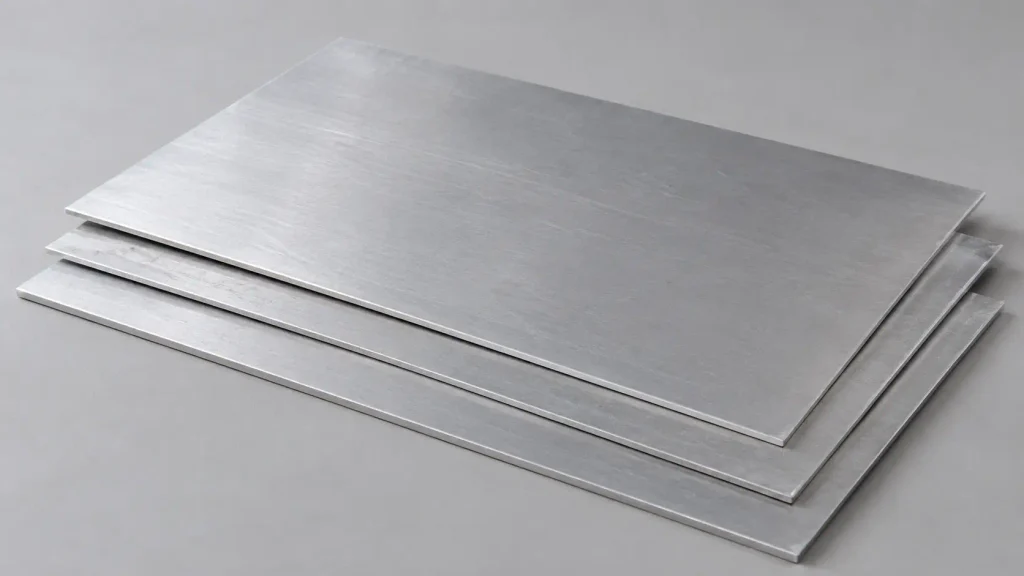
Aluminum sheet is commonly used for lightweight enclosures, panels, brackets, and covers. Its density is roughly one-third that of steel, but its lower stiffness means a part may need thicker sheet, reinforcing bends, or ribs to limit deflection.
5052-H32 aluminum is a common choice for bent sheet metal parts. It offers good corrosion resistance, weldability, and formability, making it suitable for housings, trays, and components with multiple bends.
6061-T6 aluminum offers higher strength than 5052-H32, but it is less suitable for tight bends and can crack if the bend radius is too small. It may suit flat panels or parts that combine sheet fabrication with machining, provided the design accommodates its forming limitations.
Specify both the alloy and temper when ordering aluminum sheet. Bending performance depends on thickness, grain direction, and inside bend radius. Welding can reduce strength around the joint in heat-treated alloys such as 6061-T6, while anodized appearance can vary with alloy and surface condition.
Choose aluminum when reducing weight is a priority, and select the alloy and temper according to the part’s bending, strength, and finishing requirements.
Galvanized Steel Sheet
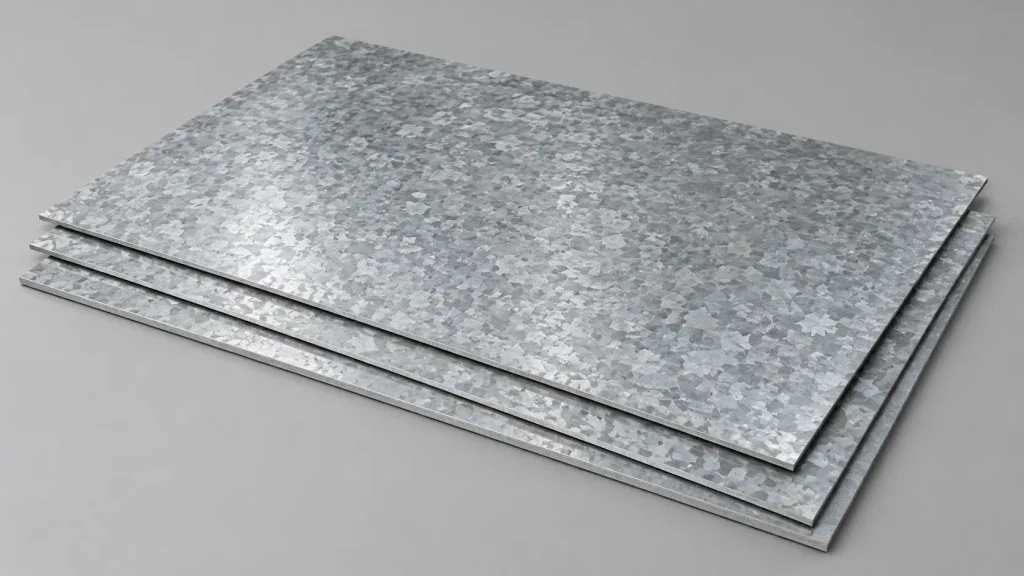
Galvanized steel combines a steel base with a protective zinc coating. It is commonly used for equipment covers, electrical enclosures, ventilation components, and brackets that need corrosion protection without switching to stainless steel.
Hot-dip galvanized sheet is coated by passing steel through molten zinc. Coating thickness and surface appearance vary by specification, so select the coating designation according to the exposure conditions and finishing requirements.
Electrogalvanized sheet receives its zinc coating through an electroplating process. It typically has a thinner, more uniform coating and a smooth surface, making it useful for parts with cosmetic requirements or those receiving a compatible paint system. SECC and SGCC are familiar JIS designations for electrogalvanized and hot-dip galvanized sheet, respectively.
Cutting exposes the steel at edges, while bending can damage the coating if the radius is too tight. Zinc can provide sacrificial protection near small exposed areas, but this does not make every cut edge rust-proof. Welding also damages the coating around the joint and requires suitable fume control and restoration of corrosion protection.
Choose galvanized steel when the part needs the strength and economy of steel with a zinc coating suited to its operating environment.
Copper Sheet
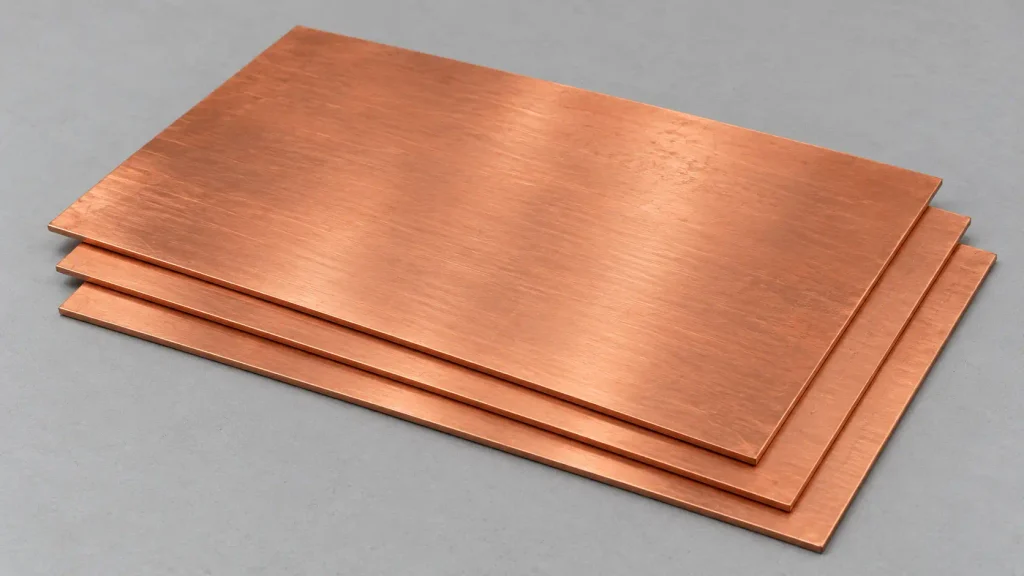
Copper sheet is valued for its high electrical and thermal conductivity. Common applications include electrical contacts, grounding components, conductive plates, and heat-transfer parts. Its reddish appearance also makes it suitable for decorative panels.
C110 copper, also known as electrolytic tough-pitch copper, is a common option for conductive sheet metal components. The material’s temper affects its strength and formability: softer conditions accommodate more demanding bends, while harder conditions offer greater resistance to deformation.
Copper’s ductility supports forming, but cutting and punching can leave burrs that need removal. For electrical connections, surface condition and contact design matter alongside the material’s conductivity. Any coating on a contact area must suit the electrical requirements.
Exposed copper gradually develops an oxide layer and may form a patina, changing its appearance. Specify whether this change is acceptable or whether the part requires a protective finish.
Choose copper when electrical conductivity or heat transfer is a primary requirement and justifies its weight and material cost.
Brass Sheet
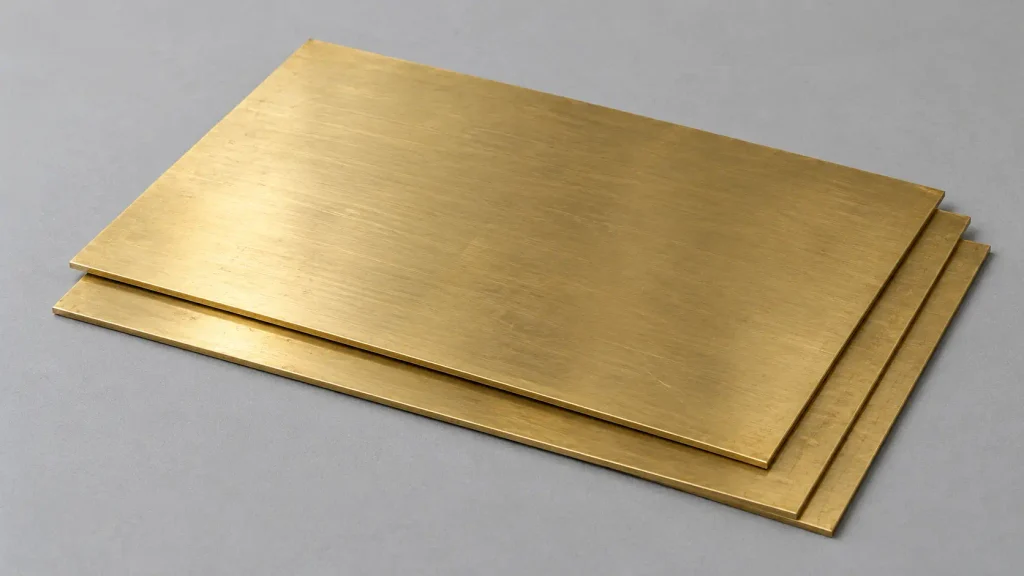
Brass is a copper-zinc alloy used for decorative panels, nameplates, electrical components, and formed hardware. Its gold-like appearance suits exposed parts, while its formability allows it to be shaped into detailed components.
C260 brass, commonly called cartridge brass, is a familiar choice for sheet forming. It contains approximately 70% copper and 30% zinc and offers good ductility in suitable tempers. Softer conditions accommodate deeper forming and tighter bends; harder conditions provide greater strength but reduce formability.
Brass conducts electricity and heat, although less effectively than copper. For electrical components, select it when the design also benefits from its mechanical properties rather than assuming it can directly replace copper.
Surface appearance needs attention during fabrication. Scratches and tool marks can remain visible after polishing, and exposed brass gradually tarnishes. A compatible clear coating or plated finish can help maintain the intended appearance.
Choose brass when appearance and formability are priorities, or when an electrical component needs a balance of conductivity and mechanical strength.
How to Choose the Right Sheet Metal Material
Start with the conditions the finished part must withstand, then check whether the material can accommodate its shape and manufacturing process. Specify the grade, condition, and thickness rather than selecting only a broad category such as “steel” or “aluminum.”
Match the Material to the Operating Environment
An indoor equipment cover and an outdoor enclosure may have similar shapes but need different corrosion protection. For indoor use, coated mild steel may be sufficient. Outdoor parts require closer attention to moisture, exposed edges, joints, and coating durability.
For coastal or chloride exposure, compare specific stainless steel grades rather than assuming all stainless performs equally. Where electrical contact or heat transfer is essential, conductivity also becomes a selection requirement.
Balance Weight, Strength, and Stiffness
Strength describes resistance to permanent deformation; stiffness determines how much a part deflects under load. A material can meet the strength requirement while still allowing a panel to bend too much.
Aluminum reduces weight, but replacing steel with aluminum at the same thickness usually reduces stiffness. Increasing thickness or adding flanges, ribs, or reinforcing bends may help. Compare materials using a design that meets the required load and deflection limits.
Consider Bending, Welding, and Finishing
Check the most demanding bends before finalizing the material. Alloy, temper, thickness, grain direction, and inside bend radius all affect whether the sheet can form without cracking.
Include joining and finishing requirements in the same review. Welding can reduce local strength in 6061-T6 aluminum, while galvanized steel needs attention to coating damage around welds. An exposed decorative panel may also require a specified surface finish and protection from handling marks.
Compare Total Finished-Part Cost
A lower material price does not always produce a cheaper finished part. Include cutting, forming, joining, surface preparation, finishing, and expected scrap in the comparison.
For example, a mild steel enclosure may require powder coating, while a stainless steel version may need brushing and weld cleanup. Compare both routes against the same corrosion, appearance, and service requirements before choosing.
If you are comparing material options for a custom sheet metal part, share your drawings, quantity, and finish requirements with ZH Precision. We can review fabrication and finishing costs for suitable options to help you choose a material that meets your requirements and budget.
Conclusion
Mild steel offers an economical option for many fabricated parts, stainless steel suits corrosion-resistant components, and aluminum helps reduce weight. Copper and brass serve more specific electrical, thermal, and decorative applications. The right choice depends on the part’s operating environment, structural requirements, and manufacturing process.
Before requesting a quote, specify the material grade, condition, thickness, and required finish on the drawing. If the material is still undecided, provide the expected loads, exposure conditions, and appearance requirements so suitable options can be evaluated alongside fabrication cost.
FAQ
Common options include mild steel, stainless steel, aluminum, galvanized steel, copper, and brass. Steel and aluminum suit many enclosures, panels, and brackets, while copper and brass serve applications that require conductivity or a particular appearance.
Cold-rolled describes how steel sheet is processed, while galvanized describes a protective zinc coating. The terms can apply to the same sheet: cold-rolled steel can subsequently be galvanized. When specifying a material, identify both the base steel requirements and any coating requirements.
Aluminum is often selected to reduce weight in covers, panels, and housings. Stainless steel can suit parts that need greater stiffness at the same thickness, frequent cleaning, or corrosion resistance in a specified environment. Compare the actual alloy, thickness, and finish against the part requirements.
Low-carbon steel, 5052 aluminum in suitable tempers, and softer copper and brass generally offer good formability. Tight bends are more challenging in materials such as 6061-T6 aluminum. The achievable bend radius depends on grade, condition, thickness, and grain direction.