

The difference becomes more important when the thread is actually manufactured. Tapping, thread milling, hole depth, chip evacuation, and thread callouts can all affect how the feature is produced. This guide explains the difference between the two terms and the practical manufacturing considerations behind internal threaded holes.
What Is a Threaded Hole?
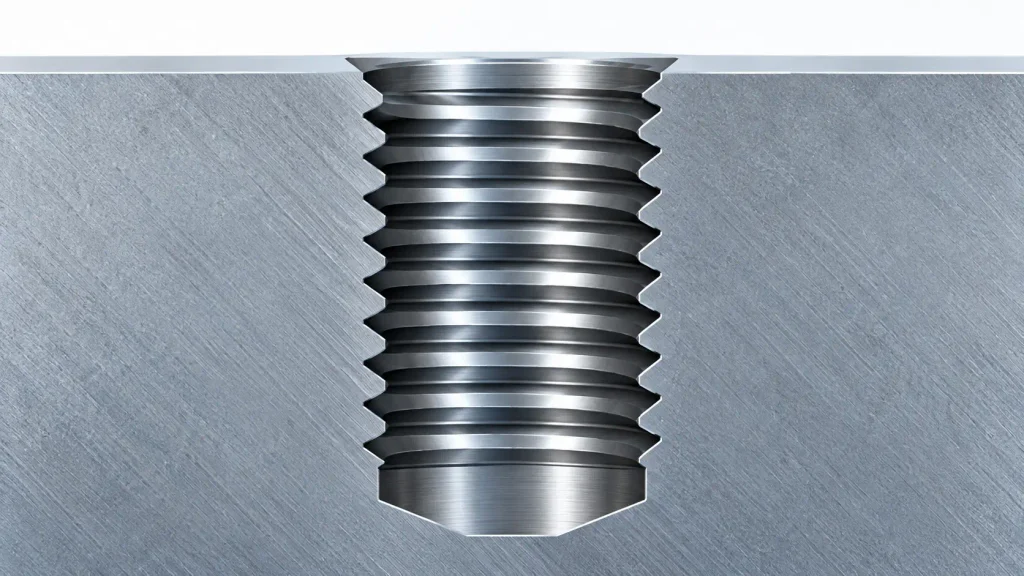
A threaded hole is the general name for a hole with an internal thread that allows a matching screw, bolt, or stud to engage directly with the part. Unlike a clearance hole, the fastener does not simply pass through the opening; it screws into the internal thread and is held by the thread engagement.
The term describes the finished feature, not how the thread was produced. A threaded hole may be made by tapping, thread milling, single-point threading, or another suitable process, as long as the finished internal thread meets the required size, pitch, tolerance, and depth.
What Is a Tapped Hole?
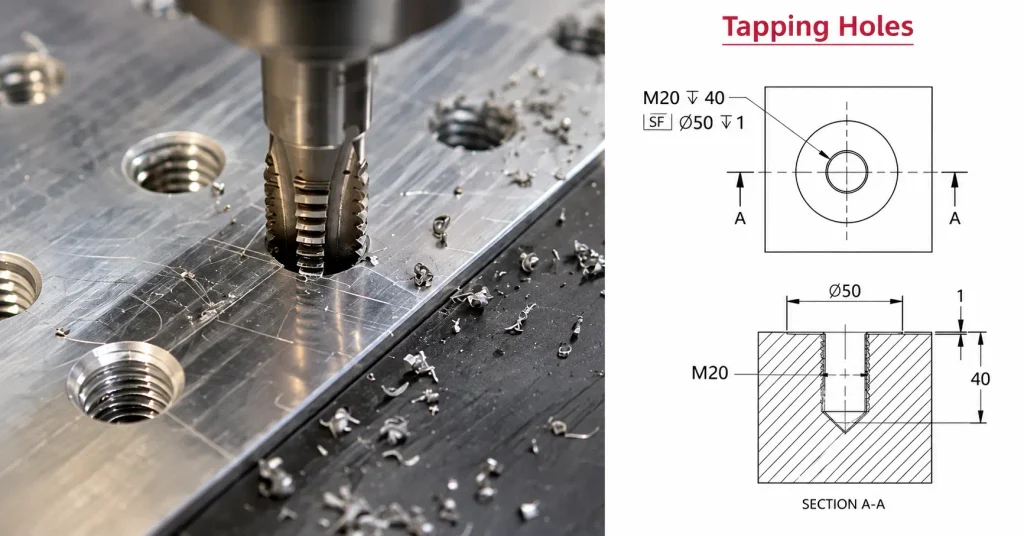
A tapped hole is a threaded hole produced with a tap. The hole is first prepared to the required tap-drill diameter, then the tap advances along the hole axis to create the internal thread.
A cutting tap removes material from the hole wall and produces chips, while a forming tap creates the thread by plastically displacing the material without cutting it. Both methods are tapping processes, which is what makes the finished feature a tapped hole.
Tapped Hole vs Threaded Hole: Key Differences
Tapped holes fall within the broader category of threaded holes.
The term threaded hole refers to any hole that contains an internal thread, regardless of how that thread was produced.
By comparison, tapped hole is more specific because the internal thread is created with a tap, either by cutting or forming the material.
| Threaded Hole | Tapped Hole | |
| Meaning | Any hole with an internal thread | A threaded hole made with a tap |
| Process | Tapping, thread milling, single-point threading, or another suitable method | Cutting tap or forming tap |
| Finished function | Engages with a matching external thread | Engages with a matching external thread |
| Example | M6 × 1.0 thread made by thread milling | M6 × 1.0 thread made with an M6 tap |
An M6 × 1.0 thread can be produced by tapping or thread milling and still meet the same drawing requirement. The distinction is the manufacturing method used to create the internal thread, not the basic function of the finished hole.
How Are Threaded Holes Made?
A tapped hole starts with a hole prepared to the correct diameter for the required thread. The starting hole is smaller than the nominal thread size because the tap still needs material to cut or form the thread profile.
Prepare the hole. The hole is drilled or bored to the required tap-drill diameter. Cutting taps and forming taps do not use the same starting diameter, so the hole size has to match the tapping method as well as the thread specification.
Select the tap. Tap geometry depends on the material and whether the hole is blind or through. Spiral-point taps commonly push chips forward through a through hole, while spiral-flute taps carry chips back toward the hole entrance and are often used for blind holes. Forming taps create the thread without producing chips.
Run the tapping operation. On a CNC machine, the tap rotates while feeding along the hole axis. The axial feed must correspond to the thread pitch so the tool follows the thread it is creating rather than forcing its way through the material.
Control the thread depth. Through holes normally provide more room for the tap and chips to exit. Blind holes need additional depth below the required full thread to accommodate the tap lead, drill point, and chip space.
After tapping, the thread can be checked with the specified fastener, thread gauge, or other inspection method required on the drawing.
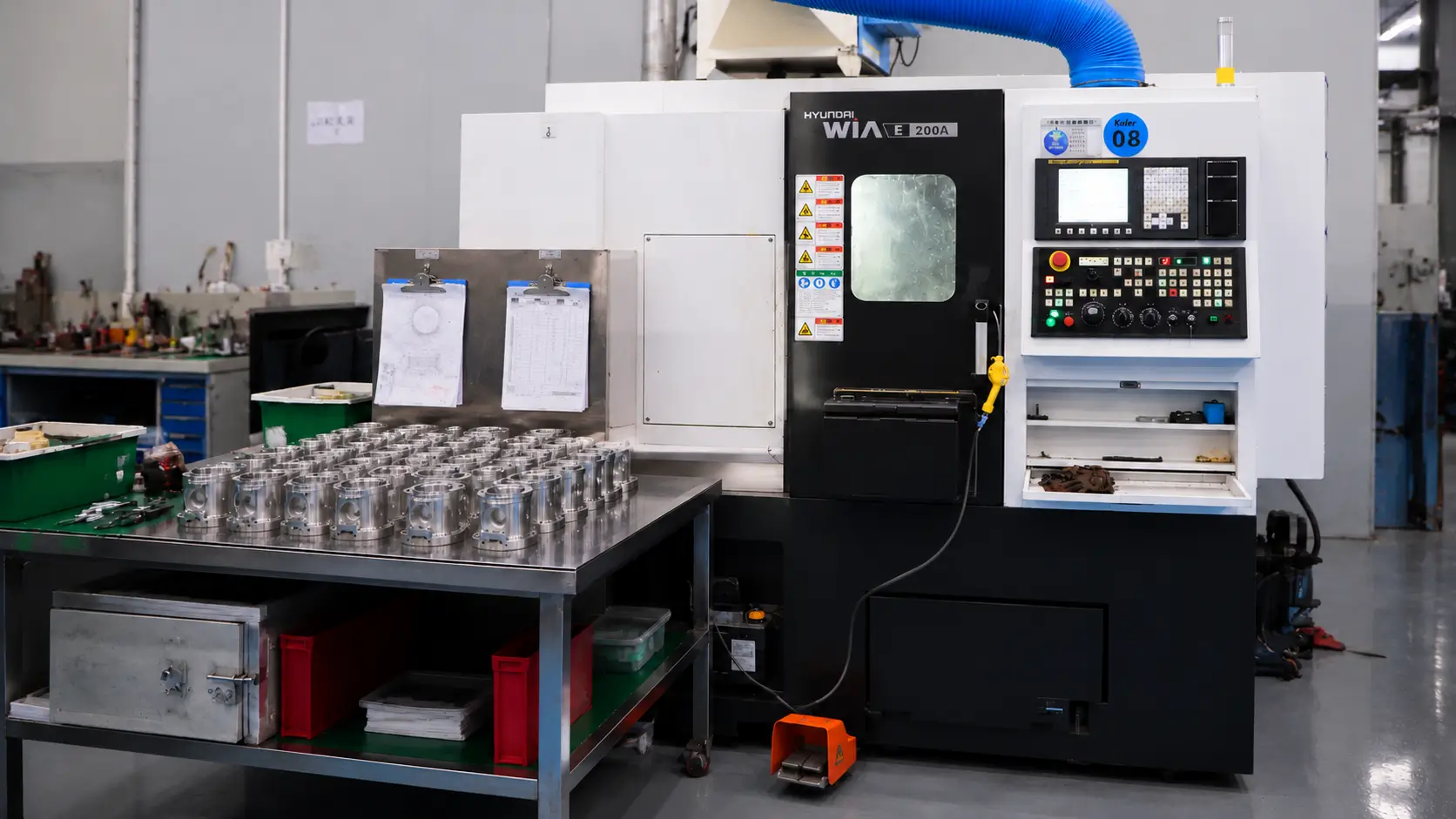
ZH Precision is equipped with dedicated tapping machines and CNC machining centers for producing internal threaded holes in prototype and production parts. Tooling and tapping methods are selected according to the thread size, material, hole geometry, and required depth, with finished threads inspected to confirm fit and thread quality before delivery.
Blind vs Through Tapped Holes
A through tapped hole and a blind tapped hole may have the same thread specification, but they do not present the same machining conditions.
In a through hole, the tap can continue beyond the required threaded section. Chips can also be directed forward and out of the opposite side, which is one reason spiral-point taps are commonly associated with through-hole tapping.
A blind hole has no exit below the tool. The tap must stop inside the part, and chips generated by a cutting tap have to be controlled before they accumulate near the bottom. Spiral-flute taps are commonly used in blind-hole applications because their flute geometry can carry chips back toward the hole entrance. Tap geometry still depends on material and the specific application, so hole type is only one part of tool selection.
Depth is another practical difference. If a drawing requires 10 mm of usable full thread, a 10 mm-deep drilled hole is normally not enough. The drill point occupies space at the bottom, and the chamfered lead of a cutting tap does not immediately produce a full thread profile. Additional depth is therefore needed below the usable thread.
This is why full thread depth and total drilled-hole depth should not be treated as the same dimension on a blind tapped hole.
Threaded Hole Callouts and Design Considerations
A thread callout should make the finished requirement clear enough for machining and inspection.
For example:
M6 × 1.0 – 6H
Here, M6 identifies the nominal metric thread size, 1.0 is the pitch, and 6H defines the tolerance class for the internal thread.
An inch thread may be written as 1/4-20 UNC-2B, where the callout identifies the nominal diameter, threads per inch, thread series, and internal-thread class.
For a blind hole, the thread callout is only part of the information needed. The drawing also needs to make the required usable thread depth clear. If the bottom of the drilled hole is placed too close to the final full thread, there may not be enough room for the tap lead, drill-point geometry, or chips generated during cutting.
Unnecessary thread depth can create the same problem from the opposite direction. Extending a blind thread deeper than the joint actually needs increases tool travel and makes the bottom of the hole more restrictive, without necessarily improving the connection.
Hole location also matters. A thread positioned close to a thin wall, shoulder, or intersecting feature may leave too little material around the hole or restrict access for the drill and threading tool. These details are usually more important to manufacturability than simply specifying that a hole should be “tapped.”
Unless the process itself is part of the requirement, the drawing should therefore concentrate on the thread that the finished part needs. The machining supplier can then select tapping, thread milling, or another appropriate method around the actual material, geometry, quantity, and tooling conditions.
Other Ways to Produce a Threaded Hole
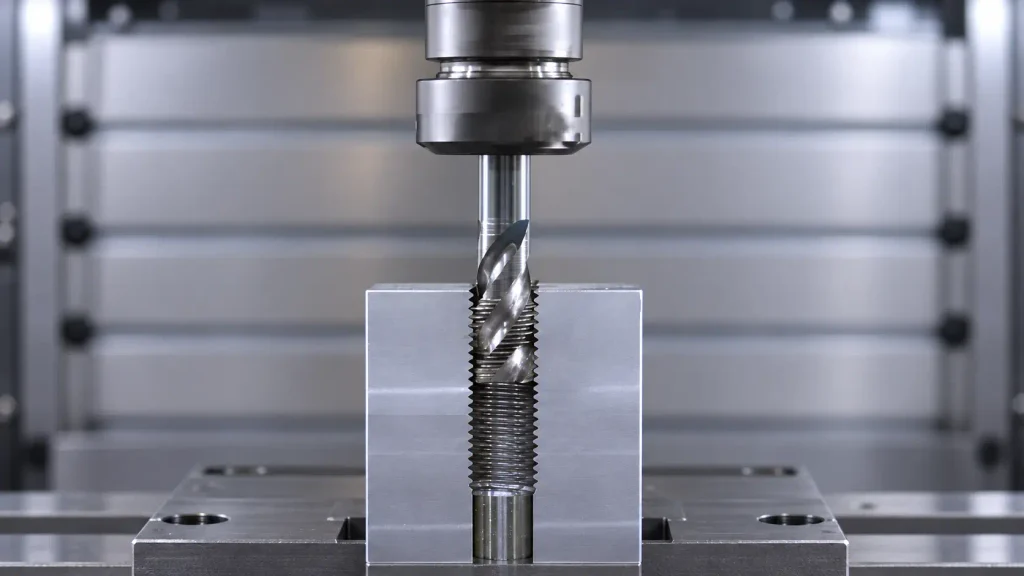
Tapping is not the only way to create an internal thread. A threaded hole can also be produced with other machining methods, depending on the part geometry, thread size, material, and production requirements.
Thread milling uses a smaller cutter that follows a helical path inside the hole to generate the thread. Because the thread diameter is controlled through the programmed toolpath, the finished size can be adjusted through tool compensation without changing to a different tap.
Single-point internal threading is commonly used on turned parts. An internal threading tool cuts the thread profile over several passes while the workpiece rotates, making it suitable for larger bores, non-standard threads, or parts already being machined on a lathe.
Threaded inserts can also be installed into a prepared hole when the design requires replaceable threads, stronger threads in softer materials, or thread repair.
All of these methods can produce a threaded hole, but only a hole produced with a tap is a tapped hole.
Conclusion
A threaded hole describes the finished internal-thread feature. A tapped hole is more specific: its thread was produced using a tap.
That distinction matters most when the part reaches manufacturing. Drawings should clearly define the thread that must function in the finished assembly, while the production method only needs to be restricted when there is a genuine engineering reason to do so.
FAQ
Drilled and tapped means a hole is first drilled to the required tap-drill diameter and then threaded using a tap. The drilled hole provides the correct amount of material for the tap to cut or form the internal thread.
Threading is the broader term for producing screw threads, including both internal and external threads. Tapping is a specific threading process that uses a tap to produce internal threads inside a prepared hole.
A tapped or threaded hole is normally specified using the required thread designation, such as M6 × 1.0 – 6H, together with information such as thread depth or THRU when required. A blind threaded hole may also need a separate hole-depth dimension because the drilled depth is normally deeper than the usable thread.
A bottoming tapped hole generally refers to a blind hole where usable threads need to extend close to the bottom of the hole. A bottoming tap has a short lead or chamfer, allowing it to cut threads closer to the bottom than a taper or plug-style tap.
It is still a tapped hole; the difference is how close the full thread needs to extend toward the bottom.
A blind tapped hole has internal threads but does not pass completely through the workpiece. Because the tap cannot exit through the opposite side, the machining process must account for thread depth, tap clearance, and chip evacuation.