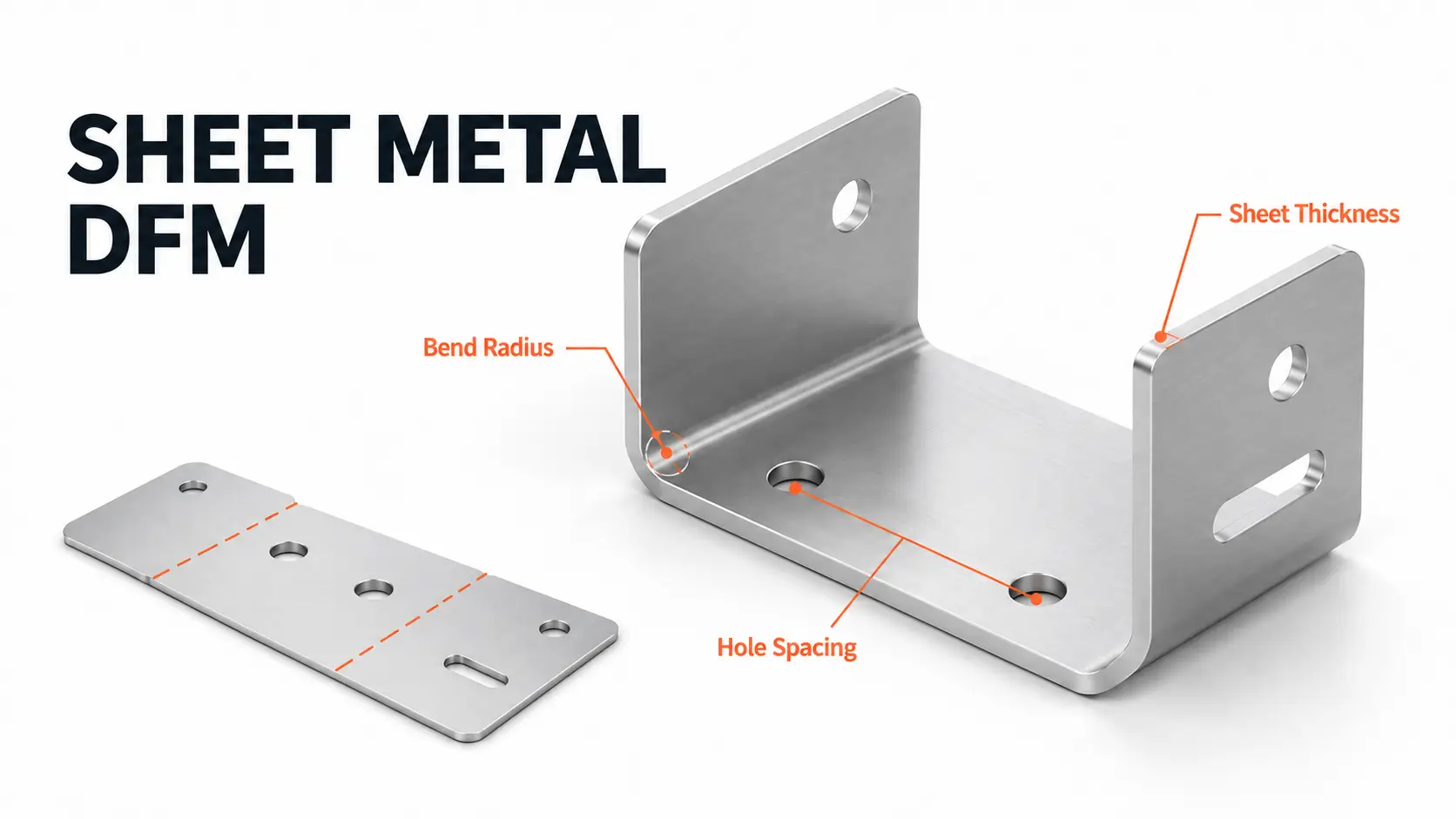

The best CNC machining material is not automatically the strongest, lightest, or easiest to machine. It is the material that meets the functional requirements of the part without creating unnecessary manufacturing difficulty or cost. A useful selection process considers part performance and manufacturing behavior together rather than treating material choice as a separate design decision.
What Materials Can Be CNC Machined?
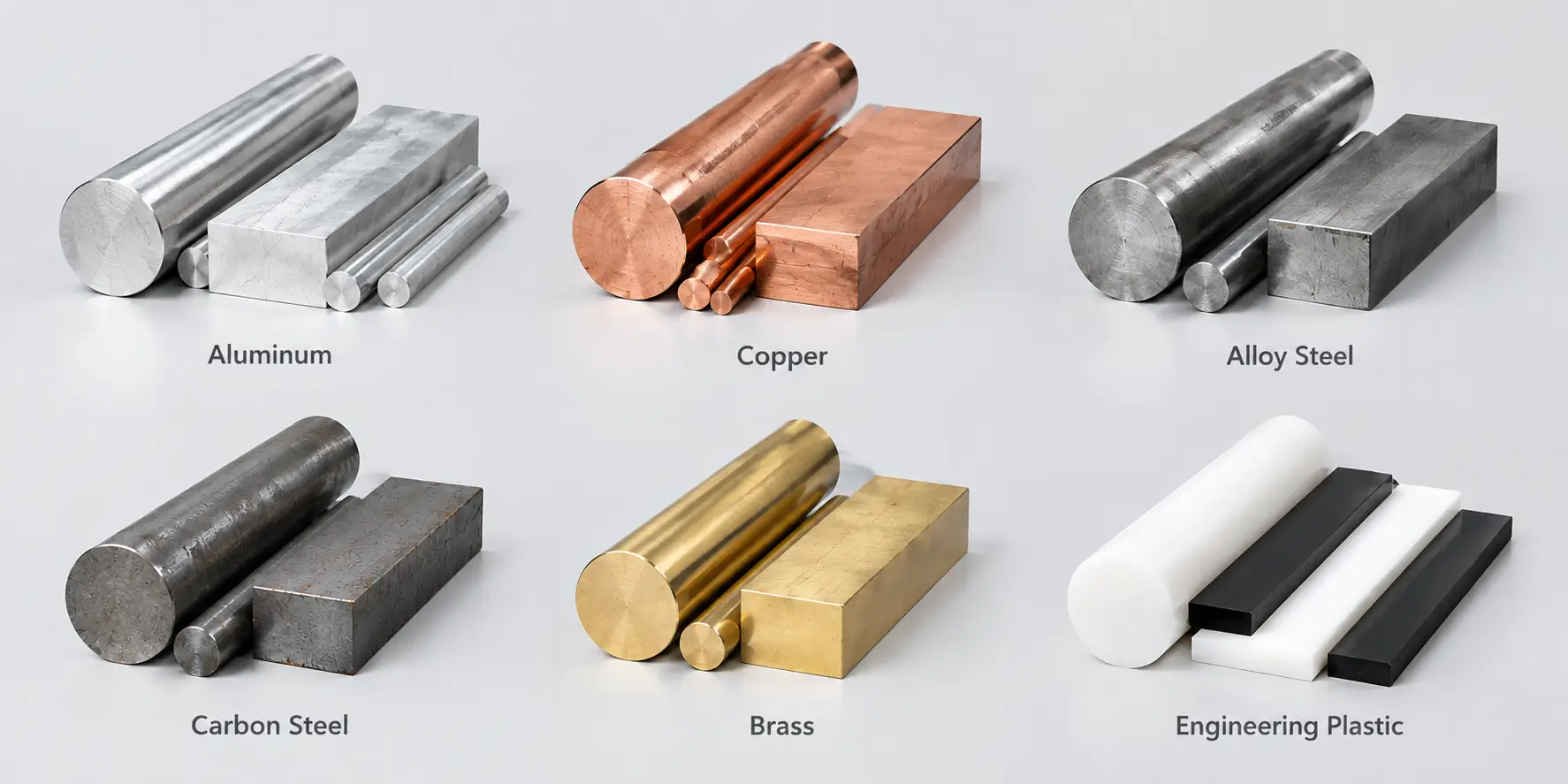
CNC machining can process a wide range of metals and engineering plastics. Common materials used for CNC machining include aluminum, stainless steel, carbon and alloy steels, titanium, copper, brass, POM, nylon, PEEK, PTFE, and other machinable polymers.
The practical question is usually not whether a material can be machined at all. It is whether that material can be machined efficiently while meeting the required geometry, tolerances, surface condition, and cost target.
| Material Family | Why It Is Commonly Selected | Main Machining Consideration |
|---|---|---|
| Aluminum | Low weight, good machinability, broad finishing options | Thin or heavily pocketed parts may distort |
| Stainless Steel | Corrosion resistance, strength, durability | Higher cutting forces and tool wear |
| Carbon / Alloy Steel | Strength, stiffness, wear resistance | Hardness and heat treatment strongly affect machining |
| Titanium | High strength-to-weight ratio, corrosion resistance | Heat concentration and tool wear |
| Brass | Good machinability, corrosion resistance, conductivity | Often machines efficiently |
| Copper | High electrical and thermal conductivity | Some grades can be difficult to machine cleanly |
| Engineering Plastics | Low weight, insulation, chemical or friction properties | Heat, clamping and thermal expansion can affect dimensions |
This CNC material list is useful as a first screening tool. Final selection still depends on alloy grade, material condition, geometry, environment, tolerances, finish, and production requirements.
What Makes a Material Suitable for CNC Machining?
A material is suitable for CNC machining when it can provide the required mechanical and environmental performance while remaining practical to machine, hold, finish, and inspect.
The first constraints usually come from the finished part. Load, stiffness, wear, corrosion exposure, operating temperature, weight, electrical conductivity, chemical resistance, and service life quickly eliminate materials that cannot perform the job.
Manufacturing adds another layer to the decision. Two materials may both meet the mechanical requirements while behaving very differently during machining. One may cut quickly and remain dimensionally stable, while the other produces higher cutting forces, more heat, greater tool wear, or additional distortion after material removal.
A lightweight equipment housing, for example, may not benefit from titanium simply because titanium offers higher strength. If aluminum already satisfies the loading, stiffness, corrosion, and temperature requirements, the additional material and machining cost provides little functional value. The opposite is also true. Choosing aluminum because it is inexpensive and easy to machine makes little sense if the part requires high wear resistance, elevated-temperature strength, or substantially greater mechanical strength.
A practical material decision starts with four questions:
- What does the part need to do?
- What environment will it operate in?
- How difficult will its geometry and tolerances be to manufacture in that material?
- Does the additional material or processing cost solve a real engineering problem?
These questions help narrow the material options before individual alloys and grades are compared in more detail.
How Does Material Choice Affect CNC Machining?
Changing material does not change the CAD geometry, but it can change almost every part of the machining process.
The same pocket machined in 6061 aluminum and 304 stainless steel may require different tooling, spindle speed, feed rate, depth of cut, coolant strategy, and cycle time. Cutting forces, heat generation, chip formation, and tool wear all respond to material properties.
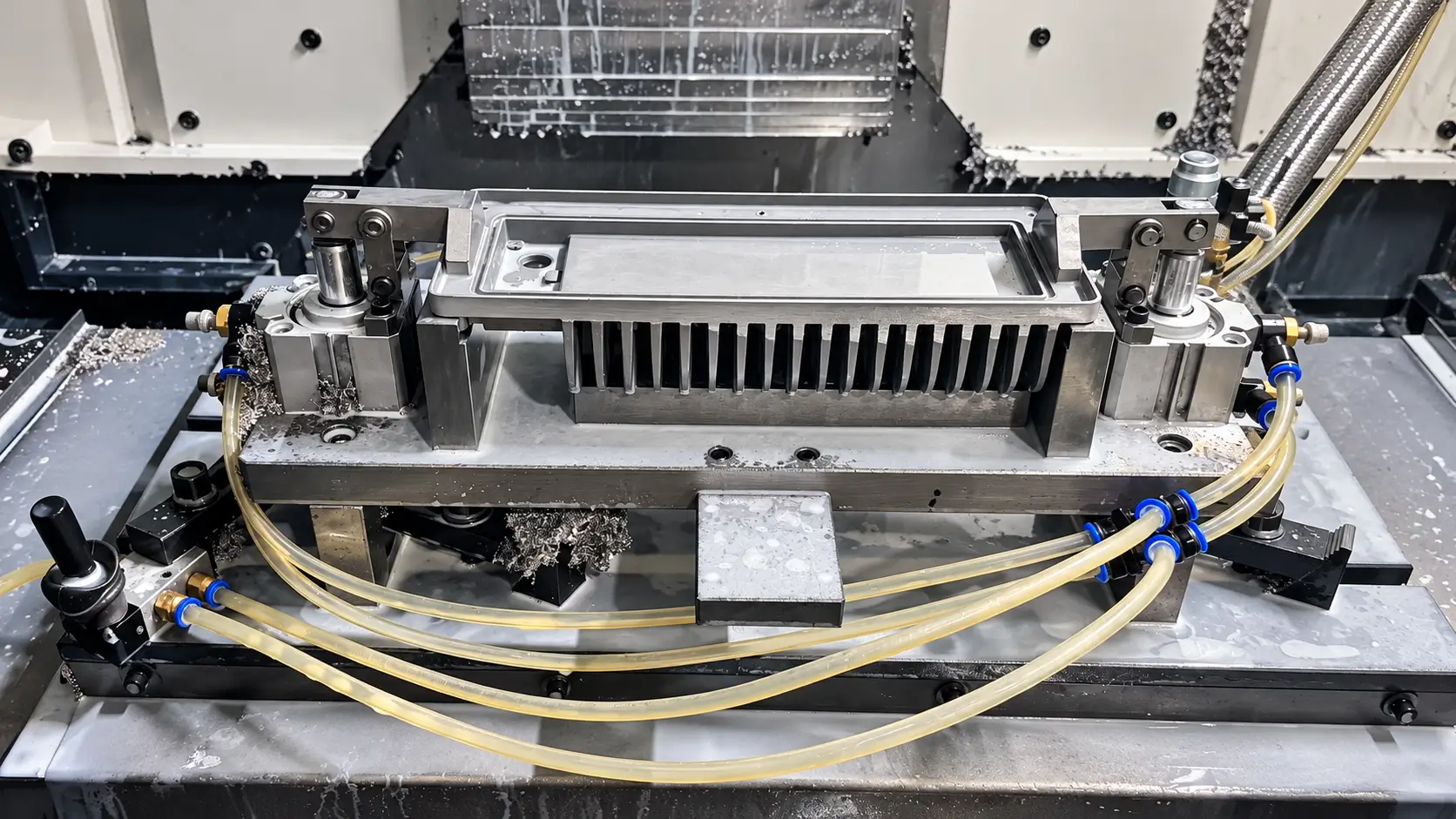
Material behavior also becomes important when large amounts of stock are removed. A thick, rigid component with balanced geometry may remain stable throughout machining, while a thin or heavily pocketed part can move as residual stresses are released. Plate, bar, extrusion, forging, casting, and heat-treated stock may behave differently even when the nominal alloy designation is similar.
These effects become more important as tolerances tighten. A general clearance feature may tolerate small material movement, while a bearing bore, long mating face, or thin-wall housing may not.
This is one reason precision CNC machining cannot be evaluated from the tolerance value alone. Material condition, geometry, workholding, cutting strategy, and inspection method all contribute to whether a critical feature can be produced consistently.
Common CNC Machining Materials
The most common CNC machining materials are selected for different reasons. Some offer low weight and efficient machining, while others are chosen because strength, corrosion resistance, conductivity, temperature performance, or wear resistance matters more than machining speed.
The material family is only the starting point. The specific grade and material condition still need to match the finished part and the manufacturing route.
Aluminum for CNC Machining
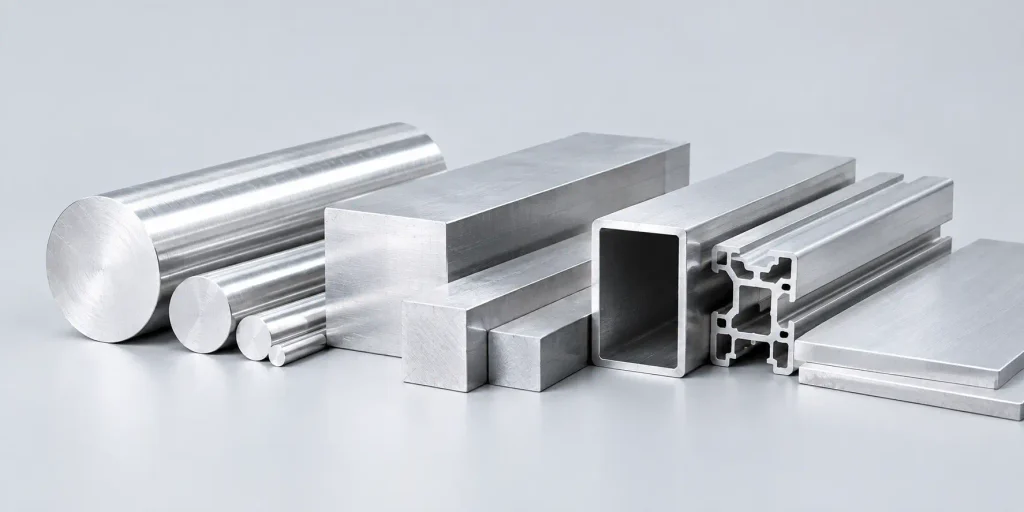
Aluminum is one of the most widely used CNC machining materials because many grades combine low density, good machinability, corrosion resistance, material availability, and compatibility with common surface treatments.
6061 is often a practical starting point for housings, brackets, fixtures, structural components, and general mechanical parts. It offers a useful balance of strength, machinability, corrosion resistance, and finishing capability.
7075 provides substantially higher strength and is often considered when a design requires more mechanical performance without moving to steel or titanium. That additional strength does not automatically make it the better material. For a lightly loaded mounting plate or enclosure, the higher material cost may add little value.
2024 is another high-strength aluminum used where structural performance matters, while 5052 is valued for corrosion resistance and formability. Material selection should be based on what the finished part actually requires rather than selecting the alloy with the highest specification.
For heavily machined aluminum parts, stock condition and geometry deserve particular attention. Thin walls, large pockets, and asymmetric material removal can expose residual stress and cause dimensional movement between roughing, finishing, and final unclamping.
Stainless Steel for CNC Machining
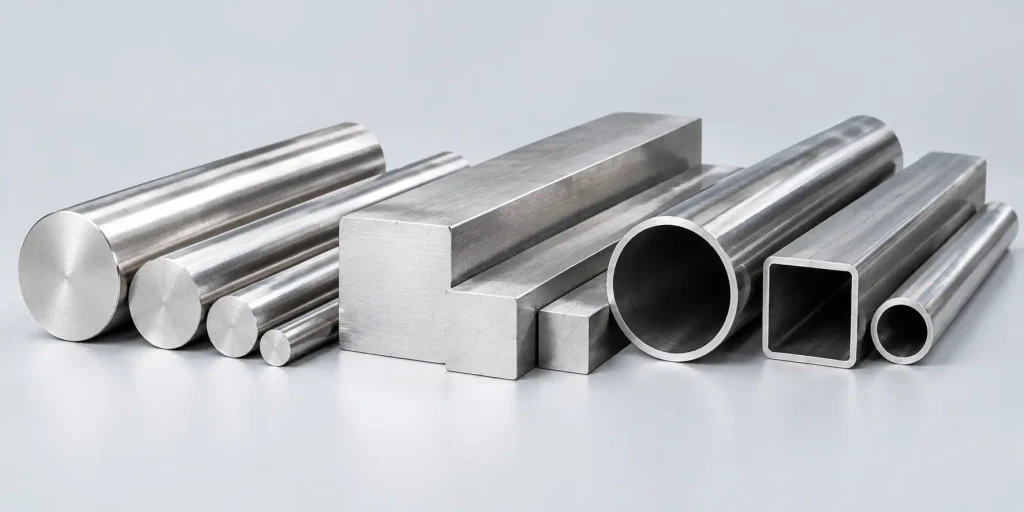
Stainless steel is commonly selected when corrosion resistance, strength, durability, or operating environment matters more than machining speed.
304 is widely used for general corrosion-resistant mechanical components. 316 and 316L are usually considered when additional corrosion resistance is required, particularly in more aggressive environments. Choosing 316 instead of 304 should be driven by actual exposure rather than the assumption that a higher-grade stainless steel is always preferable.
Austenitic stainless steels generally require more careful machining than aluminum. Cutting heat, tool condition, and work hardening can make the process increasingly unstable if the tool begins rubbing instead of cutting effectively.
The difference becomes more important on deep features, small tools, long machining cycles, and thin-wall geometry. A stainless steel part can be perfectly reasonable from a design perspective while still benefiting from simpler tool access, more generous internal radii, or more selective use of tight tolerances.
Carbon and Alloy Steel for CNC Machining
Carbon and alloy steels cover a much wider range of hardness and mechanical performance than a single material category might suggest.
Lower-carbon steels are useful for many general mechanical components where strength and stiffness matter more than low weight. Alloy steels such as 4140 are commonly considered when greater strength, fatigue performance, or wear resistance is needed.
The material condition must be defined clearly because the same nominal grade can machine very differently before and after heat treatment. Hardness affects cutting force, tool selection, tool life, machining speed, and often the sequence in which the part should be manufactured.
Some steel components are rough machined before heat treatment and then finish machined or ground at critical surfaces afterward. This allows the final operation to correct dimensional movement introduced during heat treatment.
For precision steel parts, material grade alone is not enough. Hardness, heat-treatment condition, machining sequence, and final inspection all belong to the manufacturing plan.
Titanium for CNC Machining
Titanium is usually chosen because the application genuinely needs its combination of strength, low density, corrosion resistance, or elevated performance.
Its advantages come with greater machining difficulty. Heat is concentrated near the cutting zone, tool wear becomes more significant, and machining parameters need to remain controlled to maintain a stable cutting process.
This additional manufacturing effort can be justified for weight-sensitive structural components, aerospace hardware, robotic mechanisms, medical components, or other applications where titanium properties solve a specific design problem.
For a general machine bracket, fixture, or housing that could perform equally well in aluminum or steel, titanium often adds cost without improving the function of the part.
Material selection should answer whether titanium solves a requirement that lower-cost alternatives cannot, not whether titanium is technically capable of doing the job.
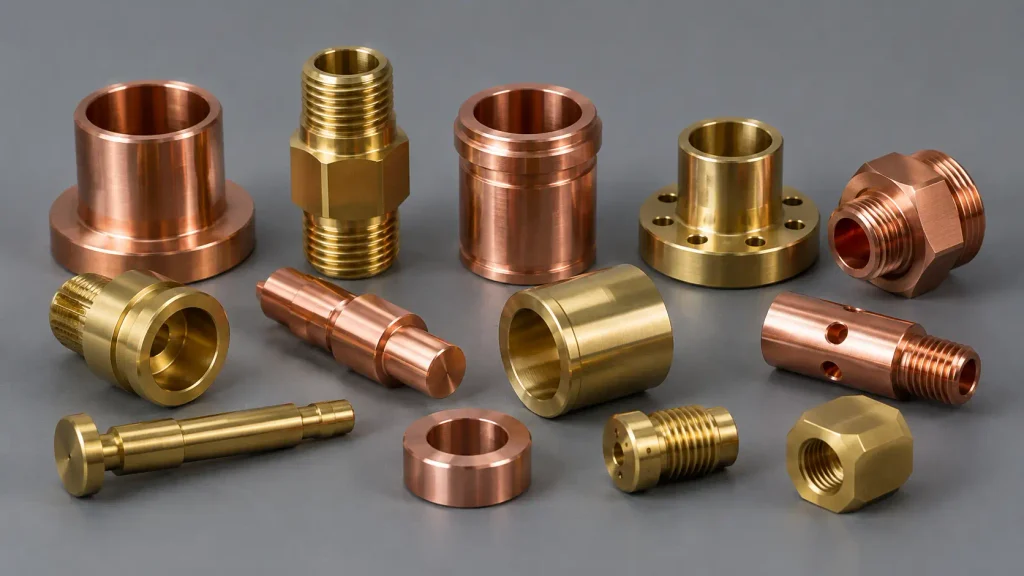
Copper and Brass for CNC Machining
Copper and brass are often selected for electrical, thermal, fluid-handling, or mechanical reasons rather than maximum structural strength.
Copper is valuable for bus bars, electrical contacts, heat-transfer components, and other parts where conductivity drives the design. Different copper grades can behave differently during machining, so conductivity, surface quality, burr control, and dimensional requirements should be evaluated together.
Brass is commonly used for connectors, bushings, fittings, valves, fluid components, and turned parts. Many brass alloys offer good machinability and can produce clean surfaces efficiently.
Copper and brass should not be treated as interchangeable simply because both belong to the same base-metal family. Their mechanical properties, conductivity, corrosion behavior, cost, and machining characteristics can lead to very different material decisions.
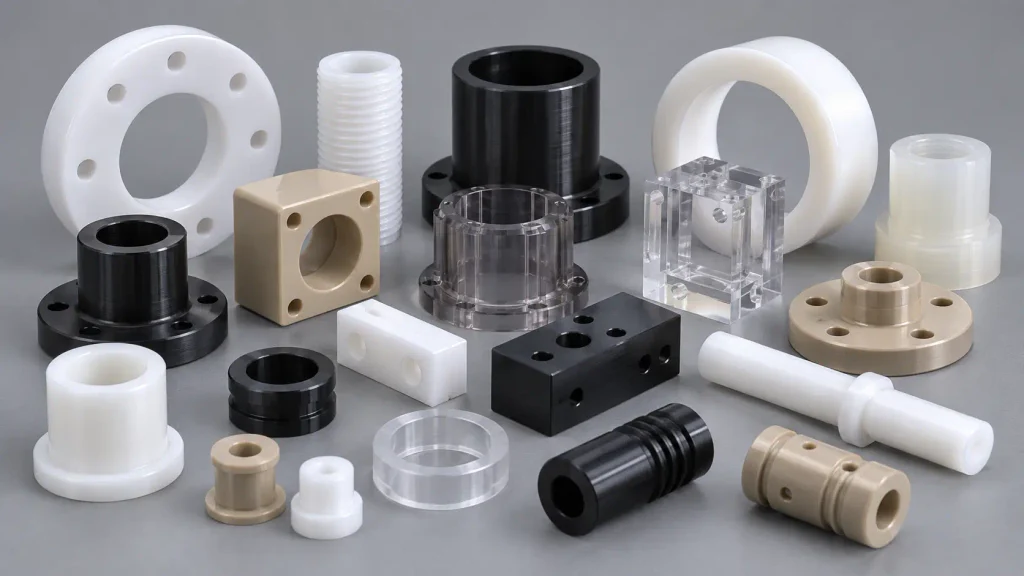
Engineering Plastics for CNC Machining
Engineering plastics are useful when low weight, electrical insulation, chemical resistance, low friction, corrosion resistance, or other polymer-specific properties are important.
Their machining behavior differs substantially from metals. Lower stiffness makes clamping deformation more important, while heat generated during cutting can affect dimensions. Thermal expansion is generally higher than in metals, and some polymers absorb moisture, which can change dimensions after machining.
POM, or acetal, is frequently used for mechanical components because it combines good machinability with relatively good dimensional stability and low moisture absorption. Nylon, PEEK, PTFE, polycarbonate, and other engineering plastics solve different design problems and should not be grouped together simply as “plastic.”
A polymer that works well for a low-friction guide may be unsuitable for a precision locating feature if temperature or moisture produces too much dimensional change.
Which CNC Machining Materials Are Better for Tight Tolerances?
No material is automatically the best material for tight-tolerance machining.
Dimensional stability depends on the interaction between material properties, stock condition, component geometry, machining sequence, temperature, and workholding. A rigid, balanced component is usually easier to control than a thin or asymmetric structure even when both are made from the same alloy.
Aluminum can support closely controlled features, but a heavily pocketed housing may move as internal stresses are released. Steel provides greater stiffness but can introduce higher cutting forces and heat-treatment effects. Engineering plastics may machine cleanly while remaining more sensitive to temperature, moisture, or clamping pressure.
The starting form matters as well. A part machined from plate is not necessarily equivalent to the same geometry machined from extrusion, casting, or forging.
For precision features, a more useful question is what could cause the feature to move between rough machining, finishing, unclamping, inspection, and final service. That gives a better indication of manufacturing risk than choosing a material based only on its reputation for dimensional stability.
Why Stock Form and Material Condition Matter
Material selection should not stop at the alloy designation.
A specification such as “6061 aluminum” or “4140 steel” may still leave important manufacturing information unresolved. Temper, heat-treatment condition, hardness, stock form, certification requirements, and starting dimensions can affect both machining and final part performance.
Aluminum temper influences strength and material behavior. Steel may be supplied annealed, pre-hardened, or in another heat-treated condition. Castings and forgings usually require machining allowance so that critical surfaces can be produced after the near-net-shape operation.
Starting stock also influences material removal. A component that can be produced efficiently from standard bar or plate may be substantially less expensive than one that requires a large billet with most of the material removed.
Availability becomes particularly relevant for repeat orders. A specialized grade, temper, diameter, or plate thickness may create longer material lead times even if machining itself is straightforward.
Material selection is partly a sourcing and process-planning decision, not only a mechanical design decision.
How Does Material Choice Affect Surface Finishing?
Material and surface finish should be evaluated together rather than treating finishing as something chosen after machining is complete.
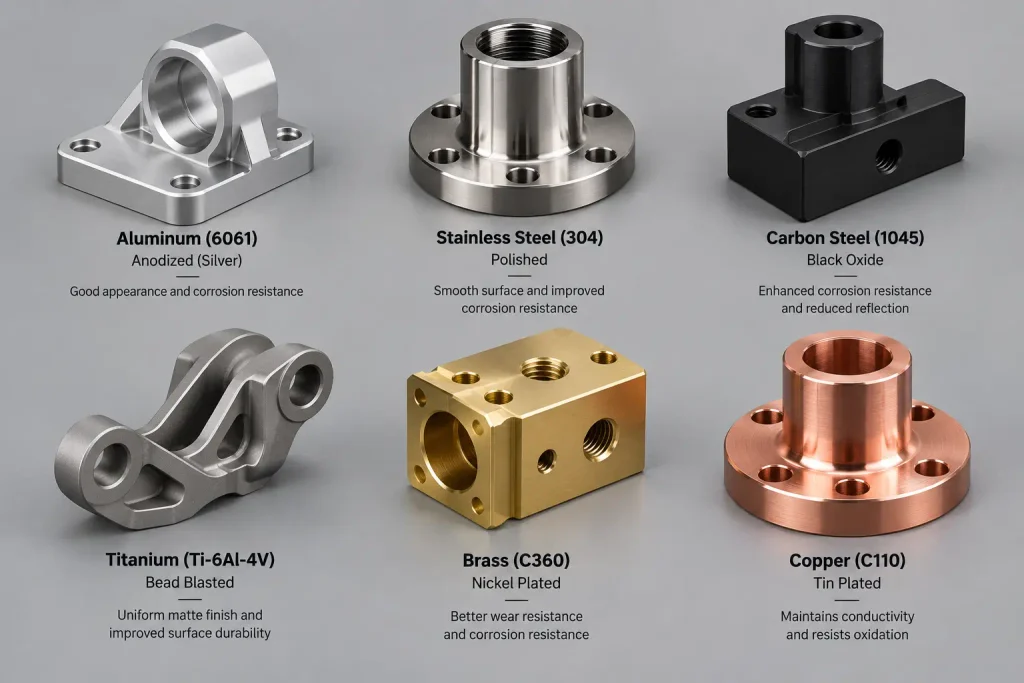
Aluminum is compatible with anodizing, bead blasting, polishing, plating, painting, and several other processes, although alloy composition can influence the final appearance. Stainless steel may be used as-machined, passivated, polished, or electropolished depending on the application. Carbon and alloy steels often need plating, black oxide, coating, or another protective treatment when corrosion resistance is required.
Finishing can also affect dimensions. Plating and coatings add material, while polishing and similar processes remove or modify the existing surface. Bearing seats, threads, sealing faces, electrical contacts, and other close-tolerance features may require masking or selective finishing.
For parts that require both CNC machining and surface finishing, the drawing should make clear whether critical dimensional or surface requirements apply before finishing or to the final treated surface.
Considering the finish only after the material and machining process have already been fixed can create avoidable problems with corrosion protection, appearance, electrical behavior, and critical fits.
How Does Material Choice Affect CNC Machining Cost?
Raw material price is only one part of material-related machining cost.
A lower-cost material can still produce a more expensive part if it requires slower cutting speeds, more frequent tool changes, additional finishing operations, heat treatment, more inspection, or greater scrap risk.
Starting stock also matters. A lightweight component machined from a large billet may consume far more material and machine time than the final part weight suggests. The purchase price of the alloy does not show how much of that stock will eventually become chips.
A useful cost comparison considers raw material, stock size, machining time, cutting-tool consumption, setup requirements, inspection, heat treatment, finishing, and material availability together.
Changing material late in a project can affect more than purchasing. Tooling, cutting parameters, process sequence, finishing, and sometimes inspection strategy may all need to change.
How to Choose the Right Material for CNC Machining
Choosing the right material for CNC machining becomes easier when unsuitable candidates are removed in a logical order.
Start with the requirements that cannot be compromised: mechanical load, stiffness, wear, operating temperature, corrosion environment, weight, conductivity, and chemical exposure. Once those requirements narrow the field, compare the remaining materials for machinability, dimensional stability, finishing compatibility, availability, and total manufacturing cost.
| Design Requirement | Common Starting Option |
|---|---|
| Low weight and general machinability | 6061 Aluminum |
| Higher strength with low weight | 7075 Aluminum |
| General corrosion resistance | 304 Stainless Steel |
| More demanding corrosion resistance | 316 / 316L Stainless Steel |
| Strength and wear resistance | Carbon or Alloy Steel |
| High strength-to-weight requirement | Titanium |
| Electrical or thermal conductivity | Copper |
| Good machinability with conductivity | Brass |
| Low weight or electrical insulation | Engineering Plastics |
This table should be treated as a starting point rather than a material specification.
A lightweight housing may initially point toward aluminum, but high temperature or wear can change the decision. Stainless steel may solve a corrosion problem, but its additional machining cost may be unnecessary in a dry indoor environment. An engineering plastic may eliminate corrosion and reduce weight while creating dimensional problems around a precision locating feature.
The best material is the one that satisfies the actual loads, environment, geometry, tolerances, finishing requirements, and production quantity without paying for properties the part does not use.
What Should Be Defined Before Requesting a CNC Quote?
Material does not always need to be completely finalized before a manufacturability review begins.
For an initial quotation, a 3D CAD model, intended material or candidate materials, quantity, and required finish usually provide enough information to begin reviewing the part. A controlled 2D drawing becomes more important when the component contains critical tolerances, GD&T, fits, threads, surface roughness, heat treatment, or specific inspection requirements.
If two materials are still being considered, requesting both options can reveal whether the higher-performance choice creates significant differences in stock availability, machining time, tooling, finishing, or inspection.
For parts where material choice interacts closely with geometry, tolerances, or finishing, ZH Precision’s CNC machining services can include a drawing and material review before production to identify potential machining, dimensional stability, or finishing concerns.
A correct alloy specification does not automatically create an efficient part. Material, geometry, tolerance, stock condition, machining sequence, and finishing need to work together.
Conclusion
Choosing a CNC machining material is a balance between part performance and manufacturability.
Strength, weight, corrosion resistance, wear, temperature, conductivity, and chemical exposure define what the component needs from the material. Machinability, dimensional stability, stock condition, tooling, finishing compatibility, availability, and cost determine how practical that choice is to manufacture.
Aluminum is often a strong starting point when low weight and good machinability matter. Stainless and alloy steels become more attractive when corrosion resistance, stiffness, strength, or wear performance dominate. Titanium is justified when its performance solves a real design requirement, while copper, brass, and engineering plastics address more specialized electrical, thermal, friction, chemical, or insulation needs.
The most effective material decision does not start by asking which material has the best specification. It starts by identifying what the part must actually do and selecting the least complicated material that can meet those requirements consistently.
FAQ
CNC machining can process a wide range of metals and engineering plastics, including aluminum, stainless steel, carbon and alloy steels, titanium, copper, brass, POM, nylon, PEEK, and PTFE. The best option depends on the part’s mechanical requirements, environment, geometry, tolerances, finishing, and cost target.
There is no universal best material for CNC machining. Aluminum is often a practical choice when low weight and good machinability matter, stainless steel is useful where corrosion resistance is important, alloy steel is suitable for greater strength or wear resistance, and titanium is normally selected when its higher performance is genuinely required.
Aluminum, particularly alloys such as 6061, is widely used because it combines good machinability, low weight, corrosion resistance, material availability, and broad finishing options. The most appropriate material still depends on the application.
Some aluminum and brass alloys are generally considered highly machinable, but machinability alone should not determine the material. Strength, environment, wear, temperature, dimensional stability, and finishing requirements still need to be satisfied.
Neither is universally better. Aluminum is lighter and generally faster to machine, while stainless steel offers greater strength and corrosion resistance in many applications. The correct choice depends on the mechanical and environmental requirements of the part.
There is no universal best material for precision machining. Geometry, stock form, residual stress, stiffness, thermal behavior, workholding, machining sequence, and inspection all influence dimensional stability.
Yes. Raw material price is only one factor. Cutting speed, cycle time, tool wear, material removal, stock availability, heat treatment, finishing, inspection, and scrap risk can all change with material selection.