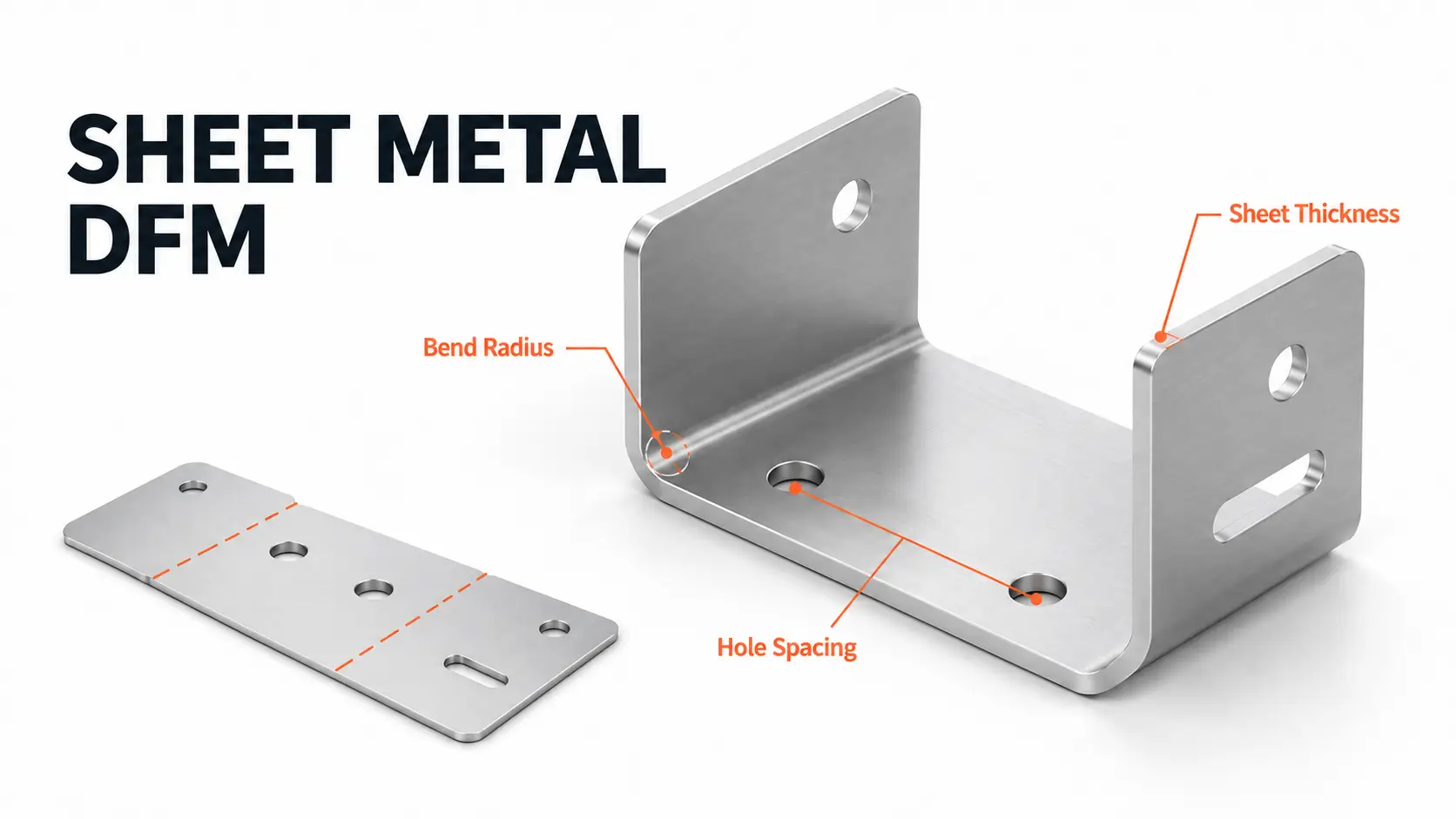

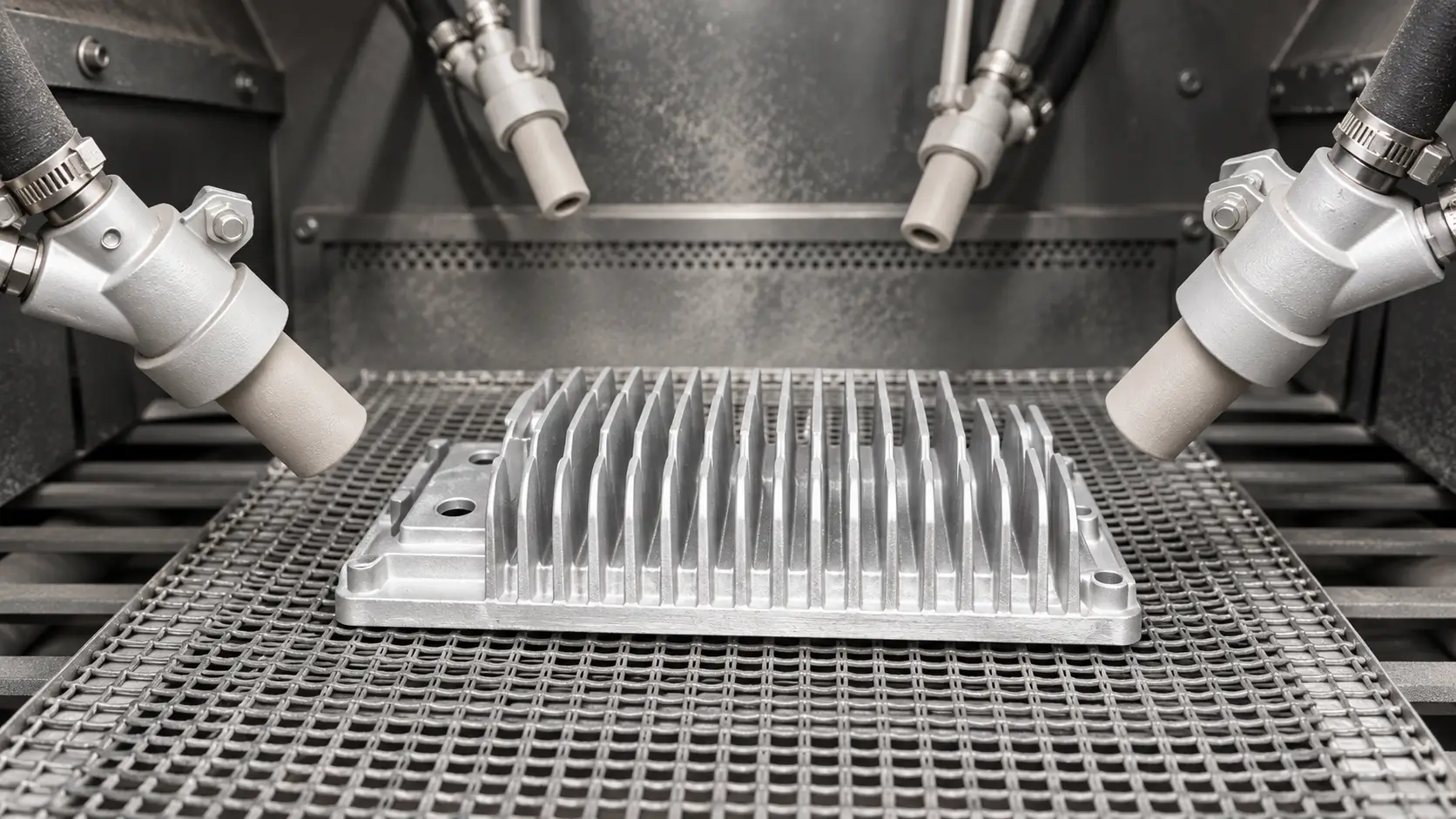
The appearance of a bead-blasted surface depends on more than the blasting media alone. The original machined surface, media selection, blasting conditions, and any subsequent finishing process can all affect the final result. This guide covers the bead blasting process, media options, surface finish, anodizing, advantages and limitations, and common applications for aluminum parts.
What Is Bead Blasting Aluminum?
Bead blasting aluminum is a mechanical surface-finishing process that uses fine blasting media, typically glass beads, to modify the texture of an aluminum surface. It is commonly used on machined parts when a more uniform, low-gloss appearance is required.
Unlike a coating, bead blasting does not add another material over the aluminum. Instead, it changes the texture of the existing metal surface and can also remove light surface contamination.
How Bead Blasting Works
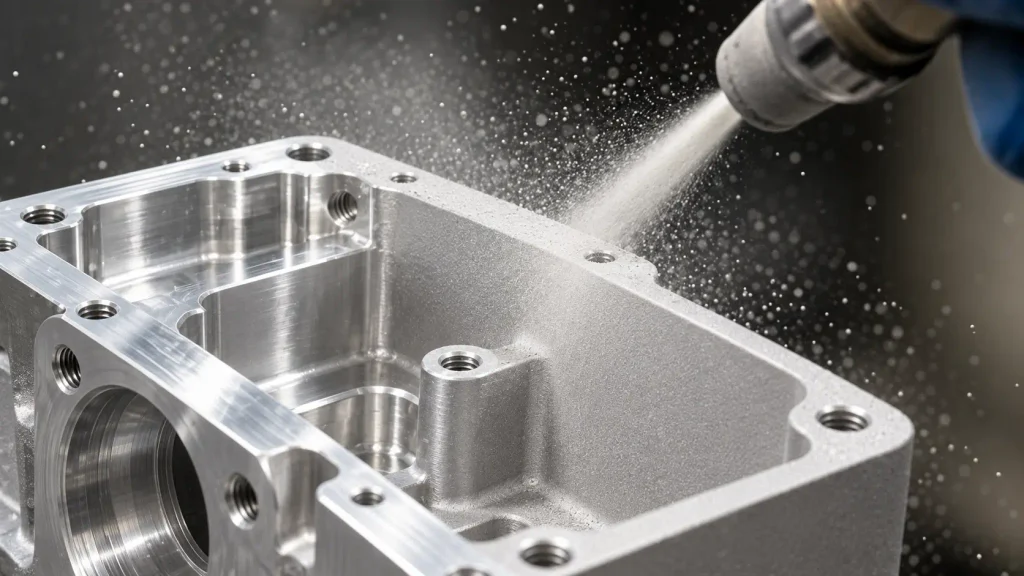
Bead blasting uses compressed air to accelerate small spherical media through a nozzle and toward the aluminum surface. Thousands of repeated impacts gradually alter the microscopic surface profile rather than removing material through aggressive cutting.
As these impacts spread across the part, they break up the directional appearance left by machining and create a more diffuse surface. The consistency of the result depends mainly on the impact energy of the media and how evenly the surface is covered.
Bead Blasting Aluminum: Step-by-Step Process
The bead blasting process starts with surface preparation and continues through controlled blasting, cleaning, and final inspection. Each step helps prevent contamination, uneven coverage, or unwanted blasting on functional features.
Step 1: Prepare the Aluminum Surface
Remove oil, dirt, coatings, and other contamination before blasting. Threads, precision bores, sealing faces, and other areas that should remain as-machined can be masked or protected before the part enters the blasting process.
Step 2: Set the Blasting Conditions
Set the air pressure and equipment according to the glass bead size, part geometry, and required surface finish. The settings should provide enough blasting action to treat the surface without making the process unnecessarily aggressive.
Step 3: Blast the Surface Evenly
Move the nozzle steadily across the part and maintain consistent coverage between passes. Large visible surfaces require particular attention because uneven exposure can produce noticeable differences in texture.
Step 4: Clean and Inspect the Part
After bead blasting, CNC-machined parts should be thoroughly cleaned to remove residual dust and loose blasting media, including particles trapped in holes, recesses, or internal features. Inspect the finished surface for missed areas, uneven coverage, and other visible inconsistencies.
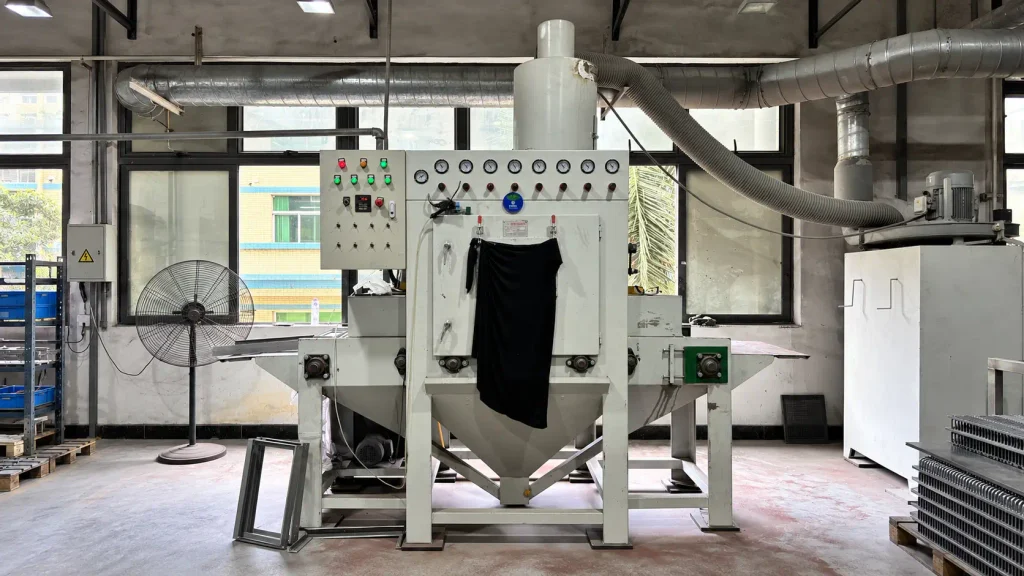
For aluminum parts with tighter cosmetic requirements, ZH Precision can use automated bead-blasting equipment to provide more controlled nozzle movement and surface coverage. This is especially useful on larger visible surfaces or multiple parts that need a closely matched finish.
Bead Blasting Media for Aluminum
The blasting media affects how aggressively the aluminum surface is treated and how much material is removed during the process. For most cosmetic aluminum parts, glass beads are the usual starting point because their rounded shape provides a gentler action than sharp abrasive particles.
Glass beads are suitable for light cleaning, blending minor machining marks, and general cosmetic finishing where heavy surface removal is not required. Different bead sizes can be selected depending on the part geometry and the level of surface treatment needed, but the final appearance also depends on the blasting pressure and overall process conditions.
When stronger abrasion is required, aluminum oxide is a more aggressive option. Its hard, angular particles cut into the surface more readily, making it useful for removing coatings, heavier contamination, or preparing aluminum where a stronger surface profile is needed.
Other media are used for more specialized applications. Steel shot produces a stronger impact and is more commonly associated with heavier cleaning or peening processes, while plastic media are used when coatings or surface contamination need to be removed with less aggressive action on the base material.
For parts where the blasting media is not already specified, ZH Precision engineers can review the material type, surface roughness requirement, expected appearance, and production quantity to help select a suitable media option for the process.
What Finish Does Bead Blasting Create on Aluminum?
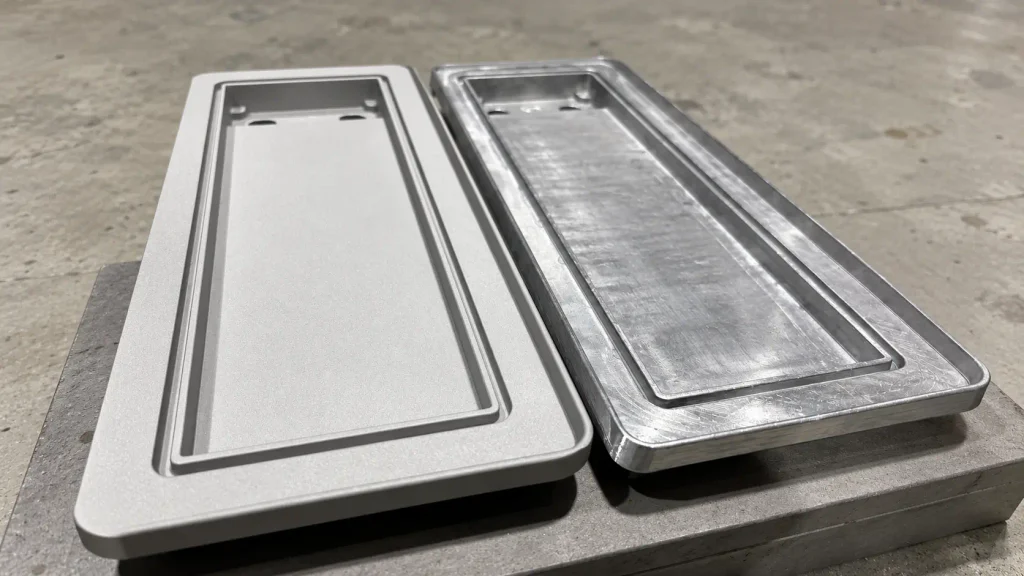
Bead blasting gives aluminum a uniform matte or satin appearance by changing the texture of the exposed surface. Compared with an as-machined part, the finish looks less directional because the blasting process reduces the visual contrast created by milling or turning marks.
The exact appearance depends on the media and blasting conditions. Fine glass beads are often used for a softer satin texture, while different bead sizes and process settings can produce a more pronounced matte finish.
For cosmetic aluminum parts, the quality of the machined surface still matters. Bead blasting improves surface uniformity, but deeper scratches, dents, or pronounced machining defects may remain visible after blasting.
Advantages and Disadvantages of Bead Blasting
Bead blasting is well suited to aluminum parts where cosmetic consistency and a controlled surface texture are more important than aggressive material removal. Its main advantages come from the relatively gentle action of glass beads, while its limitations are mainly related to removal capability, process variation, and cleaning after blasting.
Advantages
Uniform cosmetic finish. Bead blasting can reduce the directional appearance of light machining marks and give exposed aluminum surfaces a more consistent look.
Reduced glare. The matte or satin texture reflects light more diffusely than a polished or freshly machined surface, which is useful for visible housings, panels, and equipment components.
Less aggressive surface treatment. Compared with sharp angular abrasives, glass beads provide a gentler action when heavy material removal is not required.
Useful for light surface cleaning. Bead blasting can remove light contamination while improving the overall appearance of the part.
Disadvantages
Limited removal capability. Glass beads are not suitable for removing thick coatings, heavy oxidation, or deep surface defects, so a more aggressive abrasive may be needed.
Finish consistency depends on process control. Variations in pressure, coverage, exposure, or media condition can create visible differences across the part.
Residual media requires thorough cleaning. Dust and broken particles can remain in holes, recesses, or internal features after blasting.
Media condition changes with use. Glass beads gradually wear and fracture, which can affect blasting performance if the media is not maintained properly.
Applications of Bead-Blasted Aluminum
Bead blasting is commonly used on aluminum parts where surface appearance matters and a more uniform finish is preferred over the directional look left by machining. It is especially useful for visible CNC components that need a clean matte or satin surface before assembly or further finishing.
CNC housings and enclosures. Bead blasting can reduce the visual contrast of machining marks on exposed outer surfaces and give the part a more consistent appearance.
Panels and covers. Large flat aluminum surfaces often benefit from the lower-gloss finish, particularly when the component remains visible in the final assembly.
Brackets and structural components. Exposed machined faces can be bead blasted when a consistent cosmetic finish is required across the part.
Instrument and equipment components. Matte or satin aluminum surfaces are useful where excessive reflection is undesirable or where a cleaner finished appearance is needed.
Parts prepared for anodizing. Bead blasting can also be used before anodizing when the final component should retain a textured rather than as-machined surface.
Bead Blasting Aluminum Before Anodizing
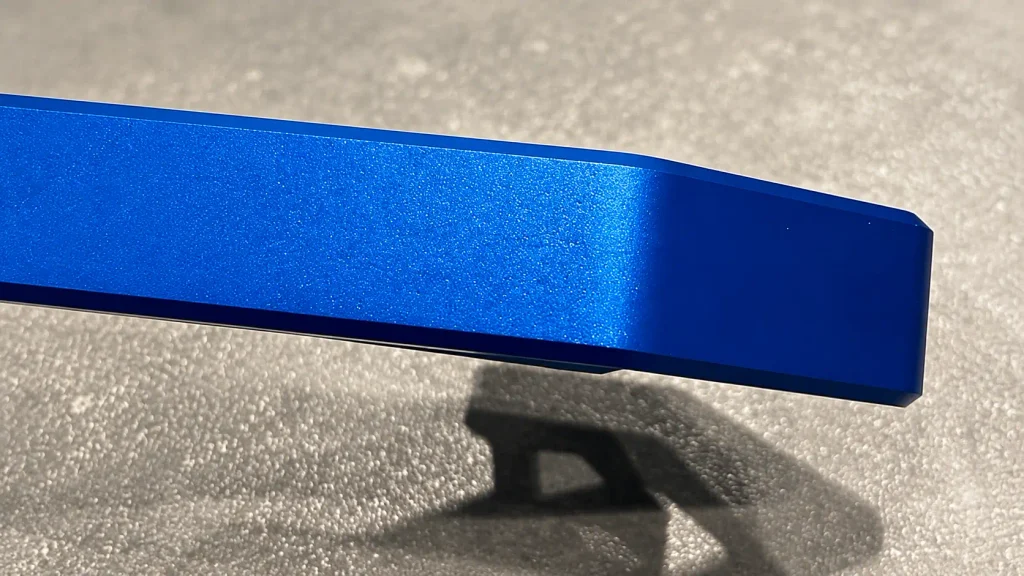
Bead blasting is often used before anodizing when the finished aluminum part needs a matte or satin appearance instead of the directional look left by machining. The blasting step establishes the surface texture first, while anodizing is applied afterward as the final surface treatment.
The condition of the blasted surface matters because anodizing does not hide deeper scratches, dents, or uneven blasting. If two areas have noticeably different textures before anodizing, those differences can remain visible after the anodized finish is applied.
For cosmetic parts, the surface should therefore be checked after bead blasting and before anodizing. Keeping the blasting media, coverage, and process conditions consistent is especially important when several parts need to match visually.
Bead Blasting vs. Sandblasting for Aluminum
Bead blasting and sandblasting are both used to modify aluminum surfaces, but they are usually selected for different finishing goals. The choice depends mainly on whether the priority is cosmetic appearance or stronger surface preparation.
Bead blasting is generally preferred when the aluminum part needs a controlled matte or satin appearance with relatively light surface treatment. It is commonly used on visible machined parts such as housings, covers, and panels where surface consistency matters.
Sandblasting is more suitable when the main objective is stronger cleaning, coating removal, or preparing the surface for another coating or treatment. Depending on the abrasive used, it can create a more pronounced surface profile than glass bead blasting.
For cosmetic CNC aluminum parts, bead blasting is usually the more appropriate option when appearance is the main concern. Sandblasting becomes more relevant when surface removal or preparation is more important than achieving a fine cosmetic finish.
The term “sandblasting” is often used broadly for abrasive blasting, so the actual result still depends on the blasting media and process conditions rather than the process name alone.
Conclusion
Bead blasting is a practical finishing method for aluminum parts that need a more uniform matte or satin appearance. It is especially useful for reducing the visual contrast of light machining marks, lowering glare, and preparing visible parts for additional finishing such as anodizing.
The quality of the final surface depends on more than the blasting media alone. Surface condition, bead size, pressure, nozzle movement, and media condition all influence the result. For cosmetic aluminum parts, consistent preparation and process control are what make the finish repeatable from one part to the next.
FAQ
Yes. Aluminum can be bead blasted with glass beads to create a matte or satin surface, reduce the visibility of light machining marks, and prepare the part for additional finishing. The blasting pressure and media should be selected carefully because aluminum is softer than many steels and can be damaged by overly aggressive blasting.
Start by cleaning the aluminum and protecting any threads, precision bores, sealing faces, or other areas that should remain untreated. Glass beads are then propelled against the surface using compressed air while the nozzle is moved evenly across the part. After blasting, the part should be cleaned to remove residual media and inspected for consistent coverage.
Yes, but bead blasting an already anodized aluminum part will normally remove or damage the anodized layer where the abrasive strikes the surface. If the part needs both a bead-blasted texture and anodizing, bead blasting is usually completed first, followed by anodizing.
It can affect the final appearance. Bead blasting changes the surface texture before anodizing, and that texture influences how light reflects from the finished part. A blasted surface generally produces a more matte appearance than an as-machined surface after anodizing, although the exact result also depends on the alloy and anodizing process.
It depends on the required result. Glass beads are better suited to cosmetic finishing because their rounded shape produces a gentler matte or satin texture. Aluminum oxide is harder and angular, making it more suitable for coating removal, heavier cleaning, or creating a rougher surface profile.