
In die casting, composition differences also affect how a material is selected and processed. A lightweight cover, a loaded mounting bracket, and a heat-dissipating housing may require different properties. Understanding density alongside alloy composition helps connect material data with the requirements of the finished part.
What Is the Density of Aluminum?
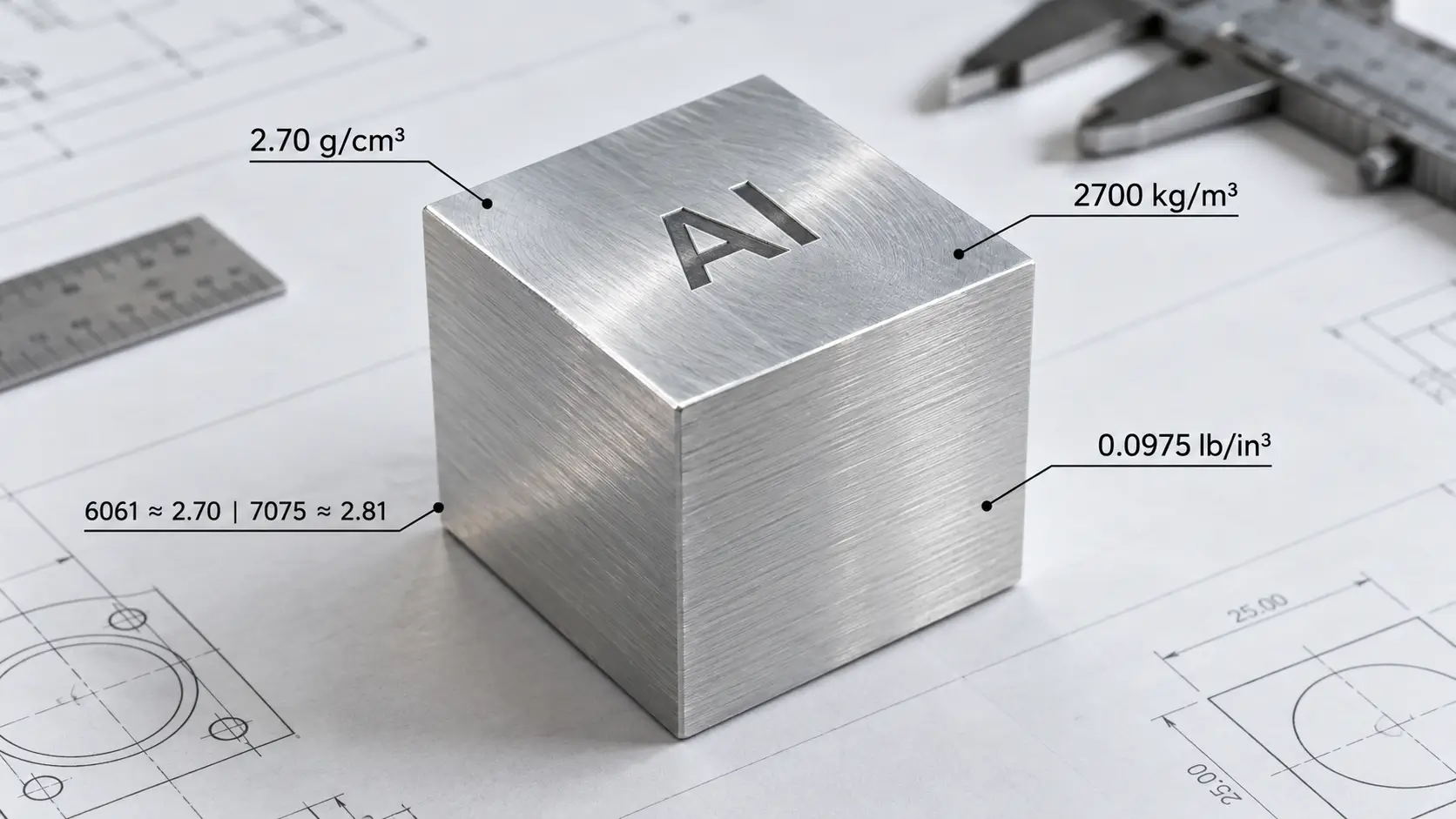
Density is the mass contained in a given volume. One cubic centimeter of solid pure aluminum has a mass of approximately 2.70 grams at room temperature.
| Unit | Approximate Density of Pure Aluminum |
|---|---|
| g/cm³ | 2.70 |
| kg/m³ | 2,700 |
| lb/in³ | 0.0975 |
| lb/ft³ | 168.6 |
Carbon steel is approximately 7.85 g/cm³, while copper is about 8.96 g/cm³. For equal volumes, aluminum therefore has roughly one-third the mass of steel.
The 2.70 g/cm³ value describes pure aluminum near room temperature. Commercial grades contain alloying elements, so their nominal densities differ.
Density of Common Aluminum Alloys
Aluminum grades are grouped according to their composition and material form. Wrought alloys and casting alloys use different designation systems and should be identified separately.
Wrought Aluminum Alloys
Wrought aluminum is supplied as sheet, plate, bar, and extruded sections. In the four-digit designation system, the first digit identifies the alloy series and its principal alloying element or combination of elements.
| Alloy Series | Main Alloying Elements | Grade | Density (g/cm³) | Density (kg/m³) |
|---|---|---|---|---|
| 1xxx | Commercially pure aluminum | 1100 | 2.71 | 2,710 |
| 2xxx | Copper | 2024 | 2.78 | 2,780 |
| 3xxx | Manganese | 3003 | 2.73 | 2,730 |
| 5xxx | Magnesium | 5052 | 2.68 | 2,680 |
| 5xxx | Magnesium | 5083 | 2.66 | 2,660 |
| 6xxx | Magnesium and silicon | 6061 | 2.70 | 2,700 |
| 6xxx | Magnesium and silicon | 6063 | 2.70 | 2,700 |
| 7xxx | Zinc | 7075 | 2.81 | 2,810 |
Die Casting Aluminum Alloys
Casting designations include ADC grades and Aluminum Association grades such as A380. The four-digit wrought-alloy classification above does not apply to these materials.
| Die Casting Alloy | Density (g/cm³) | Density (kg/m³) |
|---|---|---|
| ADC12 | 2.70 | 2,700 |
| A380 | 2.71 | 2,710 |
| A360 | 2.63 | 2,630 |
| A413 | 2.66 | 2,660 |
Data sources: Aluminum Association references for wrought-alloy nominal densities; NADCA alloy data for A360 and A413; supplied material specifications for ADC12 and A380. Specialty-material parameters discussed below also come from the supplied specifications. Density values are reference figures rather than finished-part acceptance limits; supplier specifications and test conditions should be retained when using performance data.
What Affects Aluminum Density?
Composition and temperature affect the density of the metal itself. Internal cavities introduce a separate effect when measuring the bulk density of a casting.
Alloy Composition
Copper and zinc are denser than aluminum, while magnesium and silicon are less dense. Their proportions influence alloy density, but commercial alloys contain several controlled elements. The complete composition matters.
Alloy names also describe more than density. Elements interact with the aluminum base to change microstructure and properties. A density value cannot show whether a grade has the required strength, corrosion resistance, or thermal conductivity.
For example, ADC12 and A380 have different silicon and copper ranges even though the density values in the table are close.
| Alloy | Silicon (wt.%) | Copper (wt.%) | Aluminum |
|---|---|---|---|
| ADC12 | 9.6–12.0 | 1.5–3.5 | Balance |
| A380 | 7.5–9.5 | 3.0–4.0 | Balance |
These are selected composition ranges, not complete specifications. Additional elements and limits must meet the governing material requirements.
Temperature
Aluminum expands as it heats. Its mass remains unchanged, but the increased volume reduces density.
Most reference tables describe solid material near room temperature. Molten aluminum has a different density, and process calculations should use data appropriate to the alloy and temperature involved.
Casting Porosity
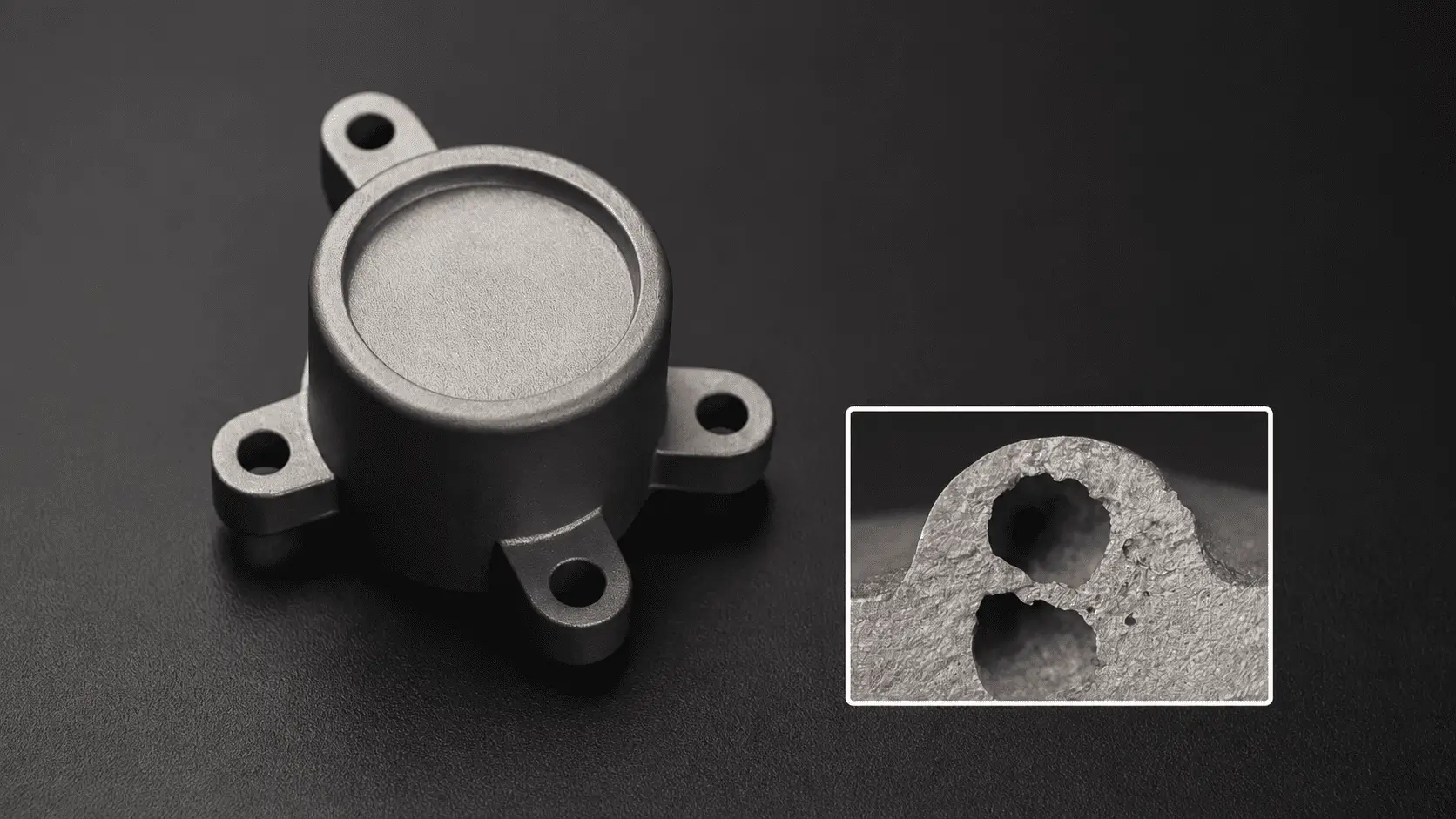
Gas pores and shrinkage cavities occupy volume without contributing metal mass. They can lower a casting’s apparent bulk density relative to solid material of the same composition.
The result depends on the measurement method and which voids are included in the measured volume. Bulk density alone cannot reveal pore locations or determine whether a connected leakage path exists.
How Aluminum Density Relates to Die Casting
Aluminum’s low density contributes to lightweight components, but the casting process involves additional material characteristics. Filling, solidification, and defect control need to be evaluated through alloy properties, part geometry, and production conditions.
Lightweight Parts and Handling
Lower component mass can be useful for equipment covers, moving assemblies, and housings supported by brackets or frames. It can also reduce the effort required to handle large parts during trimming, machining, finishing, and installation.
The benefit depends on the completed design. A loaded aluminum component may need a different section from a steel component to meet stiffness or strength requirements. Material density describes the weight associated with a volume; it does not establish a suitable wall thickness.
Nor does a light casting automatically require less clamping force. High-pressure die casting uses pressure to fill the cavity, and machine selection must account for cavity pressure, projected area, and the process requirements.
Alloy Composition and Mold Filling
Thin ribs, narrow walls, and long flow paths must fill before cooling prevents further metal movement. Alloy composition affects this behavior, alongside melt temperature, die temperature, gate arrangement, and the shot profile.
Silicon is important in aluminum casting alloys because it influences their casting characteristics. ADC12 and A380 are both aluminum-silicon-copper grades, but their composition ranges differ. Selecting between them requires a review of the geometry and material specification, rather than a comparison of density alone.
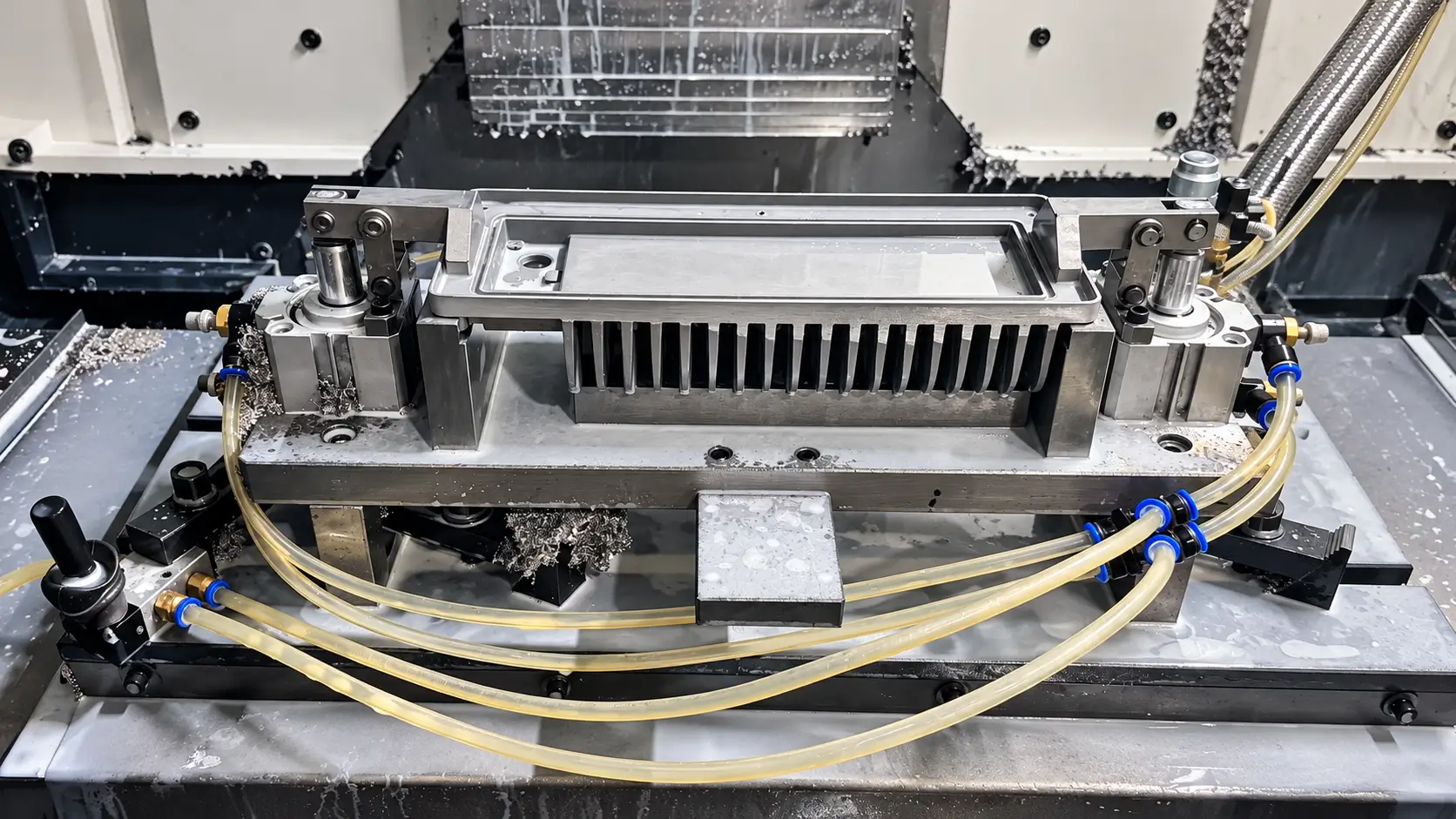
Consider a housing with several ribs around an internal opening. Metal divides as it passes the opening, and the streams must reach the remaining features without trapping excessive air or forming an incomplete junction. Gate location and filling sequence remain important even when the alloy is suitable for intricate castings.
A material change should therefore be evaluated with the intended tooling and process. It is not enough to substitute another grade because its nominal density is similar.
Solidification and Porosity Control
Gas porosity and shrinkage porosity have different causes. Air can become entrained during movement through the shot sleeve and cavity, while shrinkage cavities develop where solidification contraction cannot be adequately compensated.
For gas-related problems, review the shot profile, filling pattern, vents, and any vacuum system. Die spraying and drying also deserve attention where residual moisture or excessive lubricant can introduce gas.
For shrinkage, examine thick bosses, wall junctions, local cooling, and pressure transfer. Intensification pressure can assist only while the relevant liquid-metal path remains available; it cannot effectively feed a region already isolated by solidification.
These controls address how the casting is formed. Selecting a lower-density alloy does not, by itself, solve either mechanism. Further identification and prevention guidance is covered in Die Casting Defects: Types, Causes, and Solutions.
Matching the Alloy to the Application
For an ordinary equipment housing, material selection may begin with casting geometry, mounting requirements, environmental exposure, and the intended finish. ADC12 and A380 are familiar candidates, but the drawing still needs to identify which grade governs production.
A load-bearing connection calls for closer attention to yield strength, elongation, and the finished component’s behavior. The supplied QN39 specification lists a density of 3.05 g/cm³, tensile strength of at least 350 MPa, and elongation of at least 4%. This illustrates why a higher-density formulation may warrant consideration for mechanical requirements. Its suitability must be validated in the actual design; the material figures do not establish a bracket’s load capacity.
AlSi10MnMg provides another formulation to evaluate. Its supplied specification lists 2.64 g/cm³, with controlled magnesium and manganese ranges and relatively low copper and iron limits. The properties apply to the delivery condition stated in that document, so they should not be treated as directly interchangeable with results from a different material state.
For a heat-dissipating enclosure, thermal conductivity becomes a separate selection criterion. The supplied DR07 specification lists 180 W/m·K at 25°C, compared with 96.2 W/m·K in the supplied ADC12 specification. These figures support a material comparison, but they do not predict an equal percentage improvement in product cooling.
Heat must pass from its source into the casting and then through the walls to the cooling surfaces. Contact resistance, wall geometry, and fin arrangement can limit that path. A material with higher conductivity should be evaluated within that thermal design.
Machining and Surface Finishing Considerations
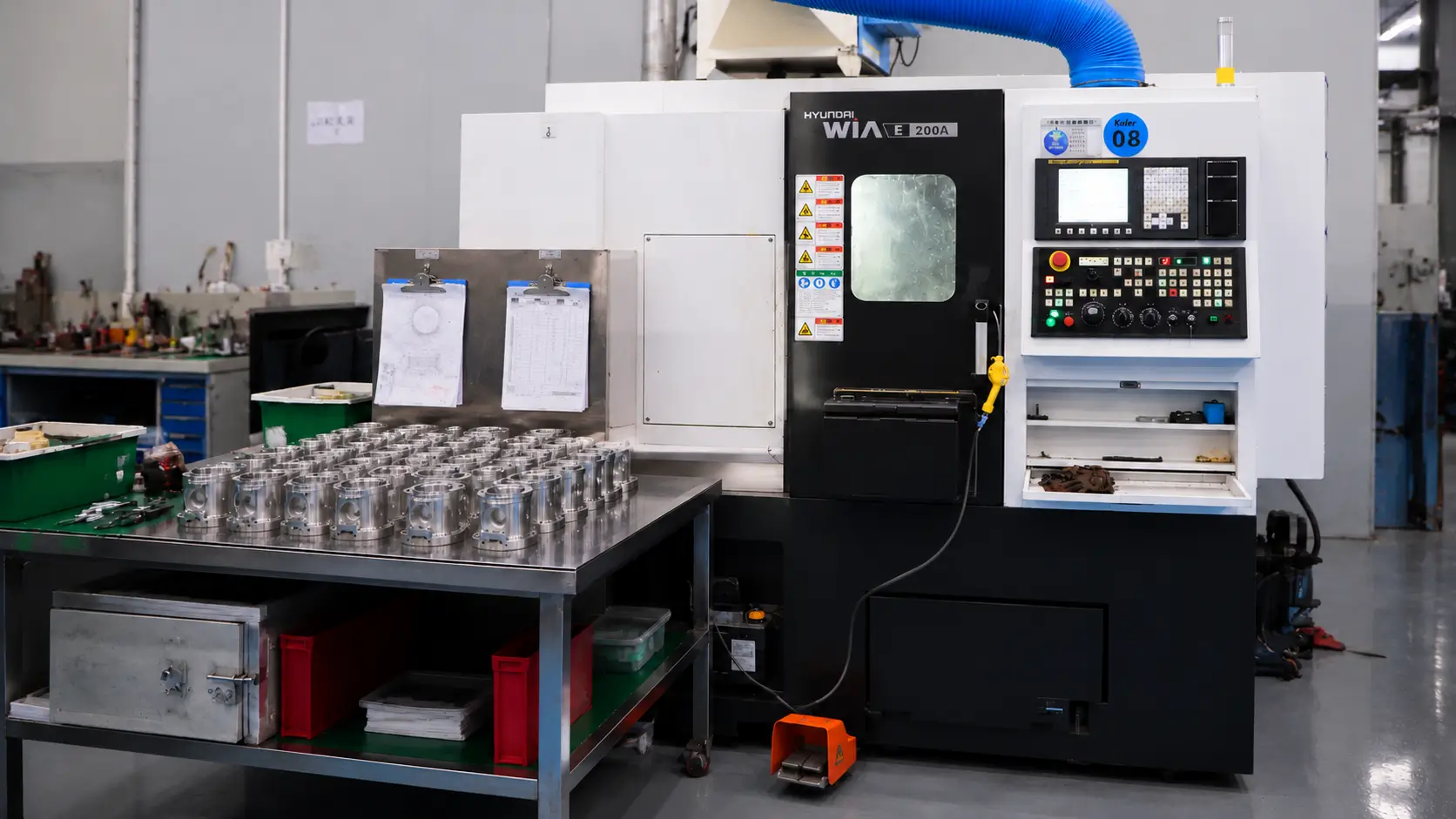
A casting may need bores, mounting faces, threads, and sealing surfaces machined after it leaves the die. Alloy composition affects cutting behavior, while internal porosity may become exposed as material is removed.
Identify critical features before tooling. A sealing face needs different acceptance criteria from a nonfunctional outer wall, and a threaded boss needs enough sound material to support the specified connection. Record these requirements on the drawing rather than relying on a general instruction such as “no defects.”
The intended finish belongs in the same discussion. Silicon-rich casting alloys can produce a different anodized appearance from wrought aluminum such as 6061. For visible components, confirm the acceptable color and texture using representative samples. Painting or powder coating may be suitable alternatives where the application permits.
Material handling requirements also need to follow the selected specification. The supplied DR07 document warns that return-metal practices can affect thermal performance. Such instructions apply to that material and should not be generalized into a rule for every aluminum casting alloy.
ZH Precision provides custom die casting services, including secondary CNC machining and surface finishing. We manufacture housings, covers, brackets, and other components to your drawings. Include the material grade, application, and critical mechanical, thermal, or sealing requirements when requesting a quote.
Conclusion
Pure aluminum has a density of approximately 2.70 g/cm³ at room temperature, while alloy densities vary with composition. In die casting, the material decision also involves filling behavior, mechanical properties, heat transfer, machining, and finishing. Use density as one material characteristic, then evaluate the selected alloy against the requirements of the actual component.