Aluminum Die Casting Services

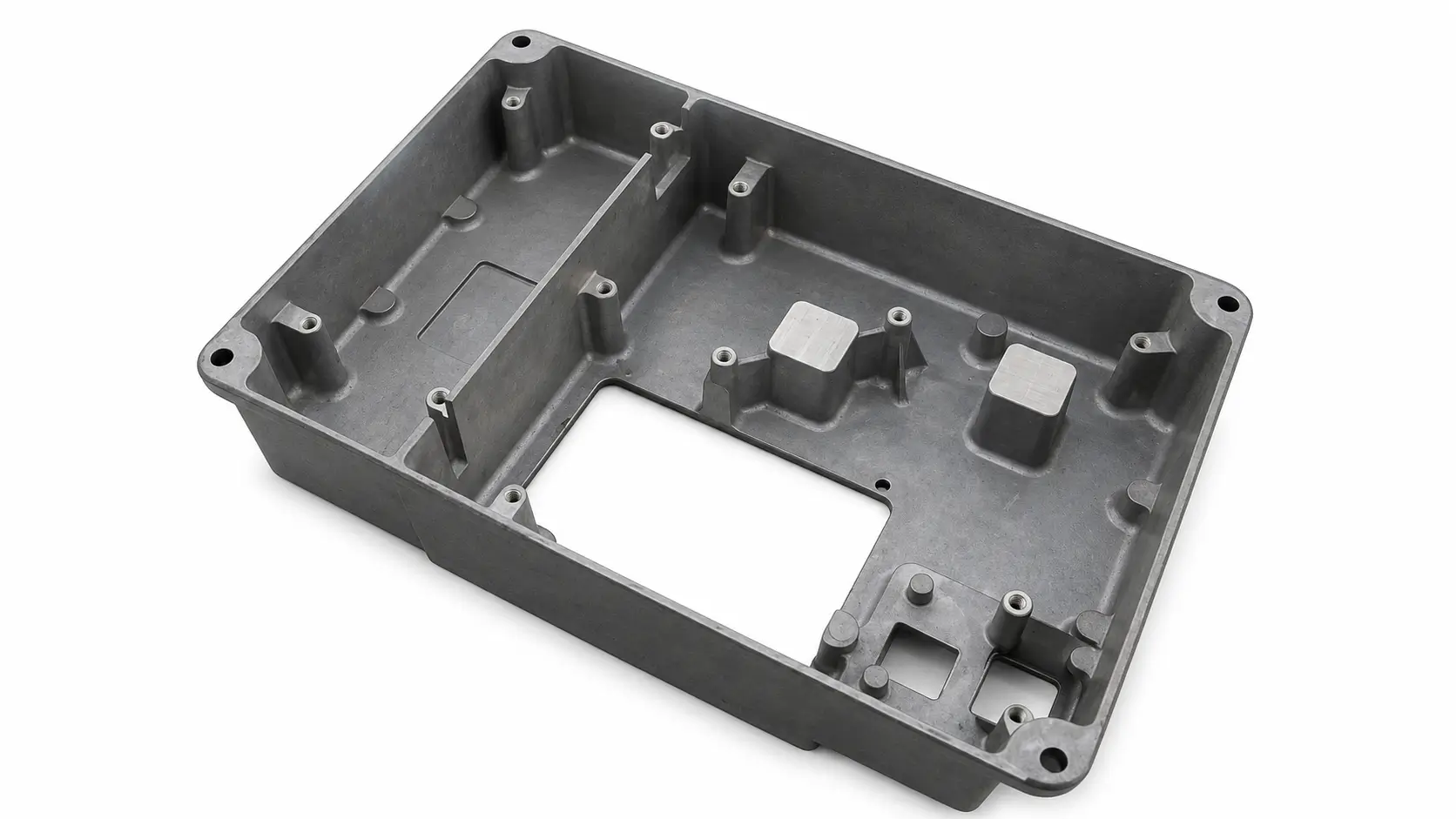
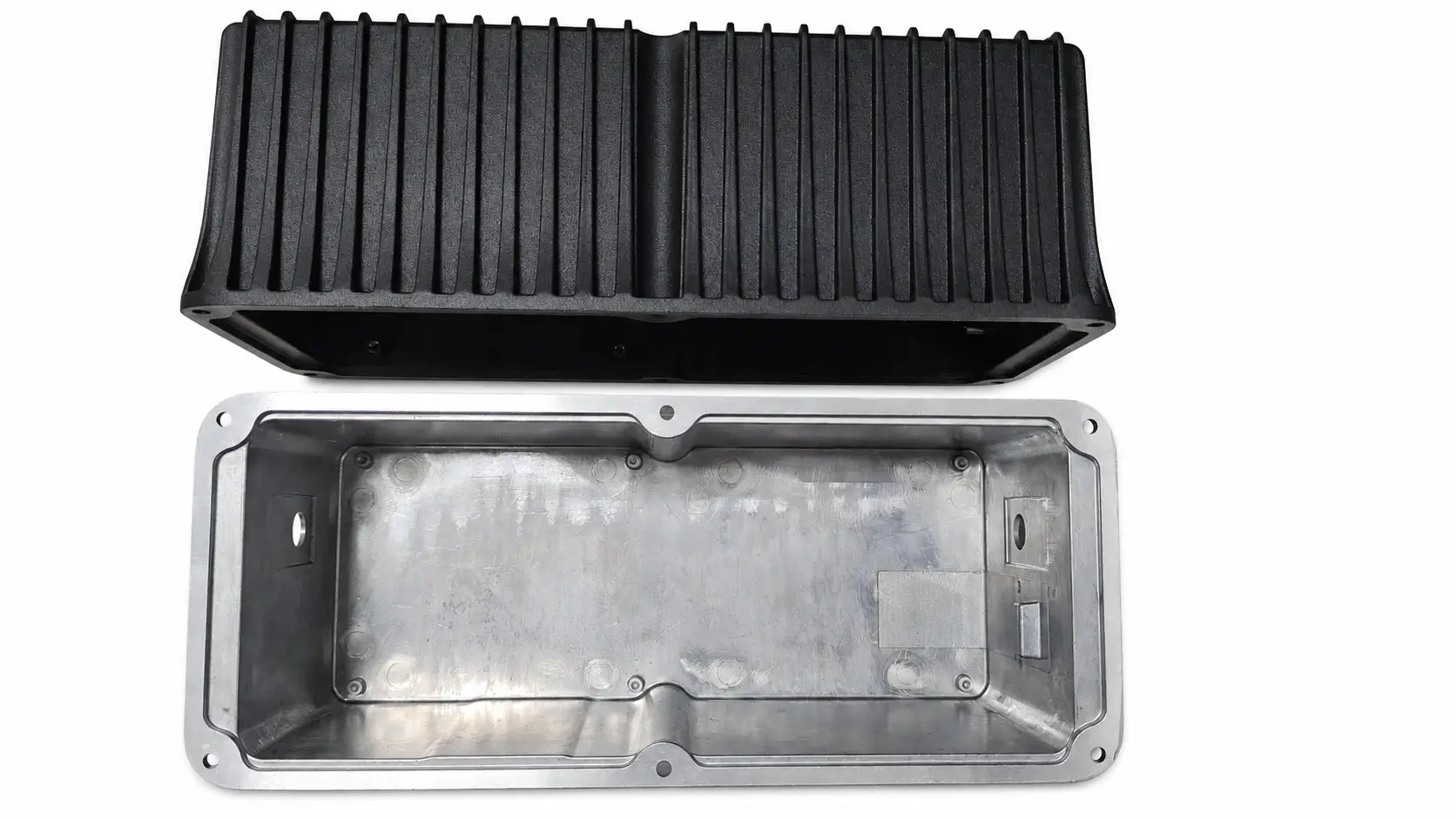
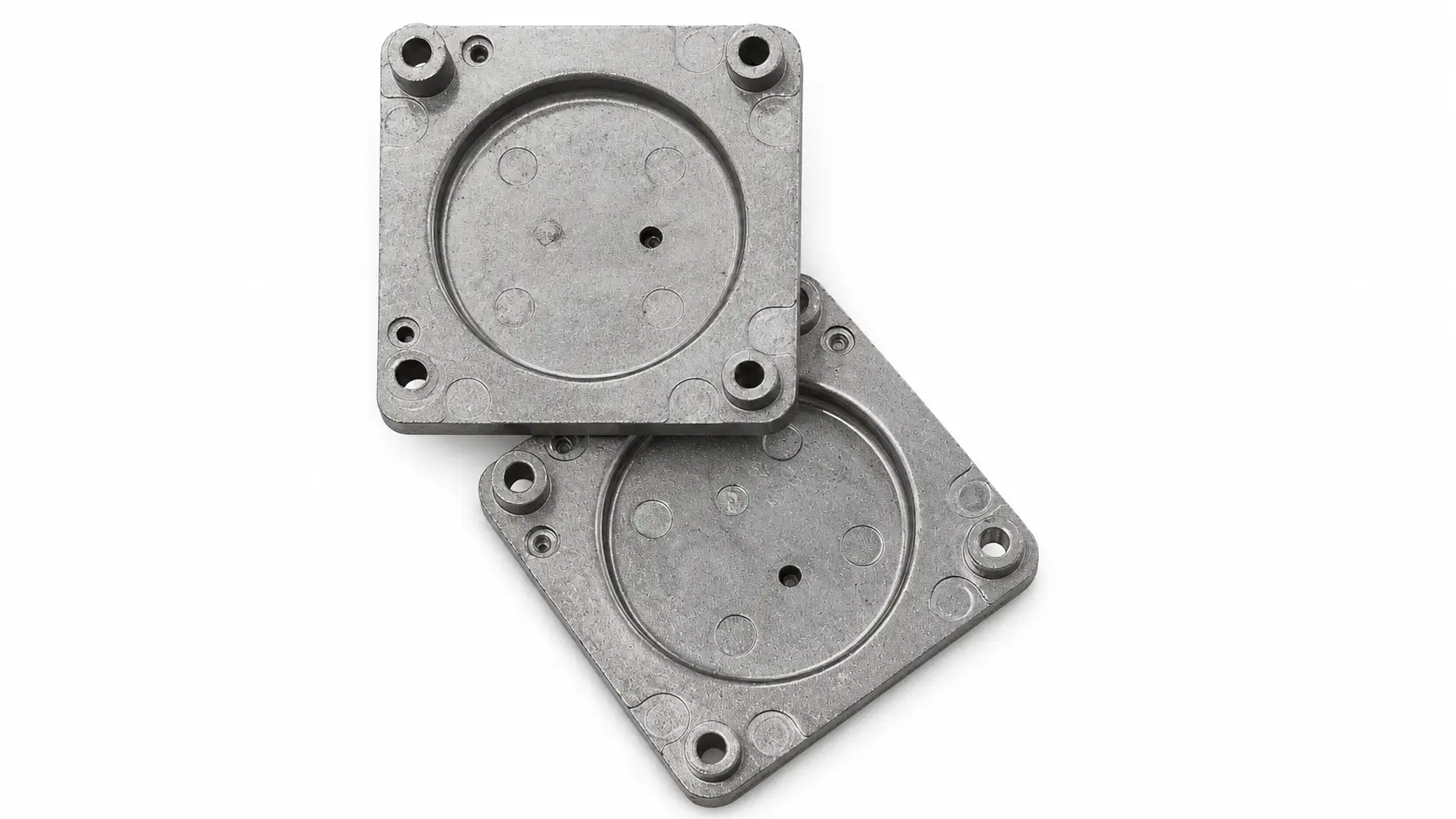
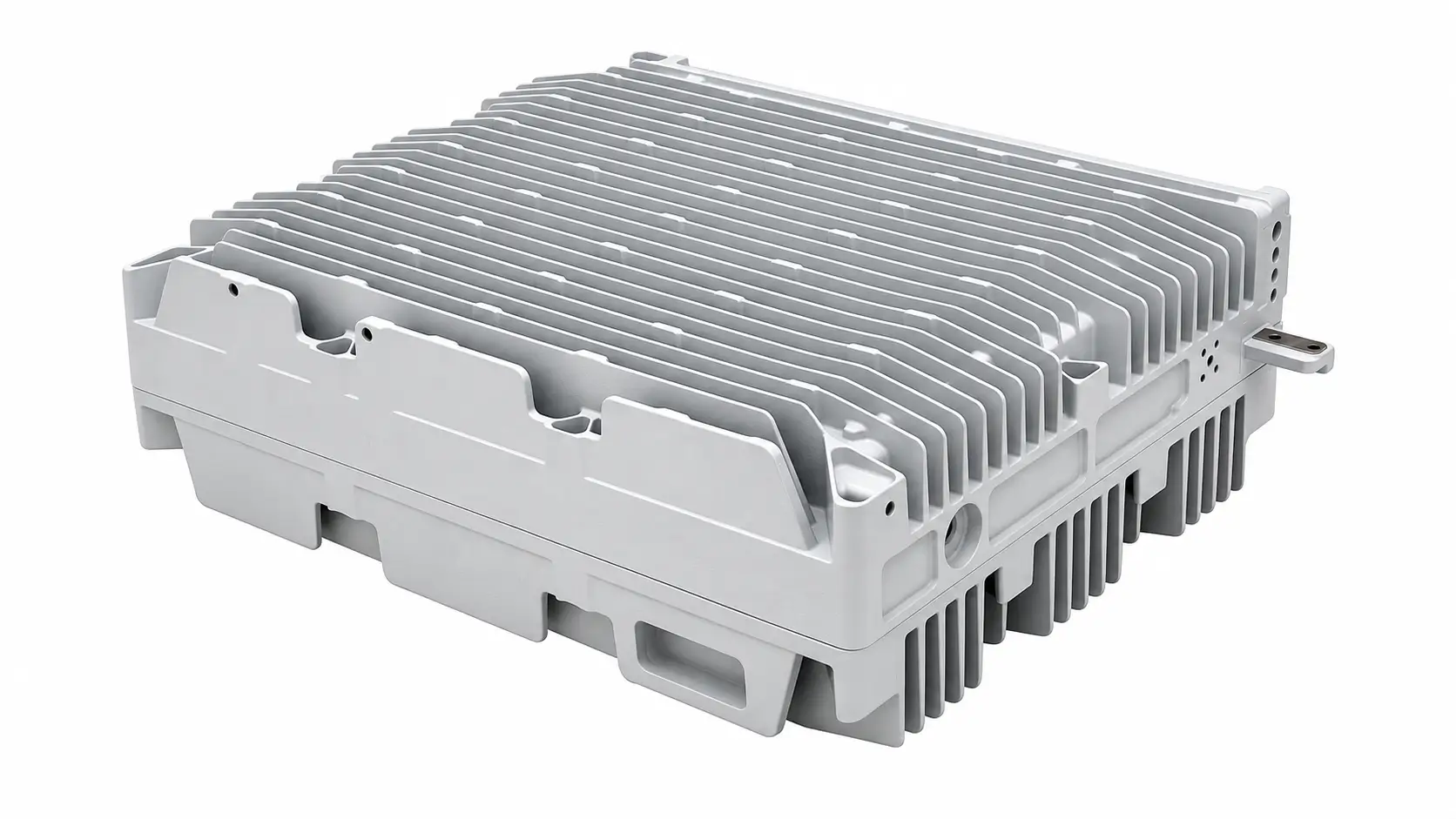
Custom aluminum die casting services, from DFM and mold manufacturing to high-pressure casting, CNC machining, and finishing. Our team supports OEM projects with reliable production and quality control.

Quality Certifications
ISO 9001:2015 | IATF 16949:2016

Aluminum Die Casting Services

STP I SLDPRT I IPT I PRT I SAT FLES
All uploaded content is secure and confidential.

Trusted by companies like

Aluminum Die Casting Manufacturer in China

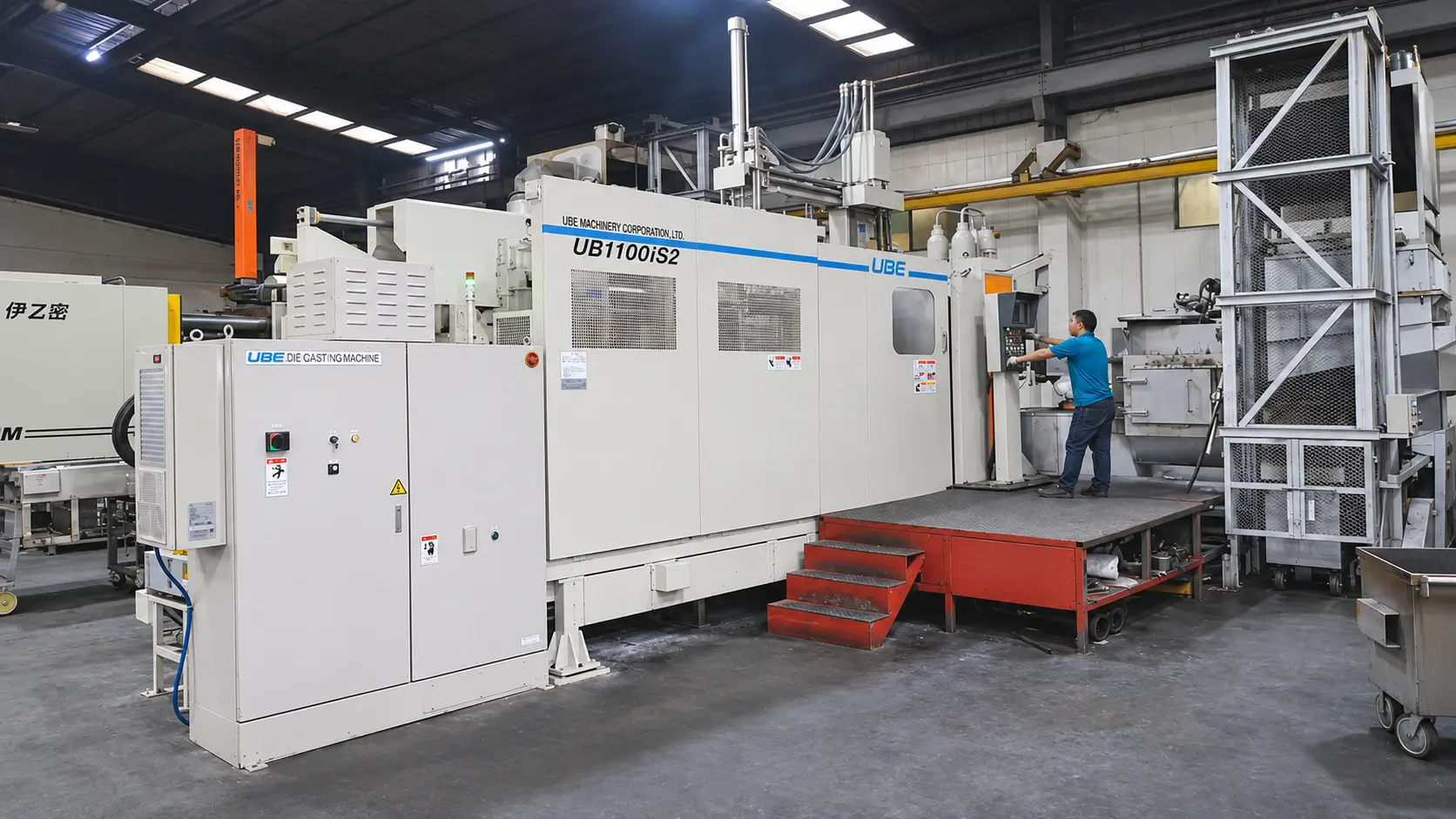
Based in Dongguan, China, Zhonghui Precision operates a 10,000 m² factory site equipped with cold-chamber aluminum die casting machines ranging from 250T to 3000T. With an annual production capacity of up to 500,000 parts, our facility supports a wide range of OEM aluminum die casting projects.

Manufacturing capabilities cover custom aluminum housings, electronic enclosures, heat sinks, and structural brackets, with in-house CNC machining for critical dimensions, mounting features, and mating surfaces. From new product development to recurring production orders, integrated manufacturing supports consistent production and coordinated project delivery.

Our Aluminum Die-Casting Process

Aluminum die casting production covers the complete manufacturing process, from mold development and high-pressure casting to CNC machining and surface finishing. With casting and secondary operations integrated in-house, Zhonghui Precision delivers finished aluminum parts tailored to specific application and assembly requirements.

Engineering-Team-1.webp

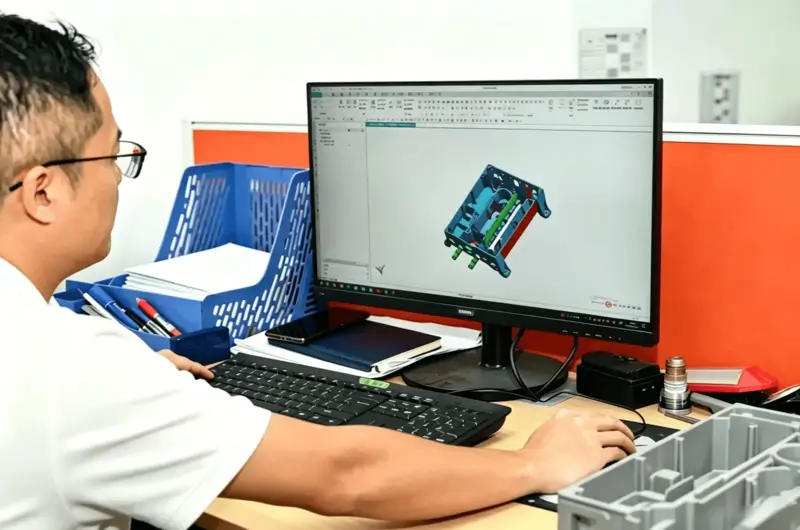
DFM Analysis

Aluminum part designs are reviewed for wall thickness, draft angles, rib structures, machining allowances, and casting feasibility to identify potential production issues before tooling begins.
Mold-Design-Manufacturing-webp.webp

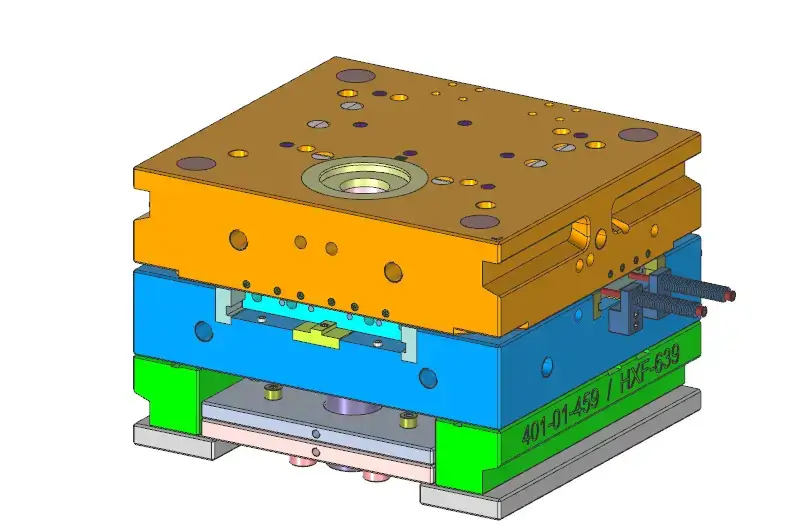
Mold Design & Manufacturing

Custom aluminum die casting molds are designed and manufactured according to part geometry, alloy characteristics, dimensional requirements, and expected production volume.
Die-Casting-Line-Image.webp

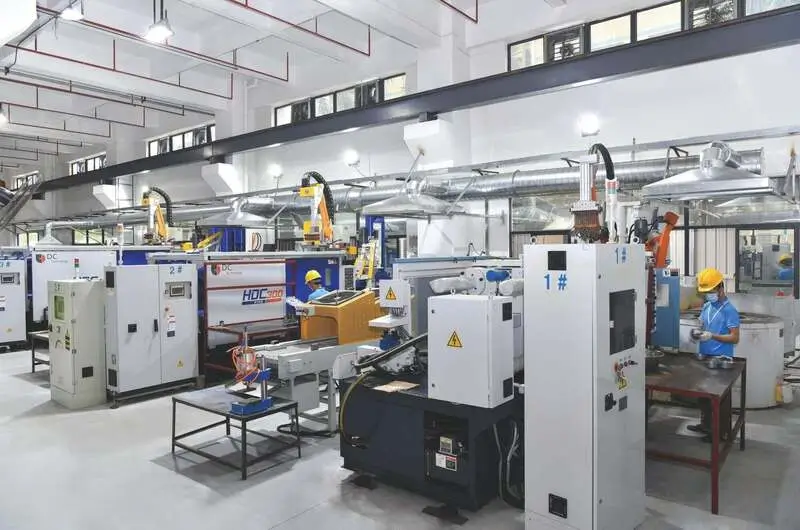
Die Casting Parts Production

Molten aluminum is injected into precision-engineered steel molds under high pressure to form parts with complex geometries, integrated features, and consistent dimensions.
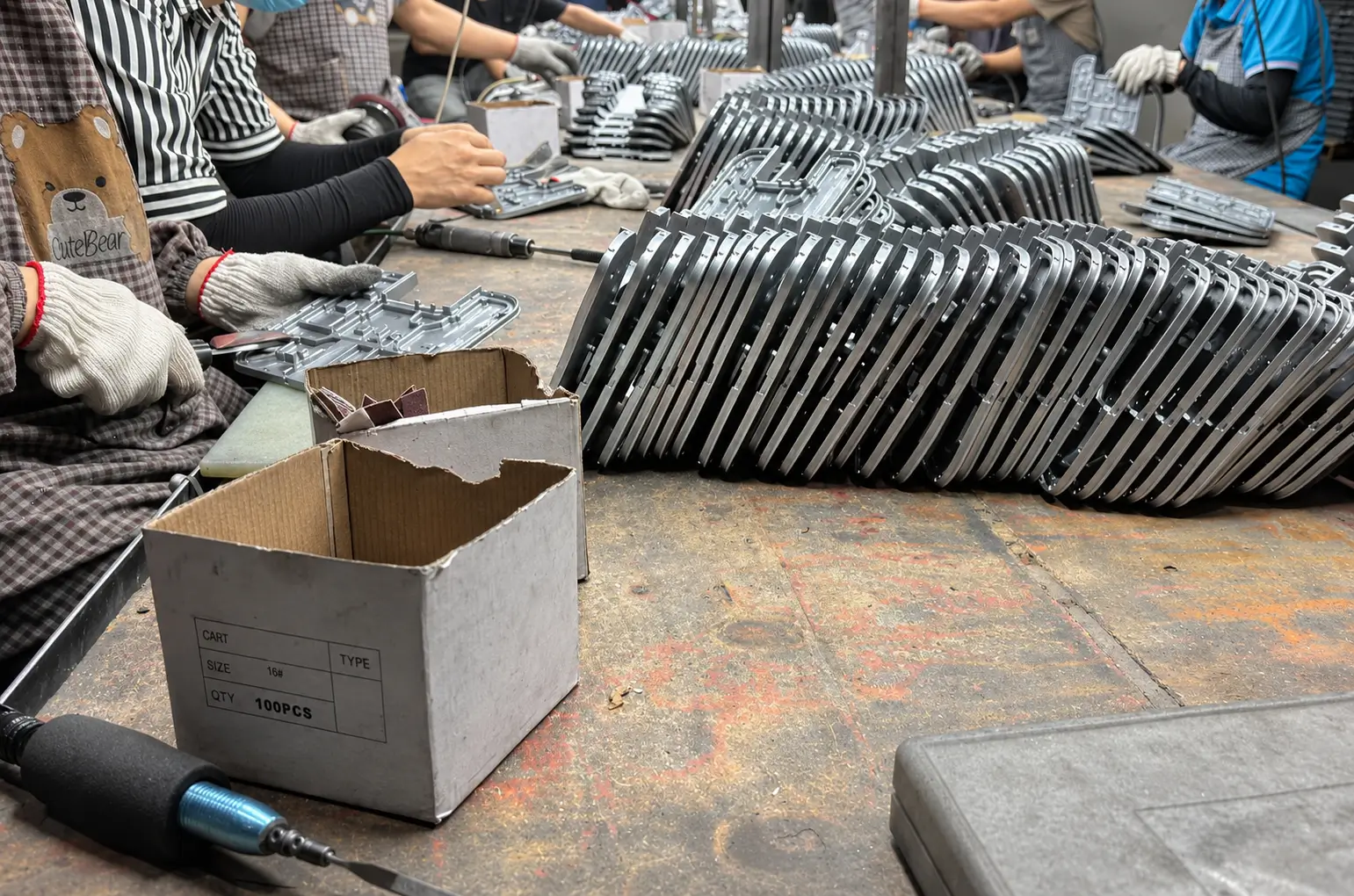
Trimming & Deburring

Trimming & Deburring

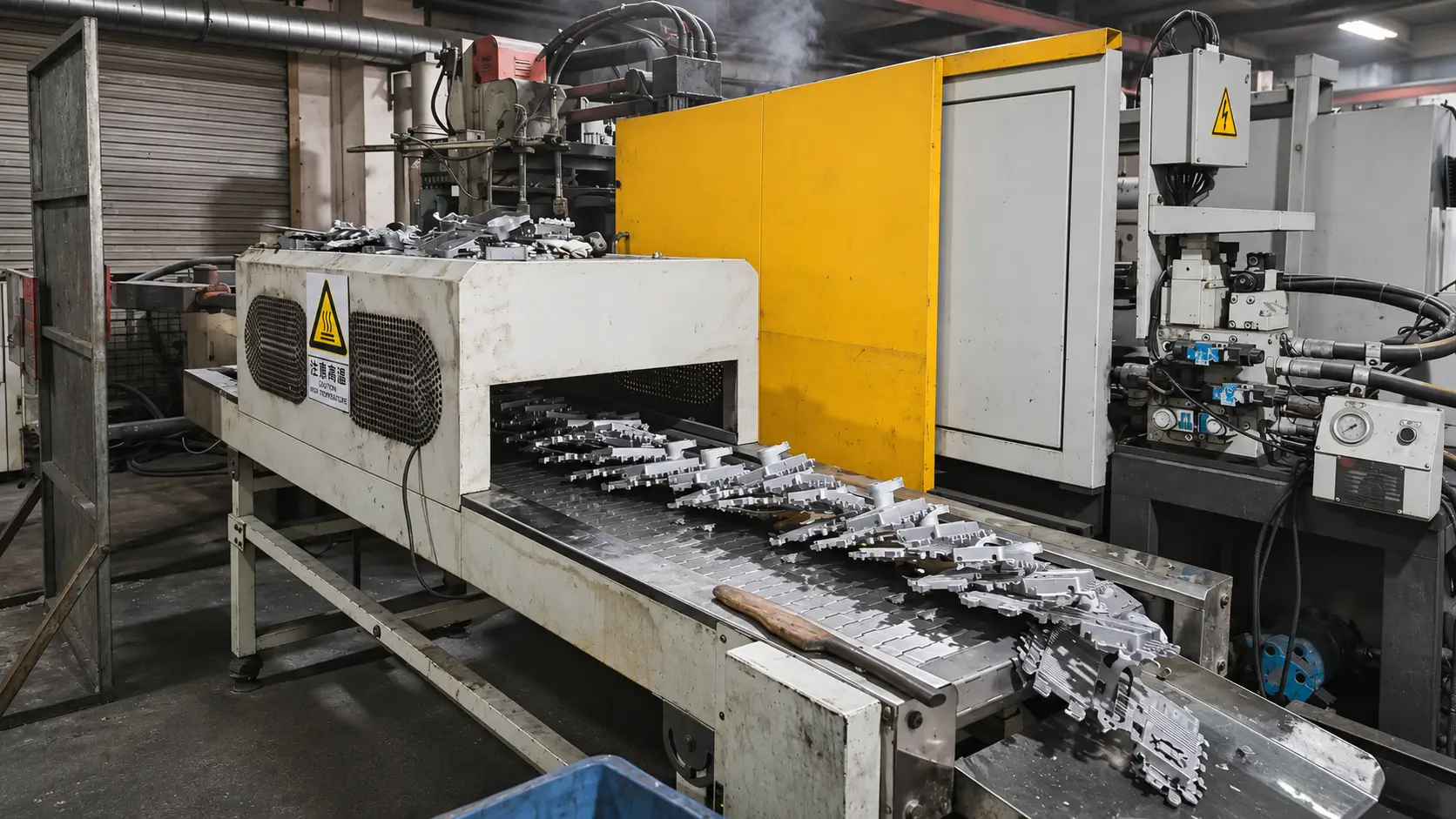
Gates, runners, and excess flash are removed through trimming, deburring, and grinding to clean casting edges and prepare parts for further processing.
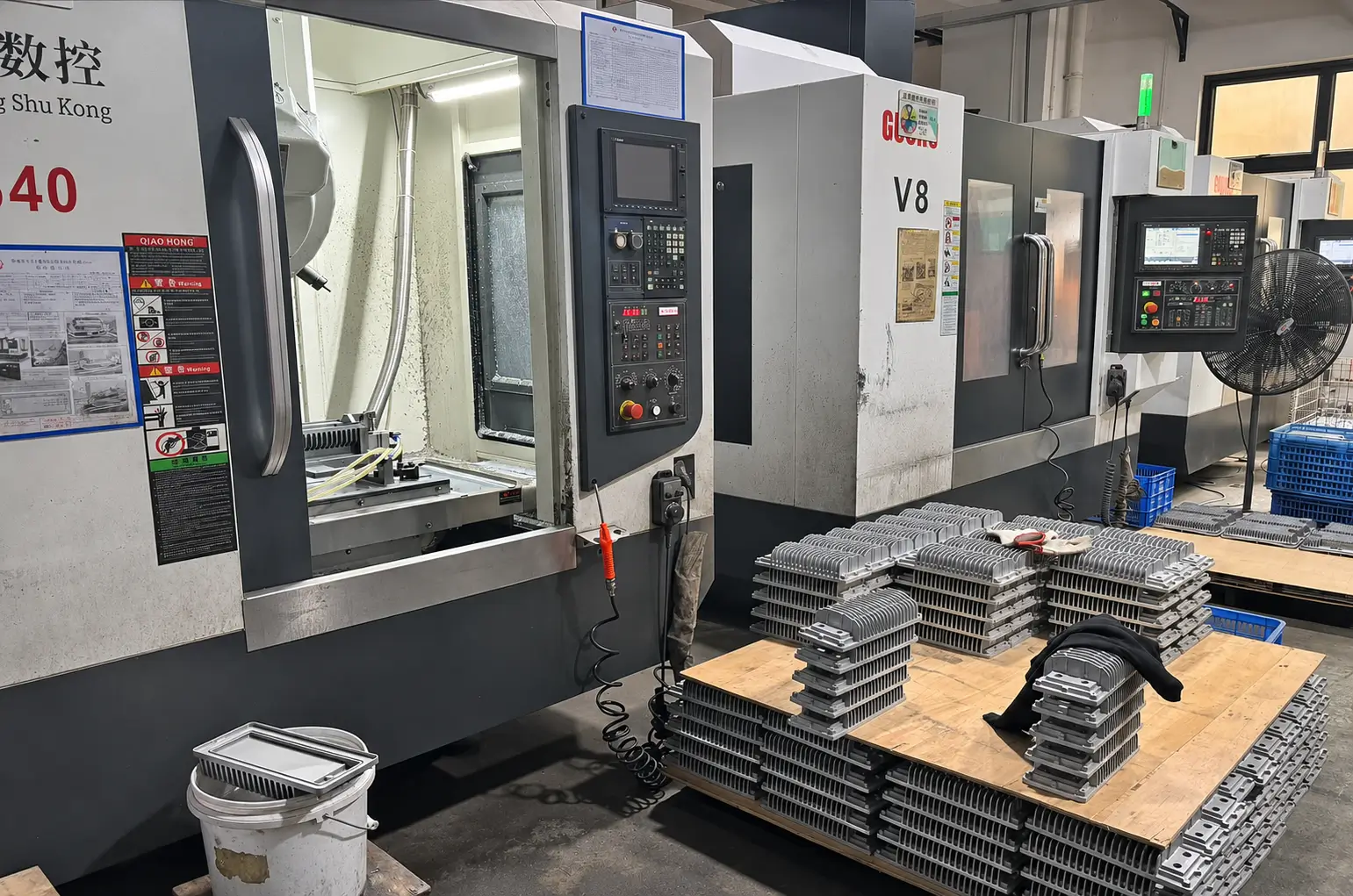
CNC Secondary Machining

CNC Secondary Machining

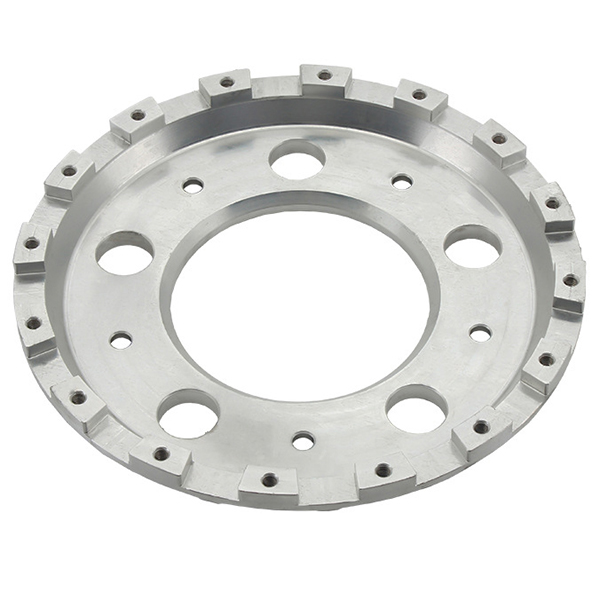
CNC milling, drilling, and tapping produce accurate mounting surfaces, threaded holes, and other critical features according to customer drawings.
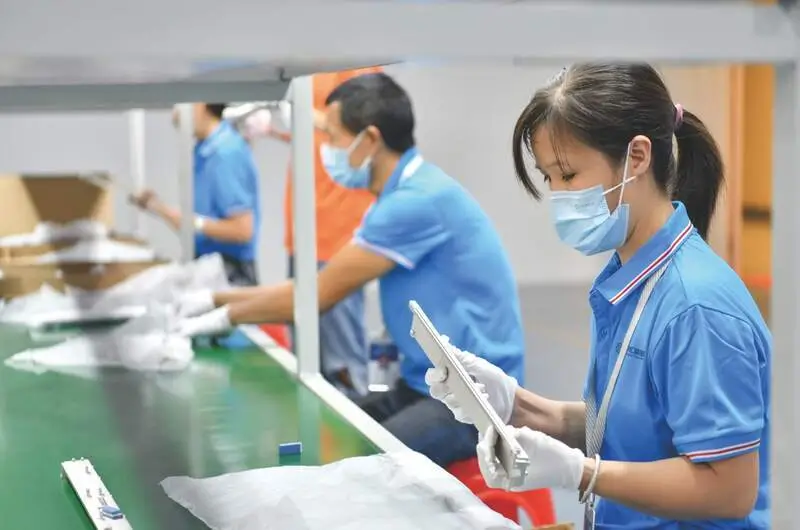
Assembly-Services-webp-1.webp

100% Inspection

Every aluminum die cast part undergoes 100% inspection to check dimensional accuracy, casting defects, and machining quality against customer specifications.
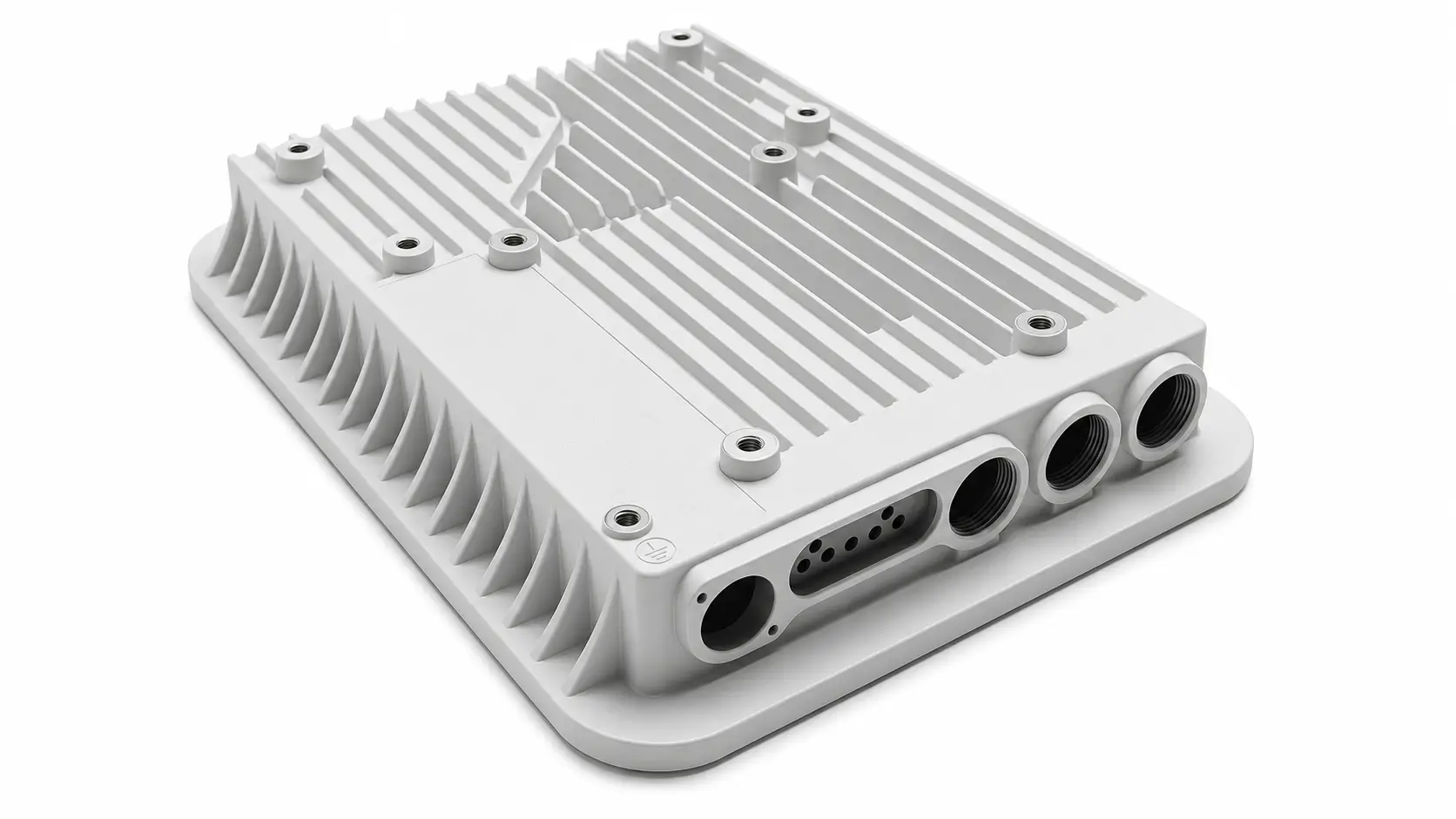
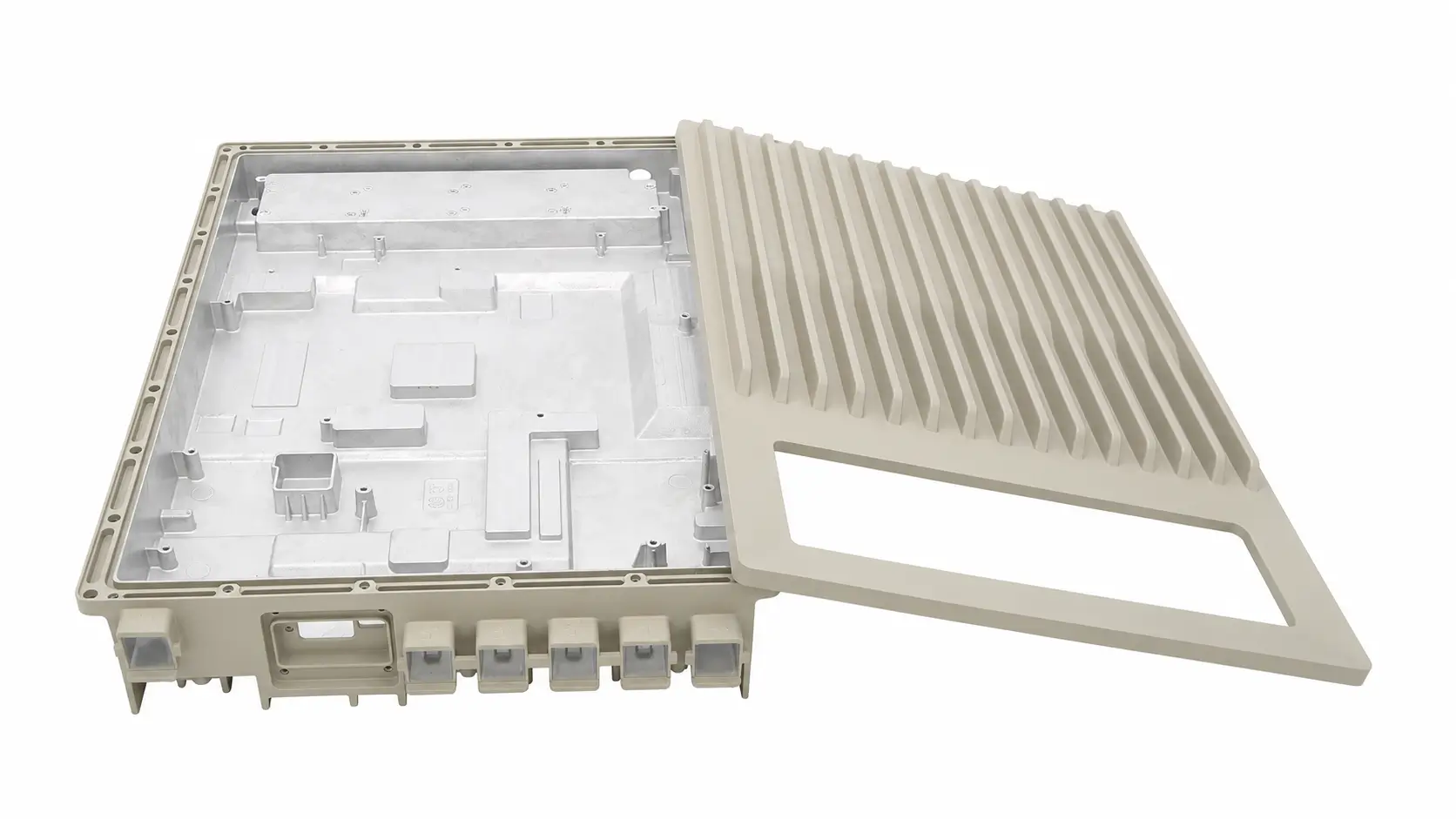
Custom Aluminum Die Casting Parts We Manufacture

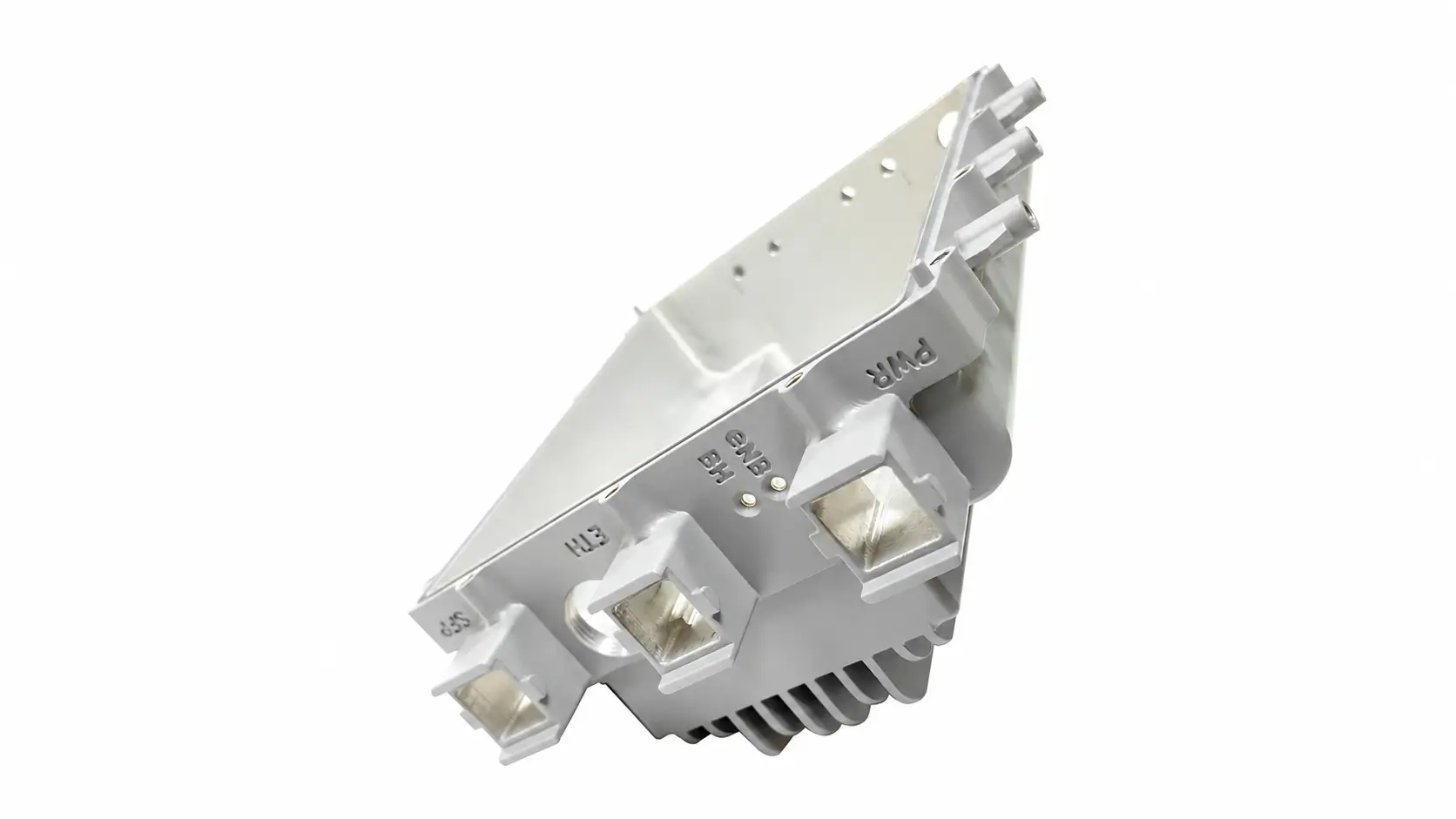
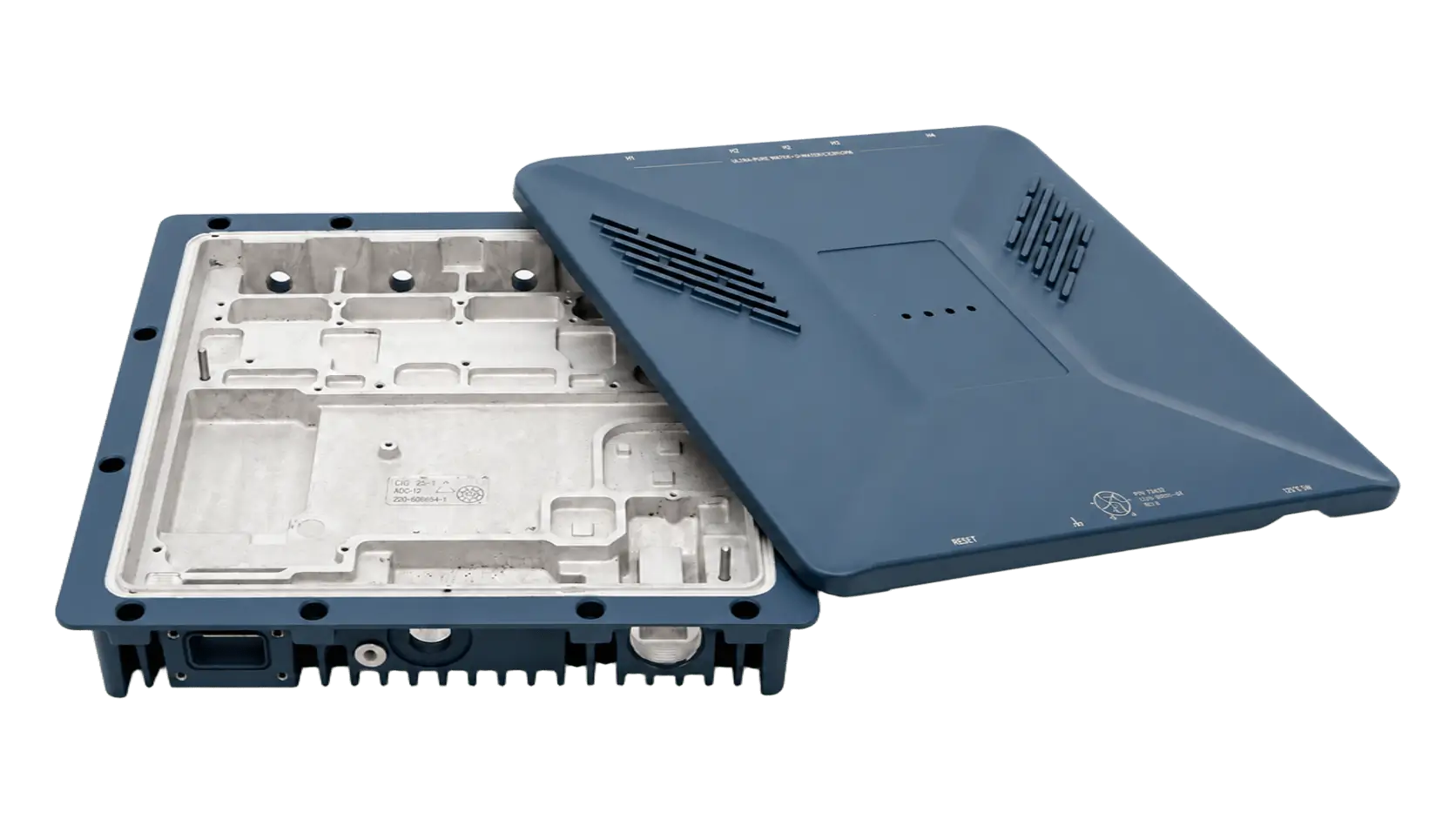
Custom aluminum die casting parts are manufactured based on customer drawings, 3D models, and application requirements. Typical products include electronic enclosures, 5G communication housings, automotive parts, industrial equipment housings, heat sinks, and structural brackets for various OEM applications.

Aluminum Die Casting Tolerances

Dimensional requirements are reviewed against the part drawing, with casting tolerances specified according to ISO 8062-3 and an agreed tolerance grade. General tolerances for secondary machined features can follow ISO 2768-m, while individually toleranced features follow the drawing specifications.

CapabilitySpecification
Minimum Part Weight5 g
Maximum Part Weight18 kg
Minimum Part Size15 mm × 3 mm
Maximum Part Size350 mm × 720 mm
Minimum Wall Thickness0.8 mm
Maximum Wall Thickness15 mm
Quality Management SystemISO 9001:2015 and IATF 16949:2016
Minimum Order Quantity500 pcs

Review Your Aluminum Die Casting Project Before Tooling

Submit your drawings or 3D models for an engineering review of casting feasibility, tooling requirements, and potential manufacturing risks before production.

Aluminum Die Casting Materials

Consistent casting performance starts with controlled aluminum alloy composition, batch consistency, and material traceability. Material Test Certificates (MTCs) and inspection records are available to verify chemical composition and mechanical properties.

A380 Aluminum Alloy

A380 is a common choice for general-purpose die cast components. It supports a broad range of part designs and is often considered when a project needs a balance between manufacturing efficiency and functional performance.

Key Features: Balanced strength and castability; good machinability for holes, threads, and mating surfaces.

Typical Applications: Equipment housings, mounting brackets, covers, and industrial components.

ADC12 Aluminum Alloy

ADC12 is widely used in Asian die casting production, particularly for parts combining detailed geometry with subsequent machining. It is frequently specified on customer drawings, making the applicable material standard an important part of project review.

Key Features: Good fluidity and filling capability; suitable for detailed castings with machined features.

Typical Applications: Electronic enclosures, communication housings, automotive components, and equipment covers.

A383 Aluminum Alloy

A383 is considered when casting geometry places greater demands on mold filling. It offers an alternative to A380 for designs with intricate sections, although the final choice must also account for the component’s mechanical and finishing requirements.

Key Features: Strong mold-filling capability, particularly for thin sections and intricate details.

Typical Applications: Thin-wall enclosures, ribbed housings, detailed covers, and complex cast components.

A360 Aluminum Alloy

A360 is an option for components where environmental exposure or fluid containment influences material selection. For these projects, alloy choice works together with casting design, process control, and testing to achieve the required performance.

Key Features: Good corrosion resistance and ductility; favorable pressure-tightness characteristics.

Typical Applications: Pump housings, valve bodies, and outdoor equipment components.

AlSi9Cu3 Aluminum Alloy

AlSi9Cu3 is commonly specified for die cast components in European automotive and industrial projects. The full material designation should be identified on the drawing or purchase specification, particularly when assessing alternatives from another alloy standard.

Key Features: Good castability and machinability, with balanced mechanical properties.

Typical Applications: Gearbox housings, motor housings, automotive covers, and industrial machinery components.

Surface Finishing for Aluminum Die Casting Parts

A complete lineup of surface finishing solutions is provided for aluminum die castings, including anodizing, powder coating, sandblasting and chromate coating. Each surface treatment optimizes part corrosion protection, mechanical performance and outward finish for mass-produced precision cast components.

AS-machined-Image.jpg

As Cast

The natural surface finish after die casting provides a cost-effective option for parts where additional surface treatment is not required.
Anodizing-Image.jpg

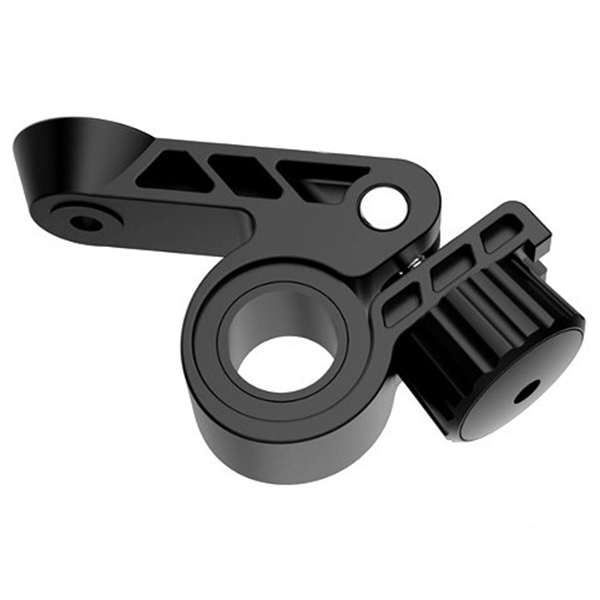
Anodizing

Anodizing creates a protective oxide layer on aluminum surfaces, improving corrosion resistance, wear resistance, and appearance with various color options.
Polishing-Image.jpg

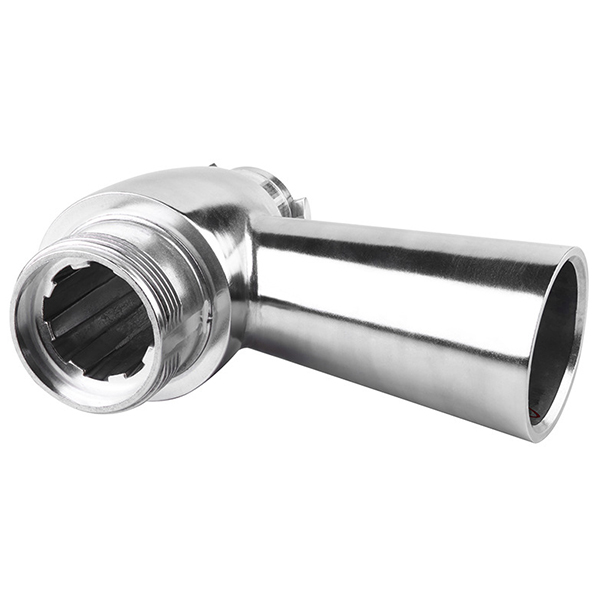
Polishing

Polishing removes surface imperfections and creates a smooth, reflective finish for aluminum die casting parts requiring enhanced visual appearance.
Sand-Blasting-Image.jpg

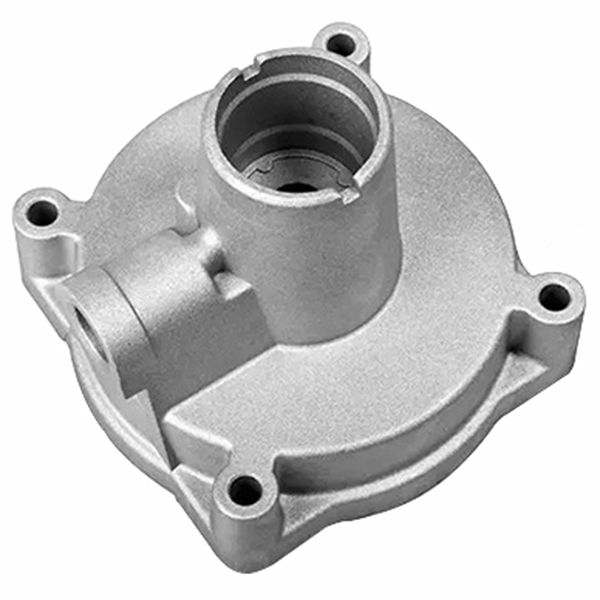
Sand Blasting

Sand blasting produces a uniform matte texture while removing surface marks and improving surface consistency before further finishing processes.
Tumbling-Image.jpg

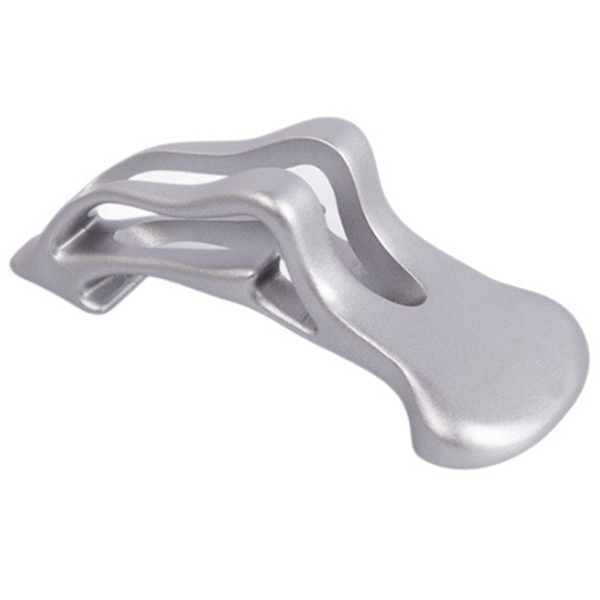
Tumbling

Tumbling improves edge conditions by removing sharp edges, burrs, and minor surface imperfections while creating a consistent surface appearance.
Electropolish-Image.jpg

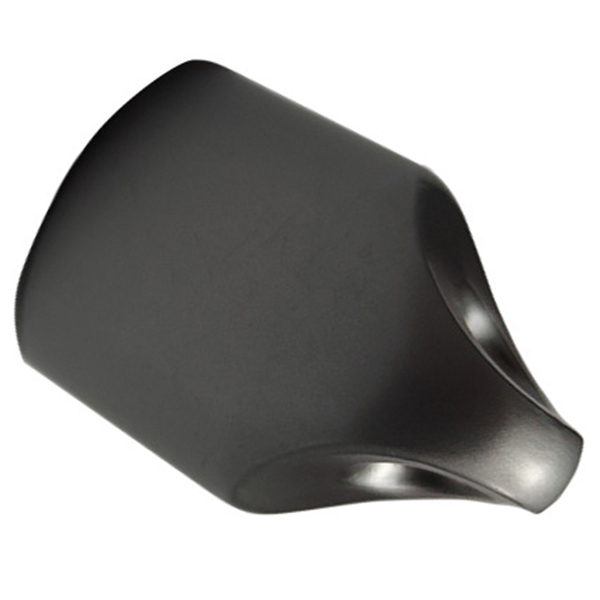
Electropolishing

Electropolishing smooths the metal surface through an electrochemical process, improving cleanliness, corrosion resistance, and surface quality.
passivation-Image.jpg

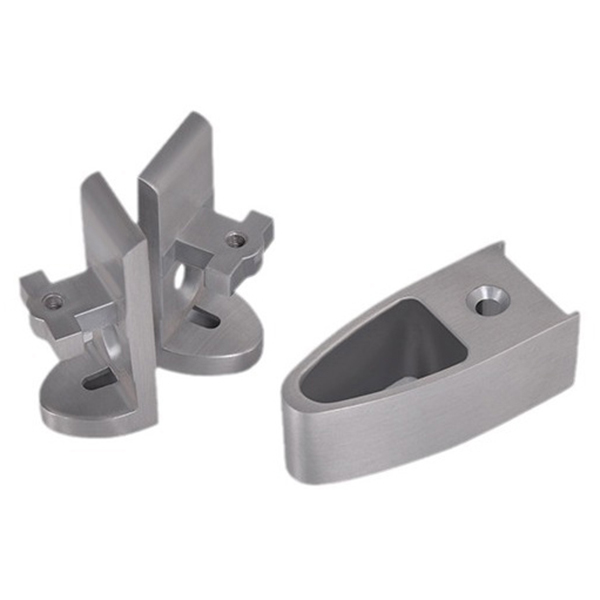
Alodine

Alodine treatment provides a protective chemical conversion coating that improves corrosion resistance and enhances paint or coating adhesion.
Electroplating-Image-1.jpg

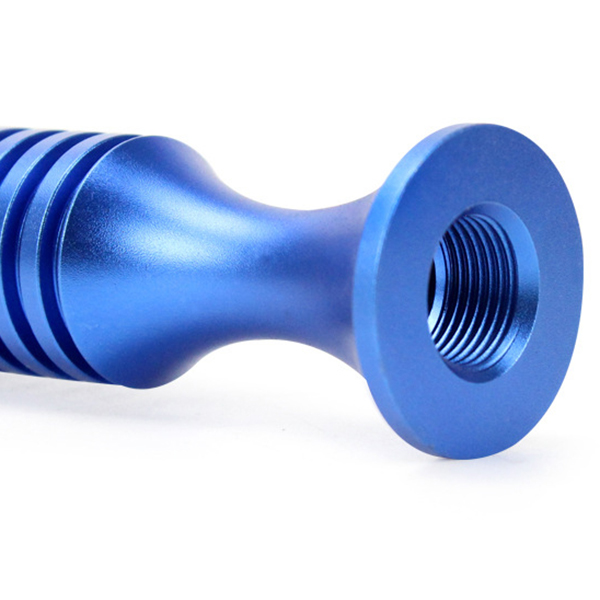
Electroplating

Electroplating applies a metal coating to aluminum surfaces to improve corrosion resistance, wear performance, conductivity, or decorative appearance.
Quality Control for Aluminum Die Casting Parts

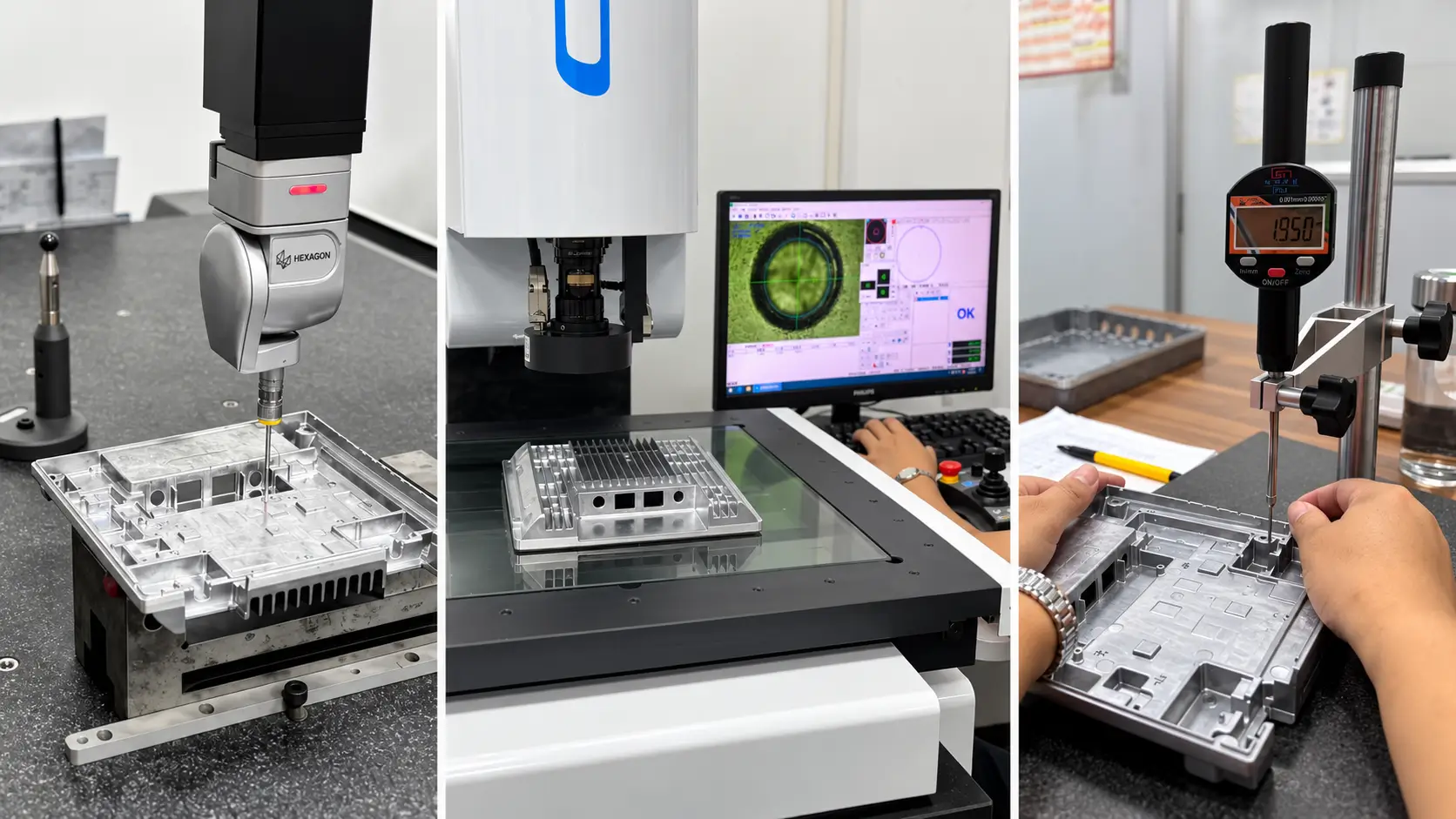
Our quality control for aluminum die casting combines alloy verification with in-process and final inspection. An Oxford spectrometer checks material composition, while CMMs, height gauges, and micrometers verify critical dimensions and feature locations. Visual checks identify cracks, cold shuts, flash, and other surface defects.

Thread and pin gauges check specified threads and bores, while coating thickness gauges and salt spray testing are used where required for finished parts. Inspection results are recorded against the approved drawing revision to support batch traceability and customer review.

Why Global OEM Customers Choose Zhonghui Precision?

Zhonghui Precision serves companies of all sizes, from established global manufacturers to mid-sized businesses, small enterprises, and startups. Our customers include NANNAN Aluminum, FOXCONN, Airspan, and ORACLE. We provide manufacturing solutions tailored to different project requirements and production volumes.

Integrated Manufacturing Support

Die casting, CNC machining, and surface finishing are coordinated within one project. This reduces the need to manage separate suppliers and keeps casting requirements aligned with subsequent operations.

From Samples to Production

We support trial samples for dimensional, appearance, and fit checks before production approval. Agreed sample requirements and inspection findings provide a reference for repeat orders.

Clear Project Communication

A dedicated contact coordinates drawing revisions, tooling questions, sample feedback, and production updates. Project details are documented to keep your team informed as work progresses.

What is Aluminum Die Casting?

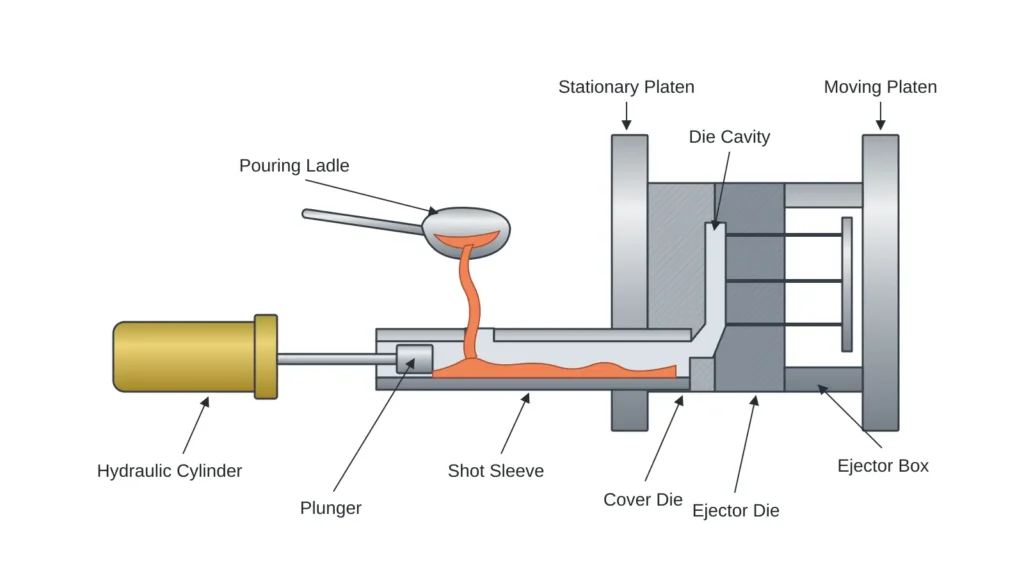
Aluminum die casting is a high-pressure metal casting process that uses molten aluminum alloy injected into a steel mold under high pressure. The molten metal fills the mold cavity, cools, and solidifies into a precise aluminum component with the required shape and dimensions.

This process uses reusable dies to produce lightweight aluminum parts with complex geometries, thin walls, and consistent dimensional accuracy. Compared with traditional casting methods, aluminum die casting offers faster production cycles, excellent repeatability, and efficient manufacturing for large-volume metal components.

Cold-Chamber Die Casting Process Control

Aluminum die casting process control begins with maintaining suitable molten metal temperature and mold conditions for each alloy and part design. Injection speed and pressure are set to achieve proper cavity filling, while intensification pressure and holding time are adjusted to support solidification and reduce shrinkage-related defects.

During production, casting samples are evaluated for filling quality, surface defects, porosity, and dimensional consistency. Process parameters are reviewed and adjusted when defects or variations occur, helping maintain stable production across batches.

Cold-Chamber Die Casting

Advantages of Aluminum Die Casting

Efficient Batch Production: Reusable steel dies and short production cycles make aluminum die casting suitable for repeat orders and medium- to high-volume manufacturing.

Integrated Part Features: Ribs, bosses, mounting points, and other design features can be formed in a single casting, reducing the need for separate parts and assembly operations.

Dimensional Consistency: Precision-engineered dies help maintain consistent part geometry across production batches. Critical dimensions and functional surfaces can be further controlled through CNC machining.

Lightweight Structural Design: Aluminum alloys offer a favorable strength-to-weight ratio, allowing manufacturers to produce lightweight parts with integrated ribs and reinforced sections for structural support.

Near-Net-Shape Production: Complex geometries can be formed close to their final dimensions, reducing machining requirements, material waste, and secondary processing.

Is Aluminum Die Casting Right for Your Project?

Medium- to High-Volume Demand: Aluminum die casting is suitable for projects with recurring production demand, where tooling investment can be distributed across multiple production runs.

Stable Part Design: The process works best when the main part geometry is established. Frequent design changes may require costly mold modifications.

Complex Integrated Features: Housings, covers, and structural parts with ribs, bosses, and mounting features can benefit from integrating multiple features into a single casting.

Defined Performance Requirements: Mechanical loads, operating temperatures, corrosion exposure, and sealing requirements should be evaluated when selecting the alloy and casting process.

A Practical Machining Strategy: Aluminum die casting is most effective when the main geometry can be formed in the mold, with CNC machining reserved for precision bores, threads, sealing surfaces, and critical dimensions.

Frequently Asked Questions

ADC12 and A380 are widely used aluminum die casting alloys with different compositions and properties. ADC12 offers good fluidity and is suitable for complex parts with thin walls and detailed features. A380 provides a balance of strength, castability, and machinability, making it suitable for general-purpose housings, brackets, and industrial parts. The appropriate alloy depends on part geometry, mechanical requirements, and operating conditions.

The cost of aluminum die casting depends on several factors, including part size, weight, alloy selection, design complexity, mold requirements, and production volume. Initial tooling costs are usually a significant part of the investment, while the unit price generally decreases with higher production quantities. Secondary operations such as CNC machining, surface finishing, and inspection also affect the final price.

The minimum wall thickness depends on part geometry, alloy fluidity, flow distance, and casting conditions. For many aluminum die casting applications, wall thicknesses around 1.0–2.0 mm are common, although thinner sections may be achievable with suitable designs and process conditions. Wall thickness should be evaluated together with rib structures, draft angles, and overall part dimensions during DFM review.

Aluminum die casting mold costs vary according to part dimensions, cavity count, mold structure, steel selection, cooling design, and expected production volume. Simple molds generally cost less, while complex parts with slides, multiple cavities, or tight dimensional requirements require greater tooling investment. A quotation can be prepared based on the 3D model, technical drawings, and estimated annual demand.

When selecting an aluminum die casting manufacturer in China, consider its tooling capabilities, machine capacity, engineering support, quality management system, and experience with similar parts. An integrated manufacturer with in-house mold manufacturing, die casting, and secondary machining can simplify supplier coordination. It is also important to review inspection procedures, production consistency, and communication during project development.

Yes. A single aluminum die casting mold can support multiple production runs over several years, depending on its design, material, maintenance, and total shot life. For customers requiring only a few thousand parts annually, production can be arranged in scheduled batches rather than manufacturing the entire volume at once. The mold can be maintained between production runs to support repeat orders and consistent part quality.

Scroll to Top

Quick Quote Within 12 Hours

Upload your CAD files and project details. Our engineers will review your requirements and provide a professional quote within 12 hours.

*If you have any design files that need to be sent, please email them to

[email protected]